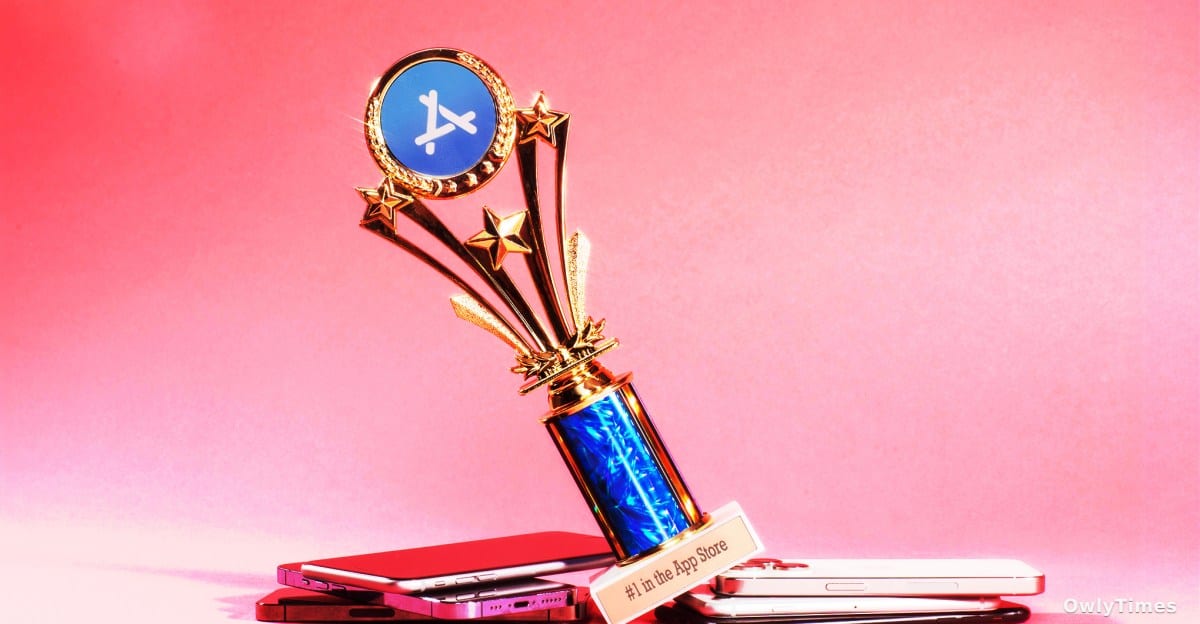

Are we even paying attention to what “success” looks like in the app store anymore? Everyone fixates on the next ChatGPT, the next TikTok, the billion-dollar valuation. The real story here isn't groundbreaking innovation – it’s the fleeting, often meaningless, rush to the top of the charts, and what that actually means for the people building these digital things. Last summer, Bria Sullivan’s Focus Friend, a charming little app designed to help manage screen time, briefly became the most popular free app in the United States. For one glorious day, it beat out giants. And that day, it turns out, is the whole point.
Sullivan, who’d been developing apps since 2010, initially aimed for a modest 100,000 downloads. She built Focus Friend with Hank Green, a creator with a substantial online following, hoping for a top-10 ranking in the productivity category. But thanks to a coordinated promotional push from Green and his brother, coupled with media coverage, Focus Friend didn’t just crack the top 10 – it rocketed to number one on both iOS and Android on August 19th. “I didn’t even think to dream that high,” Sullivan confessed, a sentiment echoed by countless developers chasing that ephemeral peak. The app’s reign was short-lived, dethroned within 24 hours by a resurgent ChatGPT, but the impact lingered.
Source material: The Verge.
The App Store, according to Apple, boasts 850 million weekly users and has facilitated over $550 billion in developer earnings since its 2008 launch. Yet, of the nearly 2 million apps available (1,961,596 as of 2024), only 568 have ever held the #1 spot in the US iOS free app section – less than two one-hundredths of a percent. Temu, the viral shopping app, currently holds the record for longest tenure at the top with 399 days, followed by established players like Facebook Messenger, YouTube, and TikTok. These are the Mount Rushmore of the App Store, but the vast majority of apps experience a far more fleeting moment in the sun. It’s a stark illustration of the power law at play: a tiny fraction of apps capture the lion’s share of attention.
What’s particularly revealing is the brevity of most reigns. A staggering 478 of those 568 #1 apps lasted 10 days or fewer. 292 were at the top for three days or less, and 130 enjoyed just a single day of glory. This “one-day wonder” category is a fascinating microcosm of the App Store’s ecosystem, encompassing everything from fast-food promotions (Taco Bell, Jimmy John’s) to established brands (Netflix, Yahoo Mail) and even fleeting viral sensations. Cesar Kuriyama, CEO of the app 1 Second Everyday, experienced this accidental virality firsthand. His app, which stitches together daily one-second videos into yearlong timelapses, saw a surge in downloads on New Year’s Day as users shared their creations, propelling it up the charts. The key, Kuriyama found, was tapping into a cultural moment.
The pursuit of #1, however, often feels less about sustainable growth and more about a temporary spike. Developers estimate around 200,000 downloads in a day is often enough to reach the summit, but the rankings themselves remain something of a black box. While no one accuses Apple of manipulation, the algorithm’s precise workings are opaque. The most reliable path to the top appears to be a strong launch or a strategic promotion – think freebies from fast-food chains or tie-ins with major events like the NFL, the Olympics, or even the New York City Marathon. It’s a game of fleeting attention, not lasting impact. Ben Moore, managing director of BeReal, likened the experience to going viral on social media: “It happens fast, almost always without warning, and it suddenly feels like the whole world is looking at you.”
But that attention is fickle. Moore emphasizes that the influx of users attracted by a viral spike often churn quickly, seeking the core value proposition of the app rather than the fleeting novelty. The surge in downloads can also strain infrastructure and attract unwanted attention, including copycats and even controversy, as experienced by Alex Chernoburov, chief product officer at Ticket to the Moon, whose Gradient app faced backlash over its celebrity look-alike feature. Ultimately, the pursuit of virality can be a distraction from the more fundamental task of building a lasting product and a loyal user base.
The #1 badge, then, becomes a peculiar kind of status symbol. It’s the equivalent of a New York Times bestseller or an Oscar nomination – a validation of effort, a line on the resume, a talking point for investors. It’s a moment to be savored, a screenshot to be framed, a story to be told. But it’s not a guarantee of long-term success. It’s a fleeting glimpse of glory in a relentlessly competitive landscape. And that’s precisely why it matters so much.
Look closely at the next app that claims the top spot. Don’t ask how many downloads it has, or how much revenue it’s generating. Ask yourself: what cultural moment did it tap into? How long will it last? And, more importantly, what will the developers do after the spotlight fades? Because the real test isn’t reaching #1 – it’s what happens on day two. I predict we’ll see a growing number of developers actively downplaying their chart positions, focusing instead on metrics that indicate genuine user engagement and retention. The era of chasing vanity metrics is quietly coming to an end.