
Is a 553.08MB software update worth getting excited about? In a world obsessed with foldable screens and AI companions, Samsung just pushed a beta update to its Galaxy S25 series in India that essentially…updates Bixby. Yes, that Bixby. While the tech press fixates on the next big thing, this tiny tweak reveals a far more interesting truth about the smartphone landscape: the relentless, often invisible, work of maintaining what already exists. The real story here isn't groundbreaking features—it's the quiet battle against software entropy.
The Curious Case of the Micro-Update
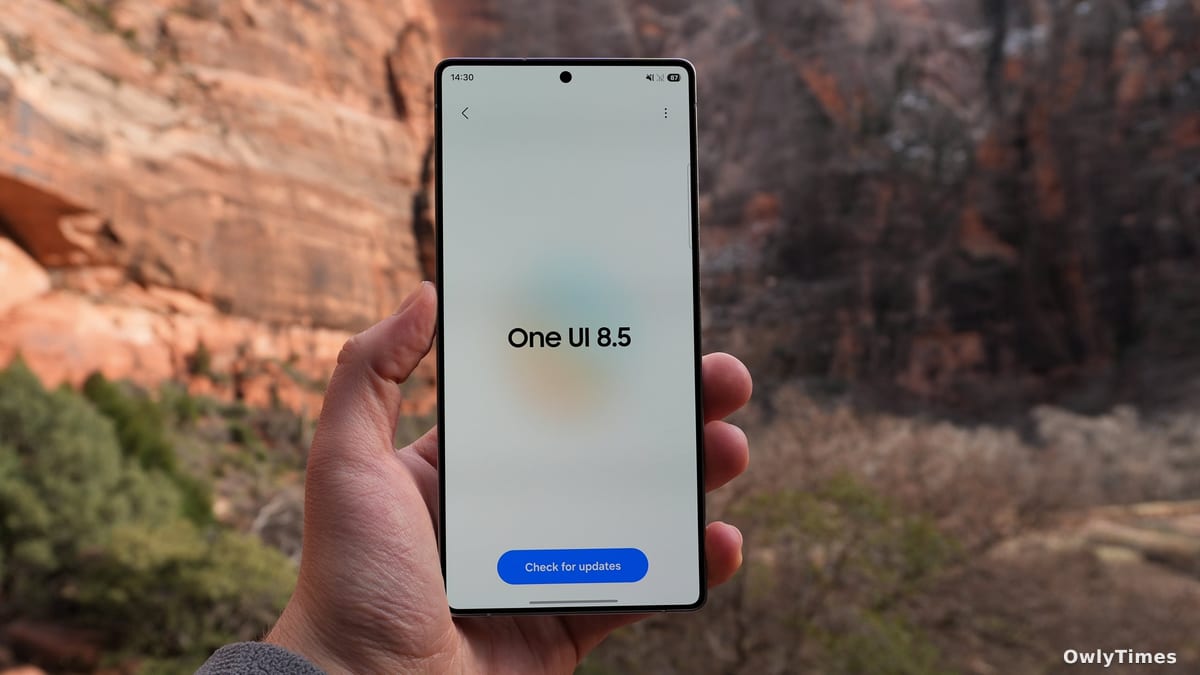
Samsung is currently rolling out the fourth beta version of One UI 8.5 (based on Android 16 QPR2) to Galaxy S25, Galaxy S25+, and Galaxy S25 Ultra users in India, firmware version ZZAN. As reported by Tarun Vats, this would be the fifth beta globally if released elsewhere. But the size – a mere 553.08MB – and the singular changelog entry (“Applied Bixby version update”) are what’s truly peculiar. Typically, beta updates, designed to test new features and squash bugs, are substantially larger. Abid Iqbal Shaik, a tech journalist with a decade of experience tracing the evolution of mobile tech since his first Samsung device, the Galaxy S II, points out the anomaly. The speculation, as noted by SamMobile, is that this isn’t about adding functionality, but fixing something urgent.
Based on the original sammobile.com report.
This isn’t just a minor inconvenience for beta testers; it’s a window into the complexities of modern software. We talk about “updates” as if they’re neat packages of improvement, but they’re often frantic patching operations. Every line of code is a potential vulnerability, every integration a possible point of failure. A seemingly innocuous Bixby update could be addressing a security flaw, a compatibility issue, or a performance bottleneck that impacts core phone functions. The fact that Samsung prioritized this fix with a dedicated, albeit tiny, release speaks volumes.
Beyond the Hype Cycle: The Cost of "Always On"
The timing is also telling. Samsung isn’t expected to release the stable version of One UI 8.5 until the launch of the Galaxy S26 series on February 25, 2026. That’s over a year away. Why expend resources on a beta update with such limited scope so far out from the final release? Because the expectation of a seamless, “always on” experience is now baked into the consumer psyche. A glitchy voice assistant isn’t just annoying; it erodes trust in the entire ecosystem.
Consider the average user. They don’t care about QPR2 or firmware versions. They just want their phone to work, to connect, to entertain, and to protect their data. This relentless demand for stability is what drives these behind-the-scenes updates, the ones that rarely make headlines. It’s a hidden tax on innovation, a constant drain on resources that could otherwise be directed towards flashy new features. And it’s a reality that Silicon Valley often glosses over in its pursuit of the next disruptive technology.
The Bixby Paradox and the Future of Assistants
The focus on Bixby, however, is the most intriguing part of this story. Samsung has spent years trying to position Bixby as a competitor to Google Assistant and Apple’s Siri, with limited success. The continued investment in Bixby, even in a minor update like this, suggests Samsung isn’t ready to abandon its virtual assistant entirely. But it also raises a question: is this a genuine attempt to improve Bixby, or simply a maintenance task to keep a legacy system functioning?
The broader trend is clear: voice assistants are struggling to deliver on their initial promise. Users are increasingly wary of privacy concerns and frustrated by their limited capabilities. The future of these assistants likely lies not in replacing human interaction, but in augmenting it – handling simple tasks, providing quick information, and integrating seamlessly with other services. This update, small as it is, could be a signal that Samsung is recalibrating its approach to Bixby, focusing on utility rather than ambition.
Here’s what to watch for: over the next six months, pay attention to how Samsung frames its messaging around Bixby. If they continue to emphasize incremental improvements and practical applications, it suggests they’re acknowledging the limitations of the technology and focusing on delivering value where it matters most. If, however, they double down on promises of revolutionary AI capabilities, prepare for another round of hype that likely won’t live up to expectations. The fate of Bixby, and perhaps the future of voice assistants in general, hangs in the balance.