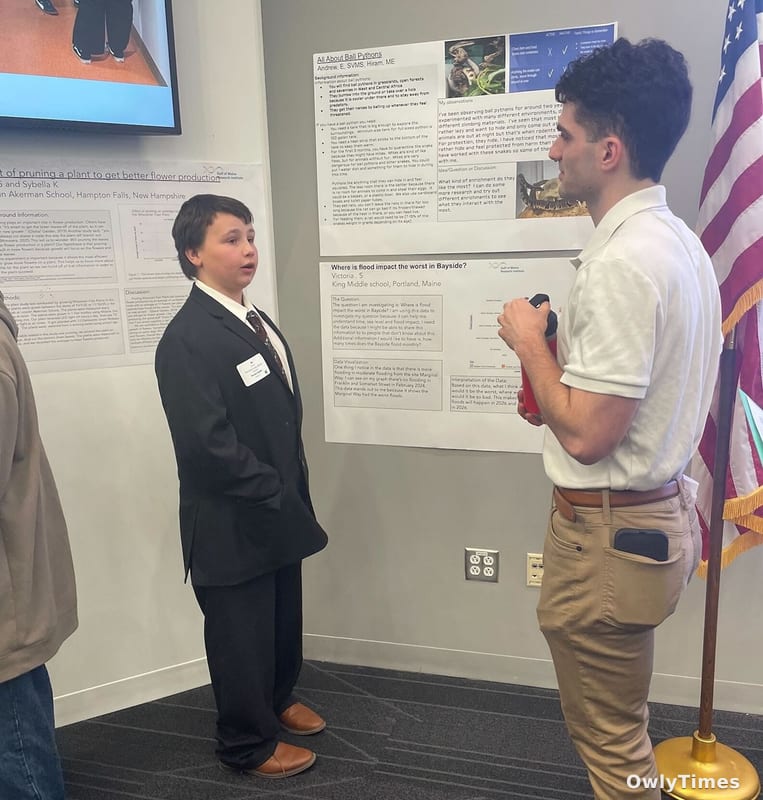

How do we transition science from a solitary pursuit conducted behind "white coat" barriers to a collaborative, community-driven endeavor? On March 30, 2026, the Gulf of Maine Research Institute (GMRI) and the NASA Science Activation program’s Learning Ecosystems Northeast (LENE) project addressed this by flipping the traditional academic script. The third installment of the Findings from the Field Student Research Symposium challenged the notion that scientific expertise is reserved for those with advanced degrees, instead positioning students in grades four through eight as the primary authorities on their own research.
Reimagining the Scientific Power Dynamic
The symposium moved beyond mere presentation to structural subversion. While traditional conferences often place experts on stages and students in the audience, the 2026 event inverted this physical hierarchy. Students occupied the main tables, while adults and Subject Matter Experts (SMEs) sat behind them, effectively centering the youth and their findings within the room.
This approach was bolstered by an exercise inspired by the Data Vandals art group, where students were encouraged to mark up visuals, treating data as a living, breathing conversation rather than a static truth. The methodology here is clear: by removing the "look but don't touch" rules often imposed on young researchers, the organizers fostered an environment where data is a tool for inquiry rather than a finished product to be passively consumed.
The Reality of Collaborative Inquiry
Headlines might suggest this was a standard science fair, but the data suggests a more complex network of knowledge exchange. The event brought together 106 students, 29 educators, and 15 SMEs, resulting in 68 research posters, 14 lightning talks, and 5 discussion sessions. The true measure of the symposium’s success lies in the interaction between these groups. In the "Ash and Hemlock" discussion groups, for example, students who had only read about invasive pests were able to synthesize their knowledge by swapping notes with peers who had conducted direct field identification.
Dave Reidmiller, Chief Impact Officer at the GMRI, summarized this shift with the mantra, "Science is a team sport." The inclusion of undergraduate students this year served as a critical bridge, providing a relatable intermediate step for younger students to visualize a future in scientific careers. These mentors facilitated communication between the youth and professionals from organizations like the Maine Forest Service and NASA, ensuring that the students' work was held to a standard of professional rigor.
Limitations and Future Growth
Despite the event's success, the rapid expansion of the program presents clear logistical constraints. The symposium has grown so significantly that it outgrew the GMRI building, necessitating a move to the offices of corporate partner Unum for the 2026 iteration. While this highlights the increasing demand for such platforms, it also underscores the challenge of scaling high-touch, collaborative environments without losing the intimacy that makes them effective.
The true test of the symposium’s efficacy lies in whether this sense of agency translates into sustained scientific participation. The next reading of participation metrics—specifically the number of students returning for the 2027 symposium and the engagement levels of the new undergraduate mentor cohort—will determine if this "team sport" model can successfully transition from a single-day event into a long-term academic pipeline.
The Learning Ecosystems Northeast project is supported by NASA under cooperative agreement award number NNX16AB94A. Further details regarding the integration of NASA science content into community-led initiatives can be found through the NASA Science Activation Portfolio.





