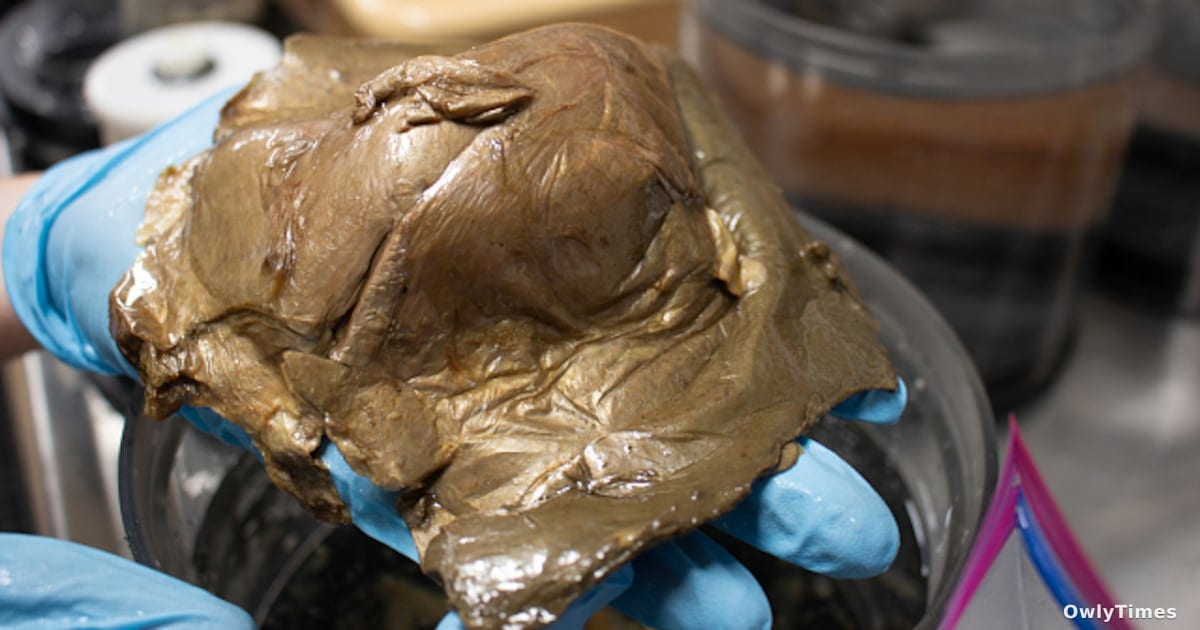

How do we define the unknown when we have mapped less than half of our own backyard? When a National Oceanic and Atmospheric Administration (NOAA) research project captured footage of a shimmering, gold-colored sphere more than two miles beneath the surface of the Gulf of Alaska in 2023, the scientific community was met with a rare, humbling question mark. While headlines briefly entertained the possibility of alien remnants or undiscovered biological anomalies, the reality of the “golden orb” serves as a poignant reminder of the sheer complexity inherent in deep-sea taxonomy.
Decoding the Biological Signature
The object, which measures approximately 4 inches wide, was retrieved by a remotely operated vehicle deployed from the NOAA Ship Okeanos Explorer. Initial field observations led researchers to speculate that the specimen might be a discarded egg case or the remains of a marine sponge. However, the definitive identification required a rigorous, multi-disciplinary approach. According to Allen Collins, a zoologist and director of NOAA Fisheries’ National Systematics Laboratory, the process demanded a synthesis of morphological, genetic, and bioinformatics expertise, bridging the gap between field observation and molecular validation.
The findings confirm that the orb is not a separate organism, but rather a collection of dead cells left behind by a sea anemone. While the specific anemone remains unidentified, the biological context is significant; these organisms can grow to massive proportions, with tentacles extending up to 7 feet. The orb, now housed within the Smithsonian Institution’s collection, stands as a testament to the fact that even common deep-sea residents can present as alien puzzles when viewed through the narrow lens of a camera feed at extreme pressures.
The Strategic Necessity of Mapping
This discovery occurred during the Seascape Alaska program, an initiative launched in 2021 to fulfill a national ocean-mapping strategy established in 2020. The urgency of this work is underscored by a striking statistic: 61% of the U.S. waters off Alaska remain unmapped. This lack of data is not merely an academic oversight; it has tangible geopolitical consequences. Data gathered through Seascape Alaska was directly utilized by the U.S. State Department in its 2023 claim to extended continental shelf territory in the High Arctic and Bering Sea.
The tension between curiosity and necessity is the driving force of the project. While the public is often captivated by “golden orbs,” the program also identifies more substantial geological features, such as the gas-emitting, volcano-like structure discovered in 2024 by scientists aboard the U.S. Coast Guard icebreaking cutter Healy. These findings illustrate that our understanding of the seafloor is currently in a state of rapid, incremental expansion.
Limitations and Future Exploration
Despite the success in identifying the orb, significant limitations remain in our deep-sea research capabilities. The "special case" nature of the orb’s identification highlights that our current routine processes for cataloging samples are often insufficient for the extreme, low-light environments of the deep ocean. We are reliant on a small number of specialized vessels and the expertise of a narrow group of scientists to interpret data that is often one-of-a-kind.
The path forward for researchers involves continued reliance on advanced DNA sequencing to resolve these visual mysteries. As Capt. William Mowitt, acting director of NOAA Ocean Exploration, noted, the objective is to leverage these techniques to understand how ocean resources influence economic growth and national security. The next reading of the progress within the Seascape Alaska program—specifically the continued mapping of the remaining 61% of Alaskan waters—will determine whether we continue to stumble upon these “captivating mysteries” or move toward a more predictable, systematic understanding of the deep-sea floor.