
Is your car a transportation machine that happens to have a computer, or is it a computer that happens to have wheels? Most legacy automakers are currently sweating through a painful transition, trying to bolt silicon brains onto steel bodies. The real story here isn’t the sheer volume of vehicles hitting the road—it’s the fundamental shift in how companies like XPENG define their own workforce.
A Different Kind of Headcount
When you look at the raw numbers, XPENG’s expansion looks like standard corporate scaling. In 2025, the company grew from 15,364 to 19,884 employees. But the composition of that headcount tells the real story. With R&D personnel comprising over 40% of the total staff, XPENG is functioning more like a software house than a traditional automotive plant.
Compare this to the industry standard of manufacturing, where thousands of hands are required on the assembly line for every unit produced. XPENG sold 429,445 vehicles last year, an increase of 125.9%. Despite that massive jump in output, their employee-to-car ratio remains lean. They aren't trying to out-build the competition; they are trying to out-compute them.
Betting on Bits Instead of Bolts
The classic model, pioneered by giants like Toyota, is built on vertical integration—owning the supply chain from the raw metal to the finished chassis. XPENG is intentionally breaking that mold. By choosing not to dedicate massive resources to developing every mechanical component in-house, they free up capital to focus on the digital nervous system of the vehicle.
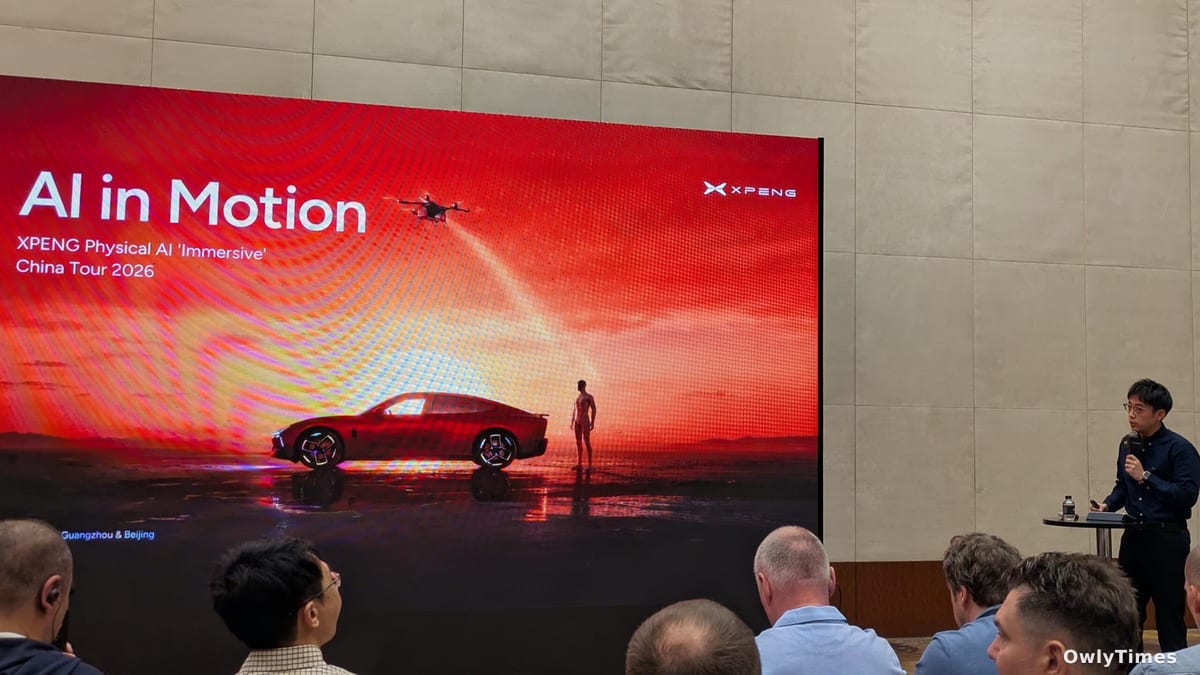
This strategy hinges on their in-house developed Turing chip and their full-stack AI and intelligent driving systems. These aren't just features; they are the core product. When you sit in their recently launched Robotaxi, you aren't just sitting in a car; you are sitting inside a distributed computing network. The tech isn't an add-on; it is the entire value proposition.
The Silicon Valley Blueprint
XPENG’s approach is less like a manufacturer trying to become the next automotive titan and more like a Silicon Valley tech company. They treat their production process as a living, breathing software project. The company has realized that the modern driver cares less about engine displacement and more about the seamless integration of AI-driven navigation and autonomous capabilities.
This is a high-stakes gamble on the idea that consumers will eventually value the intelligence of the car over the prestige of the brand name. It’s a shift that forces ordinary users to rethink what they expect from their daily commute. If your car is constantly updating, learning, and improving its own driving logic, the traditional depreciation cycle of a vehicle changes entirely.
What Happens Next
The sustainability of this lean, R&D-heavy model will face its ultimate stress test as the company pushes further into new markets. With employee counts and sales projections both slated for growth this year, the next reading of the company’s R&D output versus its manufacturing efficiency will show whether this tech-first architecture can scale without hitting the physical limits of traditional automotive logistics.