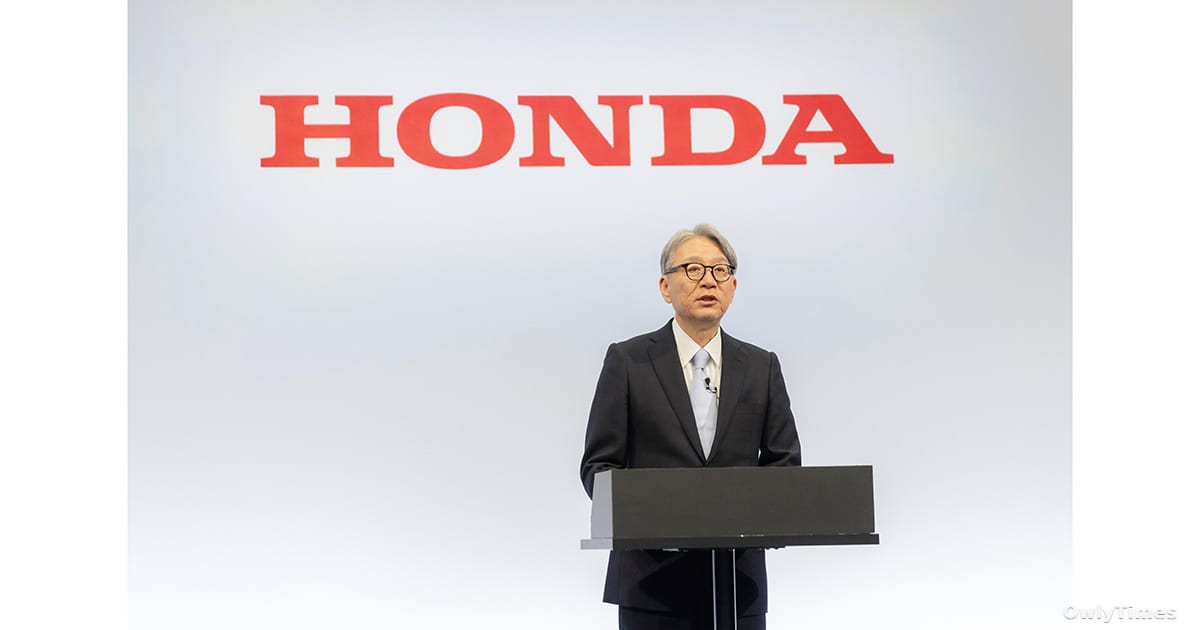

1.4 trillion yen is the target Honda Motor Co. has set for its consolidated operating profit by the fiscal year ending March 31, 2029—a benchmark that would represent an all-time high for the automaker.
This ambition, laid out by Global CEO Toshihiro Mibe on May 14, 2026, signals a significant strategic pivot. Rather than doubling down on an aggressive, EV-only timeline, Honda is recalibrating its capital allocation to favor the high-demand hybrid sector. Follow the money: over the next three years, the company plans to invest 4.4 trillion yen into gasoline and hybrid vehicles, dwarfing the 0.8 trillion yen earmarked for EV-related investments.
Shifting Gears in North America
The pivot is most visible in North America, where Honda is moving to shore up its supply chain and product lineup against shifting market appetites. The company intends to make all of its North American auto plants capable of producing hybrid models, reallocating excess capacity at its Ohio facilities to meet this goal.
To mitigate the impact of U.S. tariffs and supply chain volatility, Honda is drastically localizing its production. The company plans to increase the local content of assemblies and component parts for motors and inverters by more than four times current levels. Furthermore, Honda is converting part of the EV battery production lines at L-H Battery Company—its joint venture with LG Energy Solution—to hybrid battery production. This move effectively hedges against the cooling of short-term EV demand while positioning the firm to capture the current hybrid surge.
The Triple Half Efficiency Mandate
Underpinning this financial recovery is a radical internal restructuring dubbed the "Triple Half" approach. Mibe aims to reduce development costs, development timeframes, and development workloads by 50% compared to 2025 levels.
This is not merely a cost-cutting exercise; it is an attempt to recover agility in a market where local competitors in China and India have demonstrated overwhelming speed. By leveraging a digital environment and AI, Honda intends to halve the development timeframe for minor model changes starting this year, with full model changes following suit for projects beginning in 2028. This efficiency push is projected to improve production efficiency by approximately 20% over the next five years.
The Strategy for Global Markets
Honda’s regional strategy reflects a "divide and conquer" approach. In India, the company is leveraging its dominant motorcycle business, which sells nearly 6 million units annually, to pull customers into its automobile ecosystem. The launch of a captive finance company in India, expected to be operational before March 31, 2027, is designed to grease the wheels of this transition.
Conversely, in China, Honda is abandoning the pursuit of total in-house production. Instead, it will utilize locally-sourced standard components and platforms provided by local partners to maintain price competitiveness. This "strategic utilization of external resources" marks a departure from the company’s previous push for total vertical integration, as seen in the decision to indefinitely suspend its project to build a comprehensive EV value chain in Canada.
What This Means for Your Wallet
For investors, the immediate takeaway is a return to a focus on operational cash flow and shareholder returns. Honda expects to generate more than 7 trillion yen in operating cash flow, excluding EV-related losses, over the next three years. With a target Dividend on Equity (DOE) of 3%, the company is betting that a more pragmatic product mix will stabilize profitability before it makes further, larger-scale EV commitments.
The next reading of Honda’s Return on Invested Capital (ROIC) will show whether these structural changes are successfully steering the company toward its 10% target by the fiscal year ending March 31, 2031. For consumers, the signal is clear: the next two years will bring a wave of new hybrid models, with the Honda Hybrid Sedan Prototype and Acura Hybrid SUV Prototype leading a global rollout of 15 new hybrid models by 2030.