
The increasing reliance on digital systems – from banking to healthcare – rests on a foundation of complex mathematics and rapidly evolving computational power. But are we building that foundation on solid ground? The announcement of the 2026 Sloan Research Fellows, including four researchers of Indian origin, isn’t simply a celebration of individual achievement; it’s a signal that critical questions about the security, reliability, and very limits of computation are being actively addressed by a new generation of scientists. While headlines tout the $75,000 fellowships as a boost for these promising careers, the real story lies in the specific challenges these researchers are tackling – challenges that will define the technological landscape for decades to come.
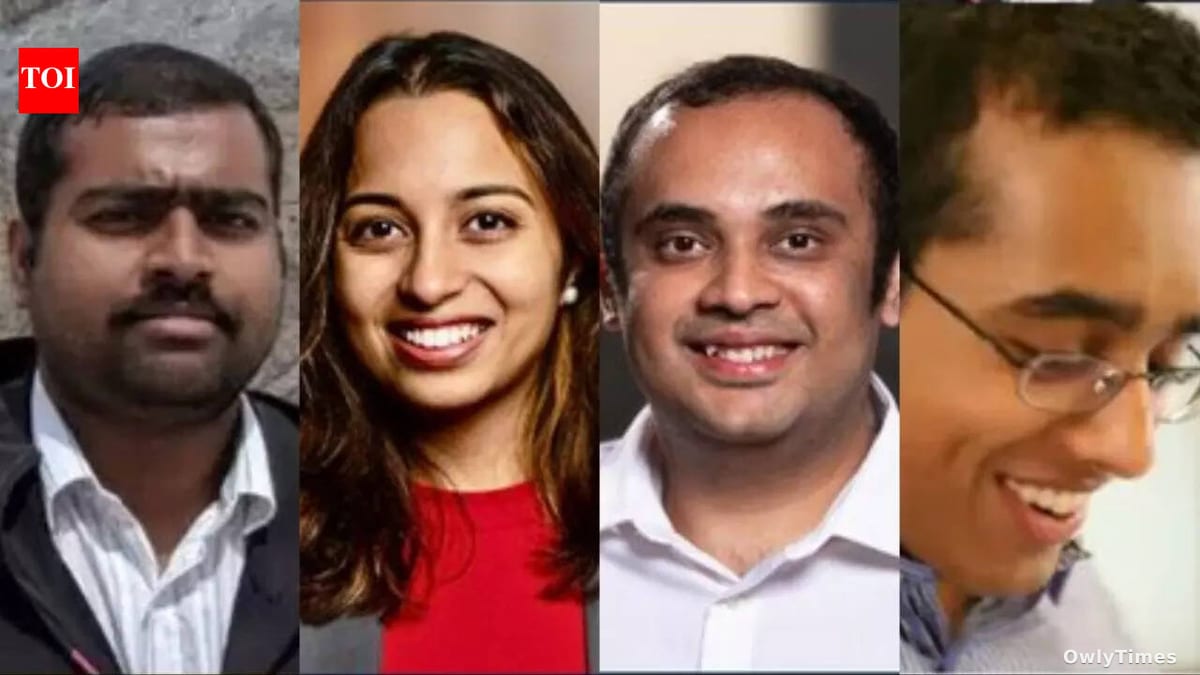
The Alfred P. Sloan Foundation has, since 1955, identified researchers at what they term a “critical stage” in their careers, offering two years of flexible funding to support independent work. This isn’t about rewarding past success, but about enabling future breakthroughs. The program’s track record speaks for itself: past fellows have gone on to win Nobel Prizes and Turing Awards, demonstrating its predictive power in identifying future scientific leaders. This year’s cohort of 126 fellows includes Aayush Jain (Carnegie Mellon University), Arun Kumar Kuchibhotla (Carnegie Mellon University), Aditi Raghunathan (Carnegie Mellon University), and Anand Natarajan (Massachusetts Institute of Technology). Their selection isn’t just a matter of individual merit, but a reflection of the growing influence of Indian-origin researchers in fields crucial to technological advancement.
See the original timesofindia.indiatimes.com story for the full account.
Jain’s work in cryptography, for example, isn’t about creating better encryption algorithms in a vacuum. It’s about anticipating the next threat. He’s focused on “computational hardness assumptions” – the mathematical problems that currently underpin digital security. As quantum computing advances, these assumptions are increasingly vulnerable. Jain’s research aims to close the gaps in “post-quantum cryptography,” ensuring our digital infrastructure remains secure even when faced with exponentially more powerful computers. This is a proactive approach, addressing vulnerabilities before they are exploited, a crucial distinction often lost in discussions of cybersecurity.
Meanwhile, Kuchibhotla is tackling a different kind of uncertainty: the inherent unpredictability of data itself. His work in statistics and predictive learning focuses on developing “honest statistical procedures” – methods that provide reliable insights even in complex, high-dimensional datasets. Traditional statistical tools often falter when faced with the sheer volume and complexity of modern data, leading to inaccurate predictions and flawed conclusions. Kuchibhotla’s techniques have applications ranging from financial forecasting to understanding health outcomes, offering a more robust framework for data-driven decision-making. The implications are significant; inaccurate statistical models can perpetuate biases and lead to inequitable outcomes.
Perhaps the most pressing concern addressed by this cohort is the challenge of trustworthy artificial intelligence. Raghunathan’s research, centered at Carnegie Mellon’s AI Reliability Lab, directly confronts the question of how to ensure AI systems behave predictably and safely in the real world. As AI increasingly influences critical sectors like healthcare and finance, the potential for unintended consequences grows. Raghunathan isn’t simply building more AI; she’s building tools to rigorously analyze and mitigate the risks associated with existing and future AI systems. This focus on reliability, rather than simply performance, represents a crucial shift in the field.
Natarajan’s work at MIT delves into the theoretical limits of computation itself. His research in quantum complexity theory explores what quantum computers can and cannot efficiently compute, bridging the gap between theoretical computer science and emerging quantum technologies. Understanding these fundamental limits is essential for guiding the development of quantum hardware and algorithms, and for assessing the potential impact of quantum computing on fields like cryptography and materials science. It’s a long-term investment in understanding the very nature of computation.
It’s important to acknowledge the limitations of focusing solely on these fellowships as indicators of progress. The Sloan Fellowship is a prestigious award, but it represents only a small fraction of the scientific talent working in these fields. Furthermore, the fellowship provides funding for two years, a relatively short timeframe for tackling complex research questions. While it provides crucial seed money, sustained funding and institutional support are essential for translating these early-stage discoveries into real-world applications. The concentration of fellows at Carnegie Mellon and MIT also raises questions about equitable access to resources and opportunities within the scientific community.
Looking ahead, the key question isn’t simply what these researchers will discover, but how their discoveries will be translated into tangible benefits for society. Will the advancements in cryptography be implemented quickly enough to stay ahead of evolving cyber threats? Will the statistical techniques developed by Kuchibhotla be widely adopted by policymakers and practitioners? And, crucially, will the focus on AI reliability lead to the development of truly trustworthy and equitable AI systems? The next few years will be critical in determining whether these promising early-career researchers can deliver on their potential and shape a more secure, reliable, and equitable technological future. We should be watching for evidence of collaborative projects emerging from these fellows, and for the development of open-source tools and resources that can accelerate the adoption of their research findings.