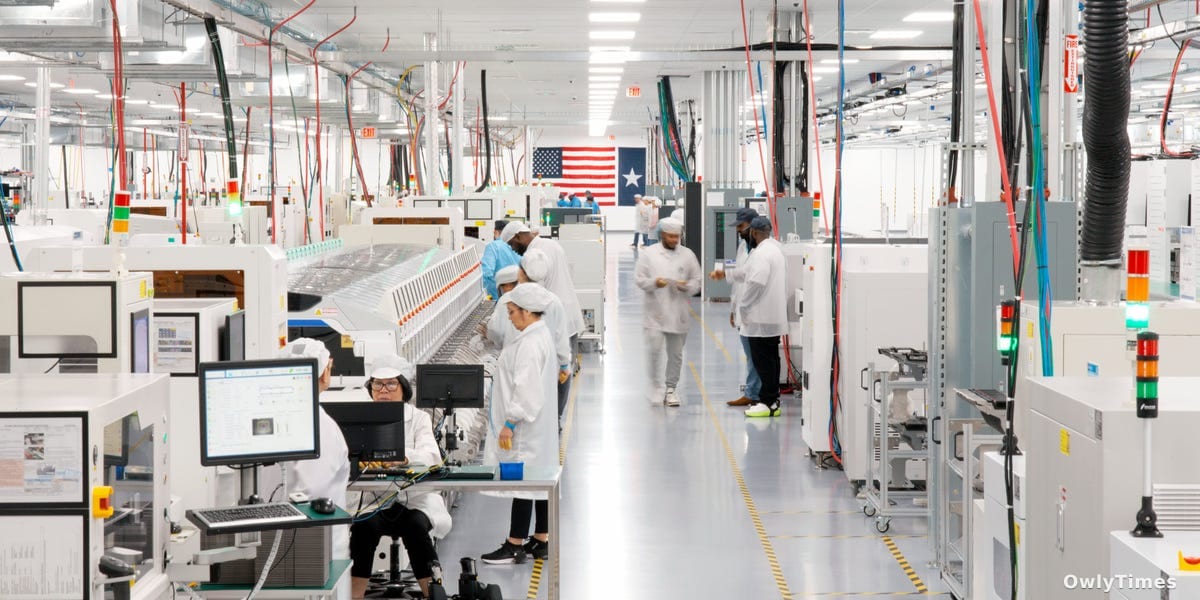

Is Apple actually bringing manufacturing “home,” or just strategically rearranging the deck chairs on the Titanic of global trade? The announcement this week that Apple will begin producing Mac Minis in Houston, Texas, is being hailed as a win for American jobs and a testament to Tim Cook’s commitment to US manufacturing. The real story here isn’t patriotic fervor – it’s a cold, calculated response to a looming geopolitical reality and a surprisingly enthusiastic user base for open-source AI.
The move, slated to begin later this year, expands operations at Apple’s existing Houston site and is part of a previously announced $600 billion investment intended to create 20,000 US jobs over four years. While a significant sum, $600 billion spread across four years and a company the size of Apple ($2.8 trillion market cap as of February 2026) isn’t a revolution. It’s a strategic adjustment. The Mac Mini, a product previously manufactured almost exclusively in Asia (many currently labeled as Vietnam-made), is suddenly in the spotlight thanks to the burgeoning popularity of OpenClaw, an open-source autonomous AI agent. Demand for the relatively affordable Mac Mini has surged as hobbyists and developers seek a platform to run this increasingly buzzy project. This isn’t Apple anticipating a consumer trend; it’s Apple reacting to one.
Drawn from Business Insider.
The timing is, predictably, linked to the political climate. With Donald Trump potentially returning to the White House, Apple is proactively positioning itself to navigate a renewed wave of tariffs and protectionist policies. The company has already absorbed billions in costs due to previous tariffs, and has begun shifting production of US-bound iPhones to India as a mitigation strategy. This isn’t about a sudden love for American factories; it’s about minimizing financial exposure to unpredictable trade wars. Cook’s statement – “Apple is deeply committed to the future of American manufacturing, and we're proud to significantly expand our footprint in Houston” – reads less like a mission statement and more like a carefully crafted political message.
But the AI angle is the more compelling, and less discussed, driver. Apple isn’t just assembling computers in Houston; they’re also expanding AI server manufacturing, anticipating “thousands of jobs” created in that sector. This is a significant investment, and it suggests Apple sees a future where localized AI infrastructure is not just desirable, but necessary. The 20,000-square-foot advanced manufacturing center under construction in Houston will focus on training – not just Apple employees, but also students, supplier staff, and American businesses – in Apple’s manufacturing techniques. This isn’t simply about building things; it’s about building a skilled workforce capable of supporting a more complex, localized supply chain. Apple has already highlighted milestones like sourcing over 20 billion US-made chips across 12 states and securing 100 million advanced chips from Taiwan Semiconductor Manufacturing Company’s Arizona facility, demonstrating a broader effort to diversify and regionalize its supply chain.
The average consumer won’t see a dramatically different Mac Mini, nor will they necessarily pay less for one. What will change is the subtle shift in the narrative around tech manufacturing. For decades, the story has been about chasing the lowest labor costs in Asia. Now, the story is becoming about resilience, political risk, and the demands of a new technological landscape. The Mac Mini’s resurgence, fueled by a scrappy open-source AI project, is a microcosm of this larger trend.
Here’s what to watch for: by the end of 2026, keep an eye on whether Apple begins to offer a price premium for the “Made in USA” Mac Mini. If they do, it will signal that the cost benefits of localized manufacturing are outweighed by the marketing value of appealing to a politically conscious – and increasingly AI-focused – consumer base. If they don’t, it will confirm that this is primarily a strategic move to insulate Apple from geopolitical headwinds, with the consumer benefiting only incidentally.