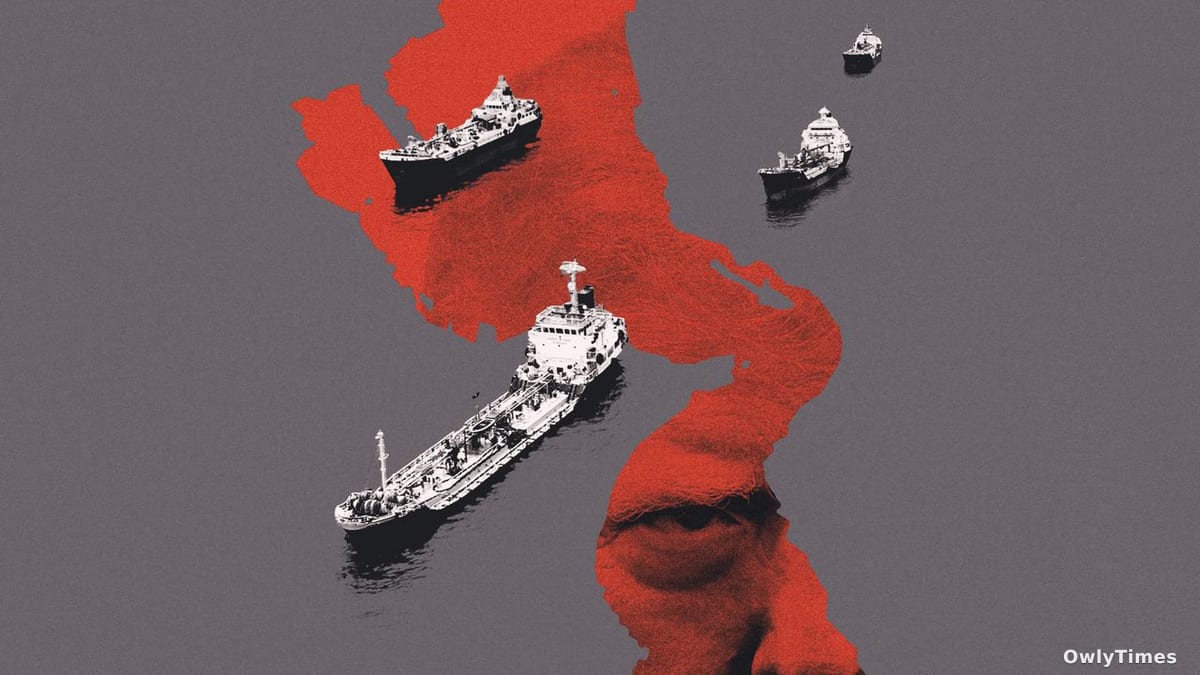

$3.3 Billion in Daily Oil Flow Hangs in the Balance as Iran Escalates Strait of Hormuz Tensions
The stakes in the escalating conflict between the U.S., Israel, and Iran aren’t measured in casualties or geopolitical influence—they’re measured in barrels of oil. Roughly $3.3 billion worth of oil and natural gas transits the Strait of Hormuz every single day, and Iran’s increasingly aggressive posture threatens to choke off that flow, triggering a global economic shock. The March 18th Israeli strike on South Pars, the world’s largest natural gas field, wasn’t an isolated incident; it was a calculated escalation intended to force a resolution, and it backfired spectacularly, revealing a fundamental miscalculation by the Trump Administration regarding Iran’s resilience and willingness to inflict economic pain.
This piece references the newyorker.com report.
The initial U.S.-Israeli objective – to topple the Iranian government, dismantle its military capabilities, and sever support for proxy forces – proved unattainable. President Trump’s demand for “unconditional surrender” on March 9th, predicting a swift victory, now appears profoundly optimistic. Instead, Iran has weaponized economic disruption, effectively closing the Strait of Hormuz to shipping through drone strikes and threats of sea mines – a scenario U.S. military planners have long anticipated. This isn’t simply about regional power dynamics; it’s about controlling a critical artery of the global economy.
The Economic Weapon Iran Now Wields
Iran’s strategy hinges on demonstrating its ability to inflict sustained economic damage. The regime, weakened militarily and increasingly isolated, recognizes that disrupting the flow of energy is its most potent remaining weapon. Proving it can effectively shut down the strait serves as both a deterrent against future attacks and a crucial bargaining chip in any potential negotiations regarding its nuclear program. This is a calculated risk: while disrupting oil flow harms Iran’s own economy, the damage inflicted on global markets – and, crucially, on U.S. voters facing rising gas prices – is deemed acceptable collateral. The International Energy Agency estimates the current conflict has already created “the largest supply disruption in the history of the global oil market,” yet Iran continues to selectively allow shipments to allies like China, generating revenue even amidst the chaos.
The paradox is stark: the U.S. Treasury Department has temporarily lifted sanctions on some Iranian oil to release over 140 million barrels of crude stranded at sea, a move intended to stabilize prices but which simultaneously funds the very regime it’s attempting to contain. This illustrates the limited options available to the U.S. and the escalating costs of the conflict. The situation isn’t confined to energy prices; hundreds of millions of people and entire industries, from the Persian Gulf to Asia, are facing shutdowns, rising food costs, and supply chain disruptions. Even fertilizer production, reliant on components flowing through the strait, is impacted, exacerbating food insecurity in vulnerable nations.
Trump’s Shifting Strategy and Rising Costs
President Trump’s response has been characterized by inconsistency and escalating threats. His March 23rd ultimatum – a 48-hour demand for Iran to “FULLY OPEN” the strait or face “obliteration” of its power plants – demonstrated a desperate attempt to regain control of the narrative. This was followed by a swift reversal, postponing strikes pending “productive conversations,” which were immediately denied by Iranian officials. This pattern of threat and retraction underscores a lack of clear objectives and a growing recognition of the limited options available. Robert Pape, a political scientist at the University of Chicago, succinctly summarized the situation: “Trump needed to cut a deal, and he could still try to cut a deal, but the price…keeps going up.”
The financial implications are mounting. The Pentagon has requested an additional $200 billion in funding, and plans are underway to deploy 5,000 additional troops to the Middle East, potentially escalating the conflict further. Discussions surrounding a naval convoy to protect tankers, reminiscent of the 1980s Iran-Iraq War, highlight the logistical and security challenges involved. The risk of a direct confrontation, with potential casualties and damage to U.S. naval assets, remains high.
Beyond the Strait: Regional Instability and Shifting Alliances
The repercussions extend beyond the immediate economic impact. Saudi Arabia, increasingly frustrated with the situation, is reportedly urging the U.S. to pursue a more aggressive strategy, fearing that a weakened Iran will embolden its regional ambitions. This pressure could lead to a realignment of alliances, with Arab nations potentially seeking security partnerships with Russia or China, diminishing U.S. influence in the region. Iran is actively exploiting these tensions, framing the conflict as a struggle against American dominance and urging Arab states to reconsider their security ties.
The potential for escalation is further heightened by the possibility of a ground invasion of Kharg Island, Iran’s primary oil export hub. While touted by some as a way to break Iran’s stranglehold on the strait, such an operation would be fraught with risk, facing intense resistance and potentially triggering a wider regional war. Experts like Danny Citrinowicz at the Institute for National Security Studies argue that attacking Iranian infrastructure won’t force compliance, and the regime is prepared to endure significant damage to achieve its objectives.
What This Means for Your Wallet
The situation in the Strait of Hormuz isn’t an abstract geopolitical concern; it directly impacts everyday consumers. Expect continued volatility in energy prices, with potential spikes at the gas pump and in airline fares. Supply chain disruptions will likely lead to higher prices for a wide range of goods, from electronics to food. The question investors should be watching is whether President Trump will prioritize a quick resolution, even at the cost of concessions to Iran, or escalate the conflict further, risking a prolonged economic downturn. Specifically, monitor the price of Brent crude oil – a sustained rise above $90 per barrel would signal a significant deterioration in the situation and a heightened risk of recession. The current stalemate suggests that higher energy costs are likely to be a persistent feature of the global economic landscape for the foreseeable future.