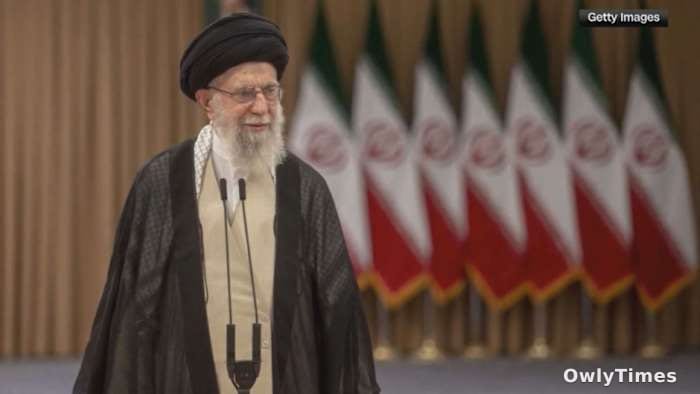

The flurry of reports surrounding the health – and now, alleged death – of Ali Khamenei isn’t about confirming a man’s mortality; it’s a calculated risk assessment by regional powers and Washington, D.C. regarding the stability of a nuclear-capable state. The immediate question isn’t if there will be a succession, but how that succession will be managed, and whether the existing power structures will be challenged from within. The current uncertainty isn’t a bug in the system, it’s a feature – a period of vulnerability that competing factions within Iran will exploit to consolidate their positions.
The Succession Calculus: Beyond the Figurehead
The international focus on Khamenei as a singular leader obscures the reality of Iran’s dual-track power structure. While the Supreme Leader holds ultimate authority, the real levers of control are distributed between the elected President (Ebrahim Raisi), the Islamic Revolutionary Guard Corps (IRGC), and a network of influential clerics and economic interests. Any transition, even one orchestrated to appear seamless, will necessitate a renegotiation of power among these groups. Dr. Kelsey P. Norman’s warning of “chaos and instability” isn’t a prediction of spontaneous uprising, but a recognition that this internal struggle could spill over into regional proxy conflicts and renewed nuclear brinkmanship. The IRGC, with its vast economic holdings – estimated at upwards of $30 billion, representing a significant portion of Iran’s GDP – is particularly well-positioned to influence the outcome. This isn’t simply about ideology; it’s about protecting entrenched economic interests.
Reporting from click2houston.com informs this analysis.
Echoes of 1989: A Controlled Transition?
The current situation bears a striking resemblance to the 1989 succession following the death of Ayatollah Ruhollah Khomeini. Then, as now, the immediate concern was preventing a power vacuum. The Assembly of Experts, a body of clerics tasked with selecting the Supreme Leader, swiftly appointed Khamenei, then-President, despite his relatively lower religious standing compared to Khomeini. This move, while ensuring continuity, also signaled a shift in the locus of power – from the charismatic authority of a revolutionary figure to the institutional authority of the presidency and, increasingly, the IRGC. The key difference today is the significantly weakened state of the Iranian economy, down 27% since 2018 according to World Bank data, and the widespread public discontent fueled by sanctions and political repression. This economic pressure creates a far more volatile environment than existed in 1989, making a “controlled” transition considerably more difficult.
The View From Tehran: Fear of Perpetuation
The anxieties expressed by former Tehran resident Arshia Kian – the fear of a “nightmare scenario” where power merely reshuffles without substantive change – are crucial. Kian’s perspective highlights the deep-seated cynicism within Iranian society regarding the possibility of genuine reform. Decades of authoritarian rule have eroded trust in the political system, and the prospect of another hardliner consolidating power is a very real concern. This isn’t simply a matter of political preference; it’s a question of basic survival for many Iranians, particularly those who have been targeted by the regime’s security apparatus. The 2022 protests, brutally suppressed with an estimated 500+ deaths and thousands of arrests, demonstrated the regime’s willingness to use force to maintain control. The current uncertainty, therefore, isn’t viewed with hope by many inside Iran, but with apprehension.
Who Benefits and Who Loses?
The immediate beneficiaries of instability in Iran are likely to be regional rivals like Saudi Arabia and Israel, both of whom have long viewed Iran as a destabilizing force. A weakened Iran would allow them to expand their influence in the Middle East and potentially renegotiate regional power dynamics. The United States, while publicly advocating for a peaceful transition, will be carefully calibrating its response to avoid inadvertently strengthening hardliners. However, a chaotic transition could also disrupt global oil supplies, driving up prices and impacting the global economy. The biggest losers, of course, are the Iranian people, who face the prospect of continued repression and economic hardship. The potential for a more open and democratic Iran, while tantalizing, remains a distant prospect.
The political chess move to watch next isn’t the official announcement of Khamenei’s death (if it hasn’t already occurred), but the composition of the committee tasked with organizing the funeral. Who is included – and, crucially, who is excluded – will provide a clear indication of which factions are ascendant and what kind of succession is being engineered. Will the IRGC dominate the proceedings, signaling a further consolidation of its power? Or will there be a concerted effort to include more moderate voices, suggesting a willingness to address public discontent? The answer to that question will determine the trajectory of Iran – and the stability of the Middle East – for years to come.