
The Khamenei Succession: Beyond Crisis Management, a Consolidation of Power
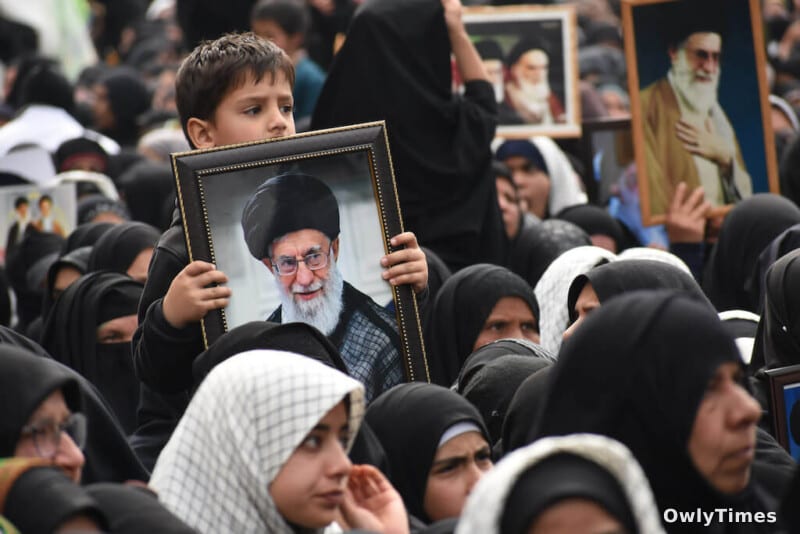
The reported death of Ali Khamenei during recent attacks isn’t simply a leadership crisis for Iran; it’s a calculated opportunity for the consolidation of power within a specific faction. While the interim leadership arrangement – involving Masoud Pezeshkian and senior officials – buys time, the emerging frontrunner, Mojtaba Khamenei, represents a strategic shift away from the revolutionary ideals of the 1979 uprising and towards a dynastic structure. The speed with which Western media has focused on Mojtaba Khamenei as a leading successor isn’t driven by mere speculation, but by an understanding of the networks he’s cultivated and the interests they represent. This isn’t about filling a vacancy; it’s about securing a pre-determined outcome.
Drawn from politicstoday.org.
Mojtaba Khamenei, born in 1969, has operated largely in the shadows, a deliberate tactic that belies a long-cultivated influence. His rank as a hojatoleslam – a mid-level clerical position – is being downplayed by some as a potential obstacle, but this overlooks a crucial precedent. His father, Ali Khamenei, was also not an ayatollah when selected as Supreme Leader in 1989, demonstrating the Assembly of Experts’ willingness to adjust requirements to suit political expediency. The focus on his religious rank misses the point: Mojtaba Khamenei’s power resides not in theological stature, but in his decades-long embeddedness within Iran’s security apparatus, particularly the Islamic Revolutionary Guard Corps (IRGC). This isn’t a case of religious legitimacy being conferred; it’s a security establishment endorsing its liaison.
The narrative of Mojtaba Khamenei’s influence hinges on his wartime service in the IRGC during the 1980-1988 Iran-Iraq War. This wasn’t simply a period of military service; it was a formative experience that forged crucial relationships with figures who now occupy senior positions within Iran’s military and intelligence institutions. He functioned as a key intermediary between his father and the IRGC, a role that granted him access to strategic decision-making and cemented his position within elite networks. This is where the stakes become clear: the IRGC isn’t merely supporting a candidate; it’s protecting its access to power and ensuring the continuation of policies that benefit its economic and political interests. The allegations leveled by opponents – particularly regarding his alleged role in suppressing the 2009 Green Movement – aren’t simply accusations of brutality, but evidence of his willingness to use force to protect the established order.
The Weight of Sanctions and Alleged Financial Networks
The United States’ sanctions against Mojtaba Khamenei are more than symbolic. While verifying Western reports alleging networks connected to him control substantial financial assets remains difficult, the very fact that these allegations persist points to a perceived economic power base. This isn’t about personal wealth; it’s about control over key sectors of the Iranian economy, providing leverage within the political system. The sanctions, therefore, aren’t aimed at isolating an individual, but at disrupting a network of patronage and influence. The difficulty in verifying these claims, however, highlights a critical tension: the opacity of Iran’s financial system and the deliberate obfuscation of power structures. This lack of transparency allows for plausible deniability and complicates efforts to hold individuals accountable.
A Hereditary Succession and the Echoes of the Pahlavi Dynasty
The most significant aspect of Mojtaba Khamenei’s potential ascension is the precedent it sets: a hereditary transfer of power. Critics rightly point to the stark contrast with the anti-monarchical rhetoric of the 1979 revolution, which overthrew the Pahlavi dynasty. This isn’t a simple irony; it’s a fundamental betrayal of the revolution’s core principles. However, for segments of the conservative establishment, this isn’t a liability, but an asset. They view Mojtaba Khamenei as a guarantor of ideological continuity and a protector of strong ties with the security apparatus – precisely what they believe is needed during a period of heightened regional tensions and ongoing conflict. This reveals a deep fracture within the Iranian political landscape: a struggle between those who cling to the revolutionary ideals of social justice and popular sovereignty, and those who prioritize stability and the preservation of power, even at the cost of democratic principles.
The Assembly of Experts, tasked with appointing the Supreme Leader, is the key battleground. Composed of 88 clerics, its composition reflects the shifting balance of power within the Iranian religious establishment. While ostensibly independent, the Assembly is heavily influenced by conservative factions and the IRGC. The question isn’t whether they can choose another candidate, but whether they will, given the pressure from within the security apparatus and the potential for instability that a contested succession could unleash. The current interim arrangement serves as a pressure release valve, allowing the Assembly to assess the situation and gauge the level of public and internal opposition to Mojtaba Khamenei’s candidacy.
The political chess move to watch next isn’t a public announcement, but the subtle signaling from within the Assembly of Experts. Specifically, monitor the statements and actions of key figures known to be aligned with either the conservative or reformist factions. Will they publicly endorse Mojtaba Khamenei, or will they subtly push for an alternative candidate? The answer to that question will reveal the true extent of the IRGC’s influence and the future trajectory of the Islamic Republic.