
$30 Billion in Military Assets Hang in the Balance as Iran Prepares for “Existential War”
For nearly half a century, Iran has been preparing for conflict with the United States, and the current escalation – marked by a significant US military buildup in the Middle East and increasingly bellicose rhetoric from Washington – is bringing that preparation into sharp focus. While unable to match the US in conventional military strength, Tehran has strategically invested in asymmetric warfare capabilities designed to inflict substantial economic and geopolitical costs, potentially destabilizing the region and triggering a global downturn. The stakes are immense: roughly $30 to $40 billion in US military assets, stationed across eight to nine facilities in the region according to Secretary of State Marco Rubio, are now within range of Iranian missiles and drones.
The core of Iran’s strategy isn’t direct confrontation, but deterrence through cost imposition. This isn’t a new development; it’s a decades-long project. Even as diplomatic channels remain open, the US military’s deployment of air and naval assets signals a belief that negotiation alone may not prevent conflict. President Donald Trump’s hints at regime change and potential strikes on Iran have only amplified these concerns, pushing Tehran to assess the level of threat it faces and calibrate its response accordingly. Farzin Nadimi, a senior fellow at the Washington Institute, succinctly frames the situation: “The regime has a lot of capabilities to use if they see this as an existential war… If they see this as a final war, they might throw everything they have.”
The Arsenal: Missiles, Drones, and a Battle-Tested Network
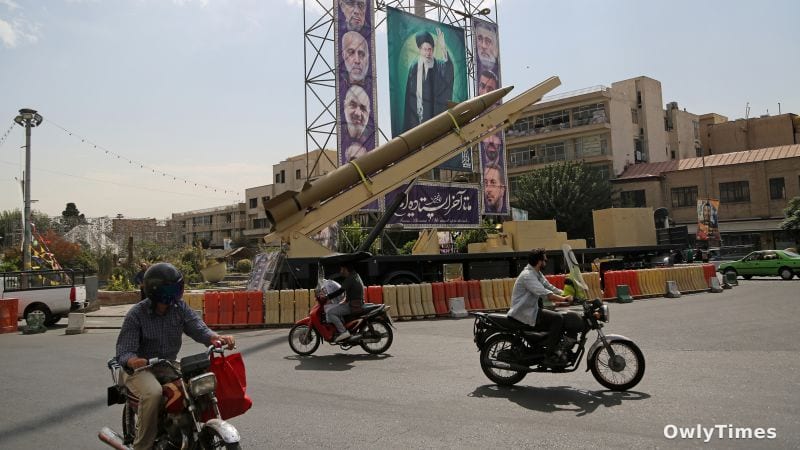
Iran’s immediate retaliatory options center on its extensive arsenal of missiles and drones. Following a retaliatory strike against Israel in June – a demonstration of its ability to bypass sophisticated air defenses – Iran has reportedly replenished its stocks. US officials acknowledge that these “battle-tested weapons,” alongside aging Russian and American fighter jets, remain a credible threat. The proliferation of Iranian drone technology, notably the Shahed suicide drone currently deployed in Ukraine, underscores its effectiveness and accessibility. Beyond quantity, Iran boasts a diverse missile portfolio, with over 20 types developed, tested, or deployed, capable of reaching targets as far as southern Europe.
See the original CNN story for the full account.
This isn’t simply about firepower; it’s about reach. The concentration of US troops in the region – between 30,000 and 40,000 personnel – makes them vulnerable. The 2019 strike on Saudi Arabian oil facilities, widely attributed to Iran, demonstrated the potential for disruption. More recently, a missile strike targeting al-Udeid Air Base in Qatar, the largest US military installation in the Middle East, followed US strikes on Iranian nuclear facilities, signaling a willingness to directly target US assets. Two US officials, speaking to CNN, confirmed that despite being outmatched in terms of technology, Iran’s capabilities complicate any potential decisive US strike.
The Proxy Network: A Regional Web of Influence
While direct attacks are a significant concern, Iran’s network of regional proxies represents another layer of complexity. Over the past two years, Israel has successfully degraded this network, limiting Iran’s ability to project power beyond its borders. However, groups like Kataeb Hezbollah and Harakat al-Nujaba in Iraq, and Hezbollah in Lebanon, have pledged to defend Iran if attacked. Abu Hussein al-Hamidawi, commander of Kataeb Hezbollah, recently called for “all-out war” in support of the Islamic Republic, highlighting the potential for a broader regional conflict.
However, the strength of these proxies is not uniform. Hezbollah, weakened by over a year of conflict with Israel, faces internal pressure for disarmament. Iraqi militias, while powerful, are constrained by the central government’s reluctance to openly support Iranian aggression. The Houthi group in Yemen, despite being targeted by both Israel and the US, remains a potent force, having already disrupted shipping in the Red Sea with attacks on Saudi Arabia, the UAE, Israel, and American vessels. Their recent video showing a burning ship, captioned “Soon,” is a stark reminder of their capabilities.
The Strait of Hormuz: Iran’s Economic Leverage
Beyond military options, Iran possesses a critical economic lever: control over the Strait of Hormuz. This narrow waterway handles over 20% of the world’s oil and a significant portion of liquefied natural gas, making it a choke point for global energy supplies. Iran has repeatedly threatened to close the strait in the event of an attack, a move experts warn could send fuel prices soaring and trigger a global recession. Umud Shokri, a Washington, D.C.-based energy strategist, describes a prolonged closure as a “dangerous scenario” that could “amplify inflation worldwide” and lead to a “realistic risk” of a global recession.
This threat isn’t merely hypothetical. Iran has historical precedent for disrupting shipping in the region, laying sea mines during the Iran-Iraq War in the 1980s and being implicated in attacks on oil tankers in 2019. The Houthis’ recent disruptions in the Bab al-Mandab Strait further demonstrate Iran’s ability to leverage its allies to inflict economic pain. As Nadimi points out, “The next war might start not in downtown Tehran, but in the Strait of Hormuz and the Persian Gulf.”
What this means for your wallet: The escalating tensions with Iran aren’t just a geopolitical concern; they directly impact energy prices and global economic stability. Watch for a potential surge in gasoline prices and increased volatility in financial markets if the situation deteriorates. Specifically, monitor the shipping rates through the Strait of Hormuz – a significant increase would be an early warning sign of impending economic disruption. The question isn’t if Iran will retaliate, but how and when, and whether that retaliation will prioritize military targets or economic leverage.