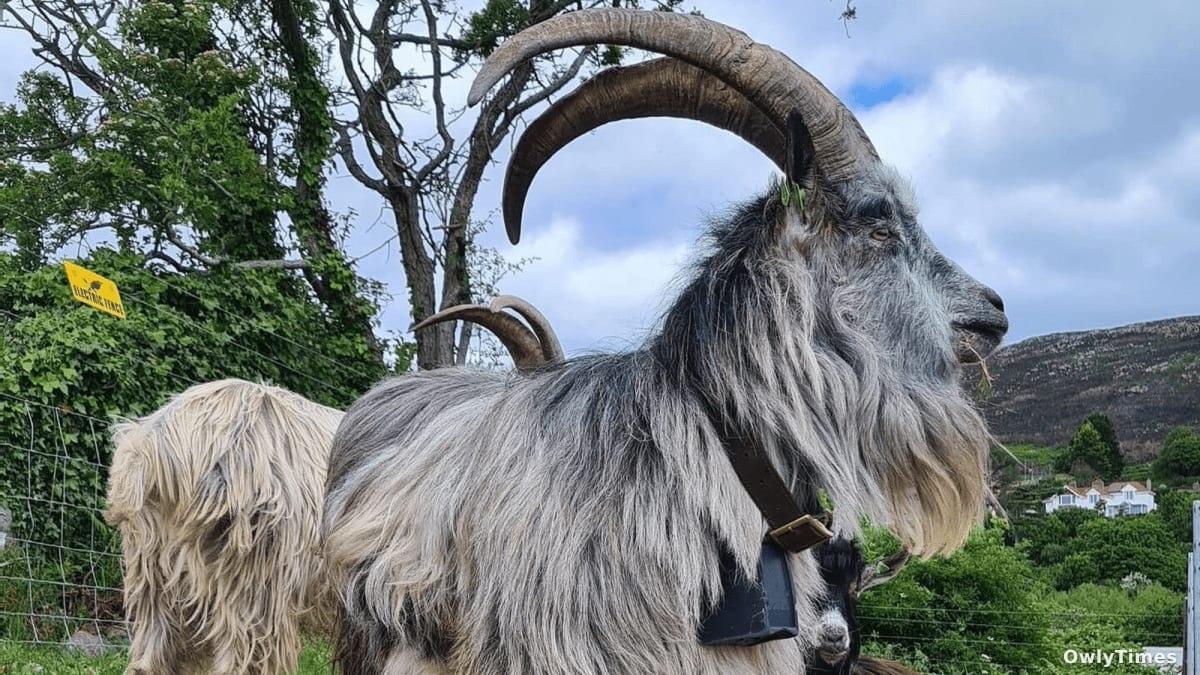

The story of the old Irish Goat isn’t simply a conservation tale; it’s a living archaeological record, and recent genetic research confirms just how deeply intertwined this animal is with Ireland’s earliest agricultural history. While headlines proclaim a 3,000-year genetic link, the nuance of the study, published in the Journal of Archaeological Science, reveals a more complex picture – one that challenges assumptions about Ireland’s past and underscores the urgency of protecting a breed facing a very recent, and human-caused, crisis. It’s not enough to say the goats are “ancient”; understanding how their genetic lineage has remained remarkably stable for millennia, and why that stability is now threatened, is crucial.
The research, led by a team from University College Dublin and Queen’s University Belfast, centered on analyzing ancient goat remains unearthed from two key Irish sites: Haughey’s Fort, a Bronze Age hillfort dating back to 1100-900 BCE in County Armagh, and the medieval town of Carrickfergus in County Antrim. Using a combination of radiocarbon dating, protein analysis (a technique called ZooMS, which identifies species by microscopic traces of collagen), and full genome sequencing, the team aimed to definitively identify goat bones – a surprisingly difficult task, as Eileen Murphy, a bioarcheologist at Queen’s University Belfast, points out: “Goats tend to get overlooked compared to sheep in the archaeological record because it is notoriously difficult to distinguish between their bones.” This inherent difficulty has likely led to an underestimation of the goat’s historical importance in Ireland.
What the team discovered was striking. The ancient goats from Haughey’s Fort represent the oldest goat remains ever identified in Ireland, and their genetic profiles showed the strongest affinity with the modern-day old Irish Goat (Capra aegagrus hircus) – the country’s only native breed. This isn’t simply a case of shared ancestry; it suggests a remarkable continuity of the same genetic lineage persisting on the island for over three millennia. Kevin Daly, a palaeogenomicist at University College Dublin, explains that “combining genetics, proteomics, and archaeological science has allowed us a glimpse of our animals hundreds and thousands of years ago—and how their descendants likely still live with us, as part of our biocultural heritage.” This continuity challenges the long-held assumption that sheep were the dominant livestock in early Ireland, with historical sources suggesting a robust trade in goat skins from ports like Carrickfergus.
However, the story isn’t solely one of unbroken tradition. The genetic analysis revealed a shift in the medieval goat populations, showing greater genetic diversity than either the ancient or modern goats. This suggests a period of increased trade and interbreeding. More concerningly, the modern old Irish Goat population exhibits clear signs of inbreeding, a direct consequence of the breed’s dramatic decline from an estimated 282,000 in 1891 to just 9,000 by 1980. This population bottleneck, driven by factors like unregulated trophy hunting and habitat loss, isn’t a feature of the breed’s long history, but a recent and damaging development. The genetic data demonstrates that the current lack of diversity is a relatively new phenomenon, not a characteristic of Irish goats throughout the ages.
Reporting from popsci.com informs this analysis.
This finding reframes the conservation challenge. It’s not simply about preserving an “ancient” breed, but about actively reversing the genetic damage caused by a recent, severe population crash. Sinead Keane of The Old Irish Goat Society emphasizes this point, stating that the research “provides powerful scientific validation of what local communities and conservationists have long believed—that the Old Irish Goat represents a living piece of our ancient heritage,” and “underscores the urgency of protecting this critically endangered breed.” The Society’s long-held beliefs are now supported by rigorous scientific evidence, but the evidence also reveals the scale of the intervention needed.
Looking ahead, researchers are now focusing on expanding the genomic dataset, analyzing remains from additional archaeological sites across Ireland. This broader analysis could reveal even more about the early history of goat domestication on the island and potentially identify previously unknown genetic variations within the breed. But beyond the academic pursuit, the critical question is whether this newfound genetic understanding will translate into effective conservation strategies. Will Ireland prioritize the genetic health of its native goat, actively managing breeding programs to address the inbreeding and restore genetic diversity? The fate of the old Irish Goat, a living link to Ireland’s prehistoric past, hinges on the answer.





