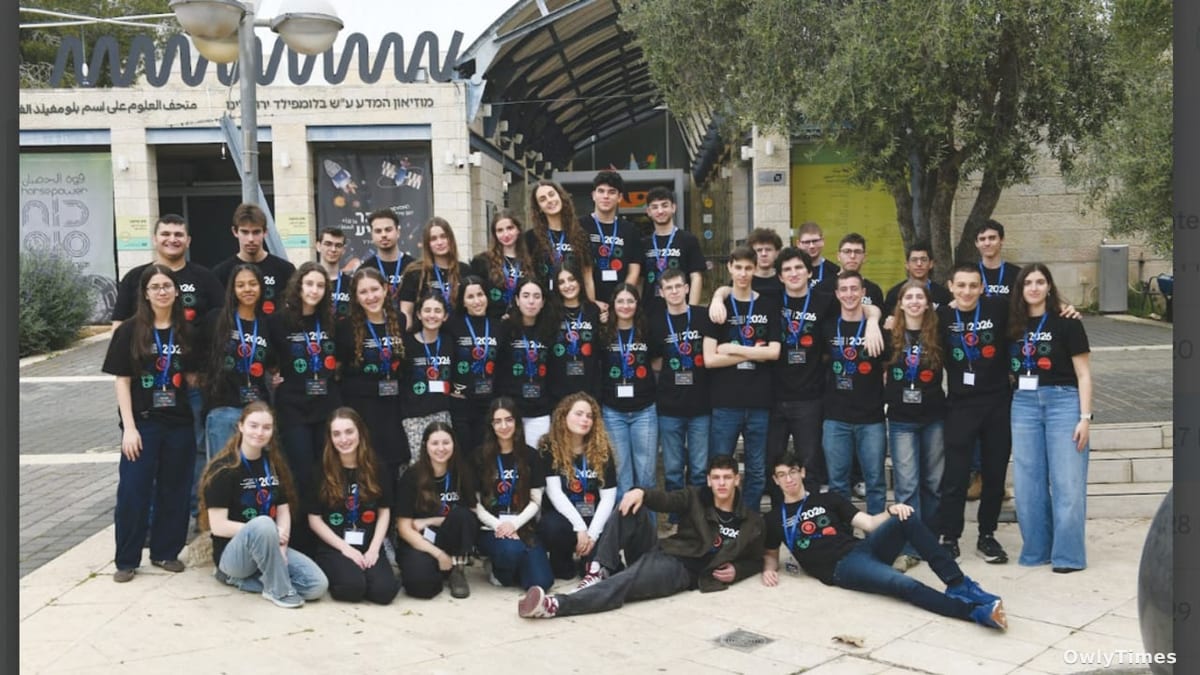

The surge in sophisticated scientific inquiry among Israeli high school students, even amidst ongoing conflict, isn’t simply a feel-good story about resilience. It’s a critical indicator of the nation’s future capacity for innovation, and a revealing case study in how external pressures – both disruptive and supportive – shape the trajectory of young researchers. The 29th annual Young Scientists and Developers competition, held beginning on Albert Einstein’s birthday, March 14th, and culminating in an awards ceremony on April 7th, 2026, demonstrates this dynamic. While headlines focus on the impressive projects themselves – from analyzing dark plasmon states in silver nano-bowties to AI-driven speech therapy – the underlying question is whether Israel can sustain this momentum when students face unprecedented academic disruption and emotional strain.
This year’s competition, managed by the Bloomfield Science Museum in Jerusalem with support from organizations like Israel Aerospace Industries and the Mandel Foundation, saw 53 students present 46 projects spanning diverse fields. Unusually, the judges, led by Hanoch Gutfreund, president of the Hebrew University of Jerusalem and a leading expert in theoretical physics, awarded two first prizes. Liam Rokach of the De Shalit High School in Rehovot took top honors for his work on nanoscale optics, while Eyal Zakesh from Modi’in’s Municipal High School was recognized for investigating the impact of light on hydrogen production in microalgae. These aren’t projects easily summarized; they represent genuine, advanced research typically associated with graduate-level work. However, the significance isn’t solely in the complexity of the science, but in the fact that this level of inquiry is flourishing within the Israeli high school system. It’s a testament to the dedication of students and educators, and a strategic investment in future STEM leadership.
This article draws on reporting from jpost.com.
The competition’s continuation during and after the recent conflict is particularly noteworthy. Rony Ben-Chaim, director of the Bloomfield Science Museum, emphasized the team’s commitment to maintaining the competition even during the COVID-19 pandemic, adapting to virtual presentations when necessary. This year, some students presented via Zoom due to ongoing security concerns, yet participation remained strong. This adaptability speaks to a deeply ingrained value placed on scientific education, but Ben-Chaim also voiced a crucial concern: the potential for future disruption. She fears that the academic setbacks caused by the war, coupled with the pressure of matriculation exams, could discourage students from pursuing long-term research projects in the coming years. This isn’t merely speculation; similar declines were observed following the pandemic, highlighting the fragility of sustained engagement in independent scientific work.
Beyond the top prizes, several projects addressed pressing societal needs. Tom Ashkenazi’s “Milah,” an AI-powered game for children with speech impediments, directly tackles the shortage of speech therapists, particularly in underserved areas. The system, utilizing Hebrew speech recognition and ChatGPT, offers accessible and personalized practice. Similarly, Ofir Mana’s research on the impact of the war on student academic self-efficacy provides valuable data for educators and policymakers navigating the challenges of learning during crisis. And Yarin Dantes’ “DeFOG” system, designed to detect motion stagnation in Parkinson’s disease patients, offers a potentially life-changing solution for a condition affecting half of those diagnosed. These projects demonstrate a clear trend: young Israeli scientists aren’t just pursuing abstract knowledge, they’re actively seeking to solve real-world problems. The fact that these solutions are being developed by high school students, and not solely in university labs or corporate R&D departments, is a powerful signal.
However, it’s crucial to acknowledge the limitations of drawing broad conclusions from a single competition. The 53 participating students represent a small fraction of the overall Israeli high school population. The projects were self-selected, meaning they likely reflect the interests and resources available to a particularly motivated and privileged group. Furthermore, the awards themselves, ranging from NIS 10,000 to NIS 3,000, while significant, may not fully offset the opportunity cost of dedicating months to research instead of focusing solely on matriculation. The long-term impact of these projects – whether they lead to further research, patents, or commercialization – remains to be seen.
The next critical step is to track the academic and career paths of these students. Will they continue to pursue STEM fields at the university level? Will the challenges they’ve faced – the pandemic, the war, the pressure of exams – deter them, or will it fuel their determination? More importantly, what systemic changes can be implemented to support and encourage broader participation in scientific research among all Israeli high school students, regardless of their socioeconomic background or geographic location? The success of the Young Scientists and Developers competition isn’t just about celebrating individual achievements; it’s about building a sustainable pipeline of scientific talent for the future. We should be watching for a potential decline in submissions next year, and specifically, whether students from schools in areas directly impacted by the conflict are proportionally represented. That will be the true test of whether this year’s resilience can be replicated.





