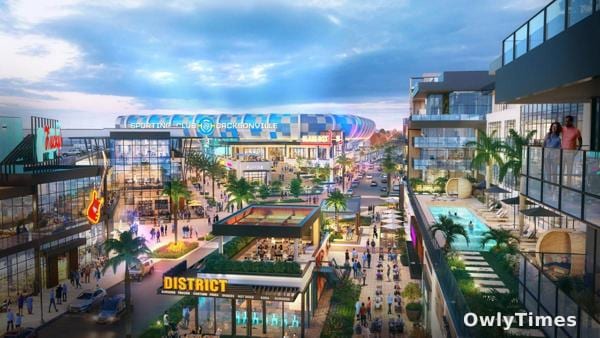

The late afternoon sun cast long shadows across the Town Center office parks Monday as Ricky Caplin, Majority Owner and Chairman of Sporting Club Jacksonville, unveiled not just a stadium site, but a vision. It wasn’t the fanfare of a groundbreaking, but a quiet assertion – a map pinpointing a future where Jacksonville isn’t just on the map for sports, but actively defining the landscape of modern entertainment districts. This isn’t simply about soccer; it’s about a city grappling with its identity, and a deliberate attempt to build a communal heart in a region often defined by sprawl.
Beyond the Pitch: Jacksonville’s Search for a Center
For decades, Jacksonville has struggled with a sense of central identity. The largest city by landmass in the continental US, it’s a collection of neighborhoods connected by highways, lacking the concentrated urban core that fosters organic community. The Sporting JAX project, slated for a currently undefined space in the Town Center area, directly addresses this. The promise of a walkable, mixed-use district – integrating professional sports, hospitality, residential living, and retail – isn’t just developer speak. It’s a response to a genuine need for a place where Jacksonville residents can be, not just pass through. The economic impact, projected to be substantial with construction jobs, expanded hospitality, and increased tourism, is significant, but the real gamble is on creating a cultural anchor. In 2023, Florida saw $132 billion in tourism revenue, but much of that was concentrated in established destinations like Orlando and Miami. Sporting JAX aims to carve out a piece of that pie, but more importantly, to cultivate a local audience that sustains the district year-round.
This article draws on reporting from uslsoccer.com.
A League of Its Own: The USL’s Growing Influence
The announcement isn’t happening in a vacuum. It’s part of a larger trend within the USL (United Soccer League), which is strategically investing in purpose-built stadiums as a catalyst for urban revitalization. Justin Papadakis, Deputy CEO & Chief Real Estate Officer of USL, emphasized that successful clubs are “anchored by stadiums that serve not only professional athletes but youth players, families, and neighborhoods.” This is a departure from the traditional model of stadiums as isolated event spaces. The USL is betting on a more holistic approach, recognizing that a thriving sports ecosystem requires community buy-in and year-round engagement. This strategy is working; USL Championship attendance rose 11% in 2023, reaching an average of 7,644 fans per game – a figure that rivals some Major League Soccer teams. Jacksonville, with its passionate sports fanbase and growing population, is seen as a prime market for this model.
The Tebow Factor and a Commitment to Inclusion
The involvement of Tim Tebow, Owner and Board Member of Sporting JAX, adds another layer to the narrative. While his athletic career is well-documented, his commitment to Jacksonville is deeply personal. “This project is exciting to me because Jacksonville is home,” Tebow stated, highlighting a dedication to creating a space that is welcoming to all, particularly the special needs community and aspiring young athletes. This emphasis on inclusivity isn’t merely philanthropic; it’s a savvy business decision. In a society increasingly focused on social responsibility, brands and organizations that demonstrate genuine commitment to diversity and inclusion are more likely to resonate with consumers. The promise of mentorship programming and inclusive access for adaptive athletes signals a deliberate effort to build a brand that reflects the values of the community it serves.
Building More Than Bricks and Mortar
The ambition extends beyond the physical structure. Michael McNaughton, President of Sporting JAX Development Company, described the project as a “vertically oriented urban environment” designed for “long-term economic resilience and growth.” This isn’t about building another stadium; it’s about creating a self-sustaining ecosystem that attracts residents, businesses, and visitors. Rooftop activations, loft-style spaces, and green spaces are all designed to foster a vibrant atmosphere that extends beyond match days. Fred Taylor, another owner of Sporting JAX, framed the project as a source of “pride in North Florida” and a means of “expanding access to the game.” This sentiment underscores the project’s broader goal: to create a sense of belonging and opportunity for the entire region.
What remains to be seen is whether Sporting JAX can successfully navigate the complexities of large-scale development and deliver on its ambitious promises. Will the project truly become the “permanent identity” for Jacksonville that Ricky Caplin envisions, or will it become another unrealized dream in a city known for its potential? The success of this venture will hinge not just on the quality of the stadium and the surrounding amenities, but on its ability to genuinely connect with the community and become a place where Jacksonville residents feel invested – a place they can truly call their own.