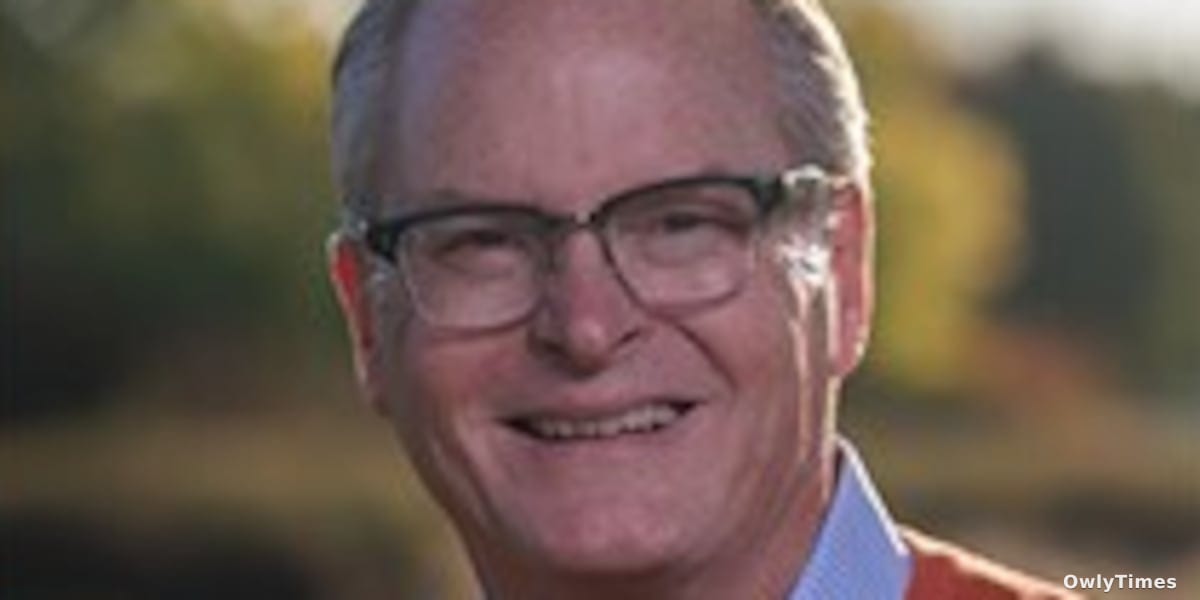

The calculus is straightforward: Adam Hamilton’s exploration of a U.S. Senate run in Kansas isn’t about a pastor suddenly desiring political office, it’s about a perceived vacuum in representing the moderate center in a state increasingly defined by partisan extremes. The announcement, made February 27th, isn’t a spontaneous decision but a carefully considered response to escalating political polarization – a condition Hamilton’s own congregation identified as their primary concern, with 71% citing it in a recent poll. This isn’t a candidate seeking power; it’s a leader assessing whether his existing platform and influence can be leveraged to address a crisis of civic discourse.
Hamilton, 61, founding pastor of Resurrection, a United Methodist Church boasting 22,000 members across nine Kansas City area locations, is taking the unusual step of a six-week “listening tour” before committing to a challenge against incumbent Republican Roger Marshall. The timing is critical. While Sharice Davids, a Democrat, is also considering a run, the field remains open, and Hamilton’s entry as an independent immediately reshapes the dynamics. Who benefits and who loses? Marshall stands to lose the mantle of representing a broad swathe of Kansans, forced to compete not just with a Democrat but with a figure uniquely positioned to appeal to disaffected moderates. Davids, meanwhile, faces a potentially split opposition, but also the risk of being overshadowed by Hamilton’s narrative of unity. The Kansas Democratic party, historically reliant on mobilizing a base, could find itself sidelined by a candidate who explicitly rejects partisan labels.
The move echoes historical instances of prominent religious figures entering politics to address perceived moral failings. Consider the rise of the Moral Majority in the 1980s, though Hamilton’s approach is fundamentally different – less about imposing a specific religious agenda and more about advocating for basic civility and common ground. The parallel isn’t in ideology, but in the identification of a societal breakdown and the belief that political action is necessary to remedy it. However, unlike the explicitly conservative agenda of the Moral Majority, Hamilton’s appeal rests on a message of inclusivity, a stance that has already proven divisive within his own denomination. The 2019 split of the United Methodist Church, with 7,600 conservative congregations departing over LGBTQ issues, demonstrates the inherent challenges in bridging deep ideological divides, even with a commitment to compromise.
Based on the original kctv5.com report.
Hamilton’s history reveals a consistent effort to navigate these tensions. His 2013 sermon at the National Prayer Service following Barack Obama’s second inauguration, titled “Compassion, Vision and Perseverance: Lessons from Moses,” underscored themes of humility and caring for the marginalized – values that resonate with a broad audience but could be interpreted as implicitly critical of the increasingly harsh rhetoric dominating contemporary politics. His church’s bi-annual campaigns promoting “Love Your Neighbor” and “Be Just. Be Kind. Be Humble.” aren’t simply feel-good slogans; they’re deliberate attempts to counteract the forces of polarization. The fact that over 1,000 churches participated in last year’s “Do Unto Others” campaign suggests a widespread desire for a different kind of political discourse.
The internal planning within Church of the Resurrection – developing scenarios for Hamilton remaining pastor, campaigning while pastoring, and even winning the Senate seat – speaks to the seriousness of this exploration. Debi Nixon, the church’s Executive Director of Donor Development, emphasizes that the institution is “built on our relentless focus, on our purpose,” and not on a single individual. This is a crucial point. Hamilton’s potential candidacy isn’t a vanity project; it’s a strategic extension of the church’s mission, albeit one fraught with risk. He has already stated he would eventually step back from his pastoral role if elected, acknowledging the demands of the office. The question isn’t simply whether Hamilton can win, but whether his campaign can maintain the integrity of his message and avoid becoming another source of division.
The political chess move to watch next isn’t Hamilton’s formal announcement, but Sharice Davids’ response. Will she aggressively pursue the Senate seat, potentially triggering a three-way race that could splinter the anti-Marshall vote? Or will she recognize the unique threat Hamilton poses and seek a way to collaborate, perhaps even deferring to his candidacy? The answer will reveal a great deal about the state of play in Kansas and the broader dynamics of American politics – specifically, whether the center can still hold in an era of relentless polarization.