
Beyond Budget Lines: What Philadelphia’s School Closures Reveal About Valuing Environmental Education
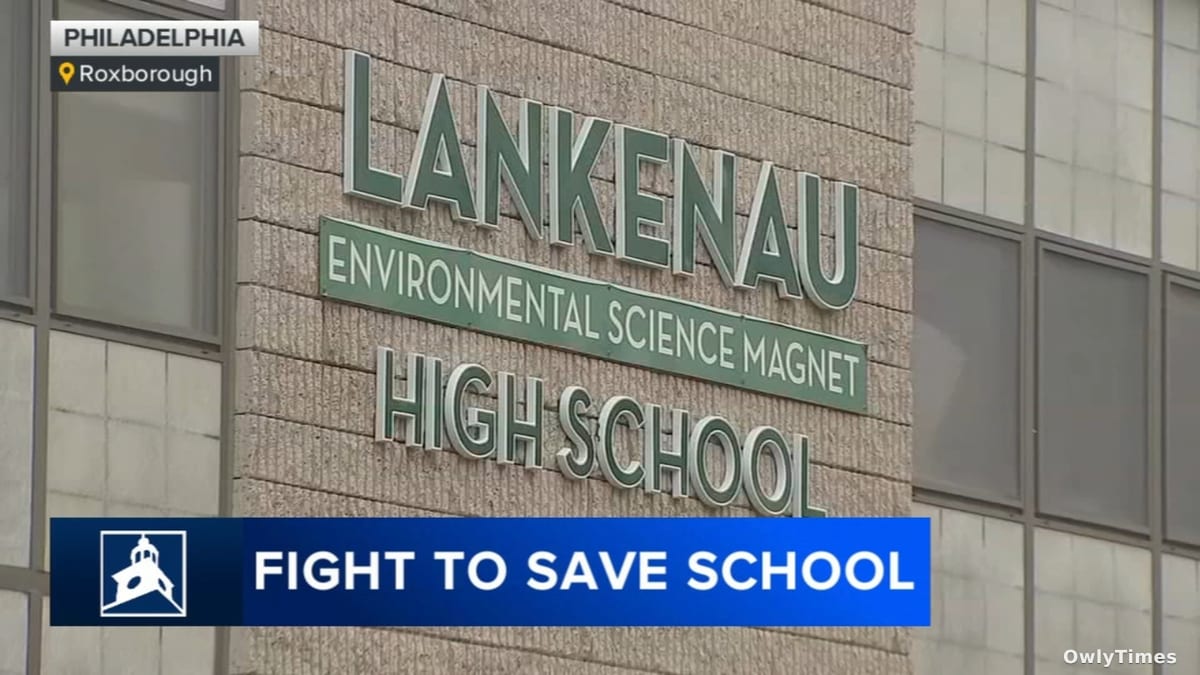
The debate over school funding is rarely about numbers on a spreadsheet; it’s about the specific learning environments those numbers sustain. This became starkly clear Wednesday at Lankenau Environmental Science High School in Philadelphia, where students, teachers, and families rallied against a proposed closure stemming from budget constraints. While headlines focus on the $18.7 billion K-12 education budget proposed by Governor Josh Shapiro, and the School District of Philadelphia’s revised $2.8 billion plan, the situation at Lankenau highlights a critical, often overlooked question: what value do we place on specialized educational programs, particularly those fostering environmental stewardship? The rally wasn’t simply a plea for money, but a defense of a unique pedagogical approach deeply intertwined with its physical surroundings.
Drawn from 6abc.com.
The School District of Philadelphia’s proposal currently lists 18 schools for closure or merger, with Lankenau among them. This decision impacts the 256 students currently enrolled, but the implications extend far beyond individual displacement. Lankenau isn’t a typical high school; its 17-acre campus borders protected natural areas and serves as a living laboratory for its curriculum. Robert Bird, a teacher at Lankenau, explained how students actively participate in ecological restoration, raising mussels and trout and releasing them into the nearby Wissahickon Creek, connecting classroom learning directly to real-world environmental monitoring. This hands-on approach, argues parent Noel Alford, is irreplaceable – “You cannot move the 400 acres of the Schuylkill Center that Lankenau uses as its lab.” The proposed reassignment to Walter B. Saul High School, while offering another agricultural focus, fundamentally alters the immersive, ecologically-focused experience Lankenau provides.
What’s often lost in discussions of school budgets is the cost of losing specialized programs. The district frames these closures as necessary adjustments to fiscal realities, but the data reveals a more complex picture. While Governor Shapiro’s proposed budget represents a significant investment in education, an 11.5% increase over the previous year, it’s crucial to understand that increased funding doesn’t automatically translate to preservation of existing programs. The district’s financial pressures stem from a confluence of factors, including declining enrollment in some areas and rising costs in others. The decision to target Lankenau, despite its unique strengths, suggests a prioritization of standardized metrics over the qualitative benefits of specialized learning environments. Morgan Thomas, a 10th grader at Lankenau, voiced a common frustration: “I feel like we have all been talking, we've all been saying our piece, but I don't think the school board hears us.” This sentiment underscores a broader concern about the disconnect between community needs and administrative decisions.
It’s important to note the limitations of interpreting this situation solely through the lens of funding. While Arthur Steinberg, president of the Philadelphia Federation of Teachers, rightly asserts that “Every dollar that goes into our schools is a dollar that is desperately needed,” simply increasing the budget doesn’t guarantee equitable distribution or preservation of programs like Lankenau’s. The district’s decision-making process, and the criteria used to evaluate school performance, are equally critical factors. Furthermore, the rally’s success hinges on the school board’s responsiveness, and Deputy Superintendent Dr. Jermaine Dawson’s encouragement for continued engagement suggests that the final decision is not yet set in stone. However, the fact that decisions haven’t been made at this time doesn’t guarantee a favorable outcome.
The situation at Lankenau serves as a microcosm of a larger debate about the future of education. As climate change and environmental degradation become increasingly pressing concerns, the need for environmental literacy is more urgent than ever. The question now is whether Philadelphia, and other cities facing similar budgetary pressures, will prioritize investments in programs that cultivate the next generation of environmental stewards, or whether they will continue to treat specialized education as a budgetary luxury. Watch for the school board’s vote on the proposed closures, and consider how the outcome reflects not just financial constraints, but a fundamental valuation of environmental education in the 21st century. Will other districts facing similar pressures follow suit, or will Lankenau’s fight inspire a broader movement to protect these vital learning environments?