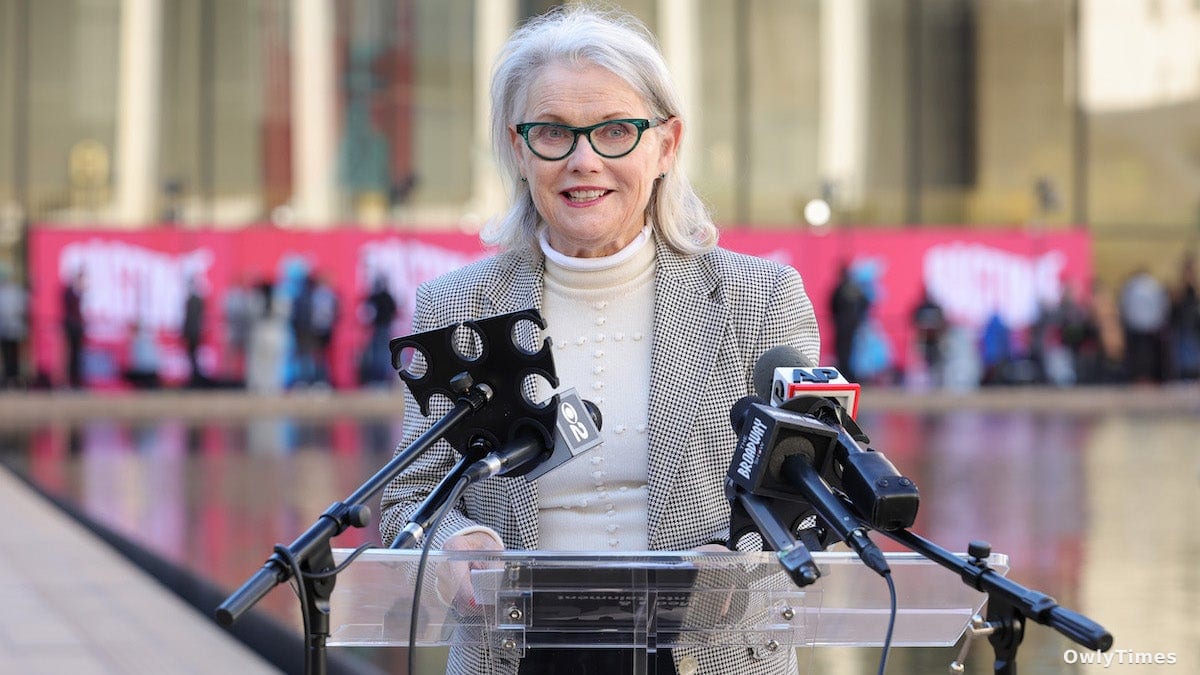

The chipped Formica of a diner booth felt cold under Pat Swinney Kaufman’s hands as she scrolled through congratulatory texts on Friday morning. Not a celebratory breakfast, but a quiet moment before officially handing the keys to the New York City creative kingdom to Rafael Espinal. It wasn’t the glamour of a red-carpet premiere, but a distinctly New York farewell – a pragmatic pause before the next act. Kaufman’s departure as Media and Entertainment Commissioner isn’t just a personnel shift; it’s a pivot point for a city desperately trying to solidify its position as the global creative capital, a title increasingly challenged by states offering more aggressive incentives and a shifting entertainment landscape.
For decades, Kaufman has been the architect of New York’s screen presence, first at the state level, then citywide. She’s the woman who understood that a tax credit wasn’t just about dollars and cents, but about convincing Hollywood – and increasingly, Atlanta, Vancouver, and London – that New York’s grit, energy, and sheer logistical complexity were worth the premium. Her legacy isn’t just the blockbusters filmed here, but the infrastructure she built to support them. But the industry she nurtured is now facing a confluence of pressures, and the transition to Espinal comes at a particularly fraught moment.
This article draws on reporting from thewrap.com.
The numbers tell a story of both resilience and vulnerability. In 2019, before the twin disruptions of COVID-19 and the writers’ and actors’ strikes, New York’s creative industries generated a staggering $150 billion in economic impact and supported over 440,000 jobs. That’s more than the entire GDP of some small nations. But the strikes, which paralyzed production for months, exposed a critical weakness: New York’s reliance on big-budget productions that can easily relocate for cheaper options. Kaufman’s focus on “stability and reliability” wasn’t just rhetoric; it was a direct response to the industry’s flightiness. The “Made in NY” initiatives – the fund for theatrical works, the video game festival attracting 15,000 attendees, even the seemingly small gesture of bringing the awards back to Gracie Mansion – were all designed to diversify the ecosystem and foster local talent, lessening the dependence on runaway productions.
Beyond the headlines about film and television, Kaufman’s tenure quietly addressed a broader cultural shift. The launch of “The NYC Field Guide” on NYC Life, featuring 17 city agencies, wasn’t just a public service announcement; it was a recognition that the creative class – the very people driving the city’s economy – were struggling with the same issues as everyone else: affordable housing, reliable transit, access to cultural experiences. The collaboration with the Theater Development Fund on “Seats on the Spectrum” demonstrated a commitment to inclusivity, acknowledging that a thriving creative scene must be accessible to all. These initiatives, while often overlooked, speak to a deeper understanding of the symbiotic relationship between the creative industries and the city’s overall quality of life.
Espinal’s appointment signals a deliberate shift in focus. His background as Executive Director of the Freelancers Union is no accident. In 2019, freelancers comprised a massive 34% – 1.3 million people – of New York City’s workforce, a significant portion concentrated within the creative industries. These are the independent filmmakers, graphic designers, musicians, and writers who are the lifeblood of the city’s artistic energy, but who often lack the protections and benefits of traditional employment. Espinal’s stated commitment to ensuring creatives can “afford to live and work here” isn’t just a promise; it’s a recognition that the future of New York’s creative economy depends on addressing the systemic challenges faced by its independent workforce. The tension here is clear: how to attract big-budget productions while simultaneously supporting the grassroots ecosystem that makes New York unique.
Kaufman leaves behind a foundation, but the real test begins now. Will Espinal be able to navigate the complex political landscape and secure the funding necessary to expand incentives for independent productions? Will he be able to address the affordability crisis that is driving creatives out of the city? And perhaps most importantly, will he be able to convince the industry that New York isn’t just a place to film, but a place to build a sustainable creative career? The question isn’t whether New York can remain a creative capital, but what kind of creative capital it will be – one dominated by Hollywood blockbusters, or one fueled by the vibrant, diverse, and fiercely independent spirit that has always defined it.