
Is the future of global warfare really being decided by a fleet of low-cost, off-the-shelf drones? We’ve been conditioned to think of military supremacy in terms of multi-billion-dollar jets and carrier strike groups, but the current escalation in the Sea of Azov suggests the real power now lies in the hands of whoever can iterate software the fastest.
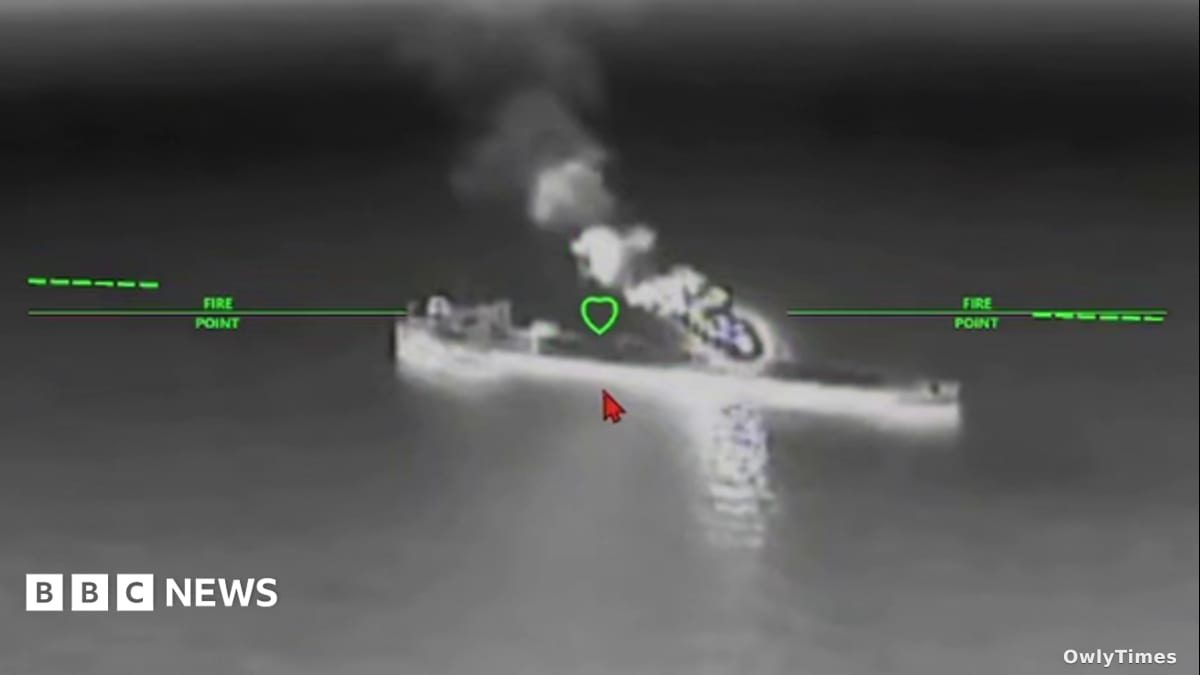
The real story here isn’t just the headline-grabbing destruction of Russian tankers—it’s the brutal efficiency of a "logistics lockdown" that is turning Russia’s own naval supply chains into a shooting gallery. According to the BBC, Ukraine’s drone force commander Robert Brovdi claims that at least 25 ships have been hit and set on fire over a four-day period ending July 9, 2026. While The Independent cites a figure of 12 tankers struck in a single night, the disparity highlights the chaos of the region; the BBC notes that Ukrainian military sources have spoken of as many as 36 total ships hit, though these numbers remain difficult to verify independently.
A Tech-Driven Chokehold
The tactics being deployed are a masterclass in asymmetric warfare. Think of it like a startup disrupting a legacy incumbent: Russia relies on a "shadow fleet" of commercial tankers to move fuel to occupied Crimea, a centralized and predictable system. Ukraine, meanwhile, is using agile, decentralized drone swarms to exploit the lack of defensive coverage from the Russian Black Sea Fleet, which, as analyst Mikhail Zvinchuk observed via the "Rybar" Telegram channel, has effectively retreated to the safety of Novorossiysk.
The impact on the average Russian citizen is becoming impossible to ignore. Al Jazeera reports that over 90% of Russian regions have introduced fuel rationing or reported shortages of petrol and diesel. While Rostov Governor Yury Slyusar initially claimed the targeted tankers were empty, ABC News confirmed that the strikes caused injuries to crew members and forced evacuations, proving that even "empty" logistics ships are becoming high-stakes targets.
The Shift in Procurement
What makes this shift so jarring for industry observers is the speed of development. As CNBC points out, Ukraine has built an innovation cycle that moves significantly faster than the legacy defense industry. By integrating machine vision and improved inertial navigation, Ukrainian forces are bypassing the jamming that typically renders standard GPS-guided hardware useless. This is why NATO is now scrambling to pivot; Secretary-General Mark Rutte has announced the "NATO Drone Edge" initiative, a $40 billion investment plan designed to catch up to the reality that drones have fundamentally altered the battlefield.
The New Rules of Engagement
The diplomatic fallout from these strikes has been as volatile as the fuel depots themselves. At the NATO summit in Ankara, U.S. President Donald Trump signaled a massive policy pivot, pledging to license Ukraine to manufacture Patriot missile interceptors domestically, according to The Independent. While Trump described the drone campaign as an "escalation that can help lead to an end," the Kremlin continues to frame the attacks as dangerous strikes on critical energy infrastructure, with spokesman Dmitry Peskov warning that such pressure will only prolong the conflict.
If you’re wondering what happens next, watch the "logistics lockdown" closely. As the fuel shortages bite deeper into the Russian interior—with strikes reaching as far as Ufa and Omsk—the next measurable signal will be the sustainability of Russian industrial output. If Moscow cannot secure its maritime and refinery supply lines, the "social unrest" predicted by analysts becomes a mathematical probability rather than a political hope. Expect the next major trigger to be the upcoming data on Russian fuel export volumes; if those numbers drop further, the "special military operation" will face a logistical wall that no amount of traditional military hardware can climb.