
Is your smartphone an open gateway to the digital world, or is it merely a velvet-lined enclosure for a single company’s garden? The persistent tension between Google’s vision of an "open" ecosystem and the legal reality of its market dominance suggests that the answer depends entirely on which court—or which continent—you ask.
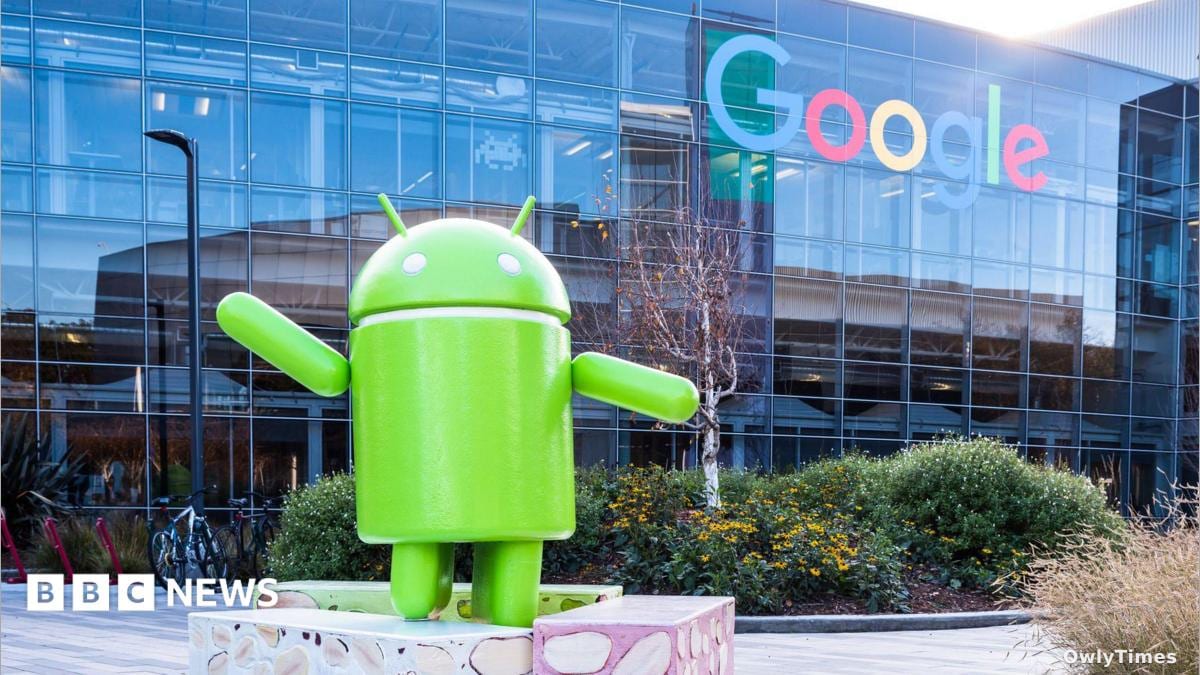
The real story here isn't just about the endless legal ping-pong in European courtrooms; it's about the fundamental way Google bundles its influence into the devices we carry every day. According to the BBC, Europe’s top court has officially dismissed an appeal from the tech giant, forcing it to pay a €4.1 billion fine for using its Android operating system to stifle competition. This ruling marks the end of a long-running saga concerning how Google leveraged its dominance to cement its search engine and Chrome browser as the default choices for millions of handset users.
The European Commission’s case, which dates back to 2018, hinged on three specific tactics: requiring manufacturers to pre-install Google Search and Chrome to access the Play Store, paying manufacturers for exclusivity, and blocking "forked" versions of Android. While Google’s chief executive Sundar Pichai argued at the time that these decisions rejected the business model that keeps Android free and open, the court disagreed. Interestingly, the scale of this penalty is significant but still pales in comparison to the bizarre, theoretical two undecillion rouble fine imposed by a Russian court in October 2024, an amount that exceeds total global GDP.
This legal friction highlights a recurring theme: Google’s aggressive expansion into new arenas often triggers a regulatory backlash that frames its "innovation" as "anticompetitive behavior." We see this pattern repeated across its portfolio. As the BBC notes, the company has faced a series of massive penalties, including a €2.4 billion fine in September 2024 for shopping-comparison abuses and a €2.95 billion fine in September 2025 regarding its advertising practices.
Despite these legal headwinds, the company is pivoting hard toward an AI-centric future, attempting to embed its tools into everything from high-stakes coding environments to mainstream entertainment. In a move that highlights this pivot, Sony Pictures Networks India has partnered with Google to integrate Gemini into the Hindi-language version of Kaun Banega Crorepati, the long-running adaptation of Who Wants to Be a Millionaire?, as reported by Variety. The integration aims to turn the AI into a "knowledge companion" for contestants and viewers, moving the tech beyond the browser and into the living room.
However, the internal performance of this AI remains a moving target. While Google pushes Gemini into the public consciousness, its technical performance in specialized tasks is proving inconsistent. Ars Technica reports that in the updated Android Bench—a tool Google itself created to test how AI handles app development—Gemini 3.1 Pro has slipped to fifth place. It is currently being outperformed by rivals like GPT 5.4, Claude Sonnet 5, and the current leader, Claude Fable 5, which boasts an 84.5 percent accuracy rate.
The next inflection point for the company isn't just another courtroom verdict; it is the upcoming shift in how users interact with these AI agents in their daily routines. Watch the engagement metrics for the new season of Kaun Banega Crorepati—if the integration of Gemini successfully drives user participation, Google will likely double down on "AI-as-a-service" partnerships to bypass the scrutiny currently being applied to its search and mobile businesses.