
The Lunar Chill: How Permanently Shadowed Craters Could Revolutionize Precision Timing
The pursuit of increasingly precise timekeeping isn’t confined to Earth-based laboratories anymore. A new proposal suggests that the moon’s most inhospitable environments – the permanently shadowed craters near its poles – could offer the ideal conditions for building an ultrastable laser, potentially surpassing the capabilities of any terrestrial counterpart. This isn’t simply about achieving a new record for laser stability; it’s about laying the groundwork for a more reliable and coordinated future of lunar exploration, and even potentially enhancing our measurement capabilities back on Earth. The core question driving this research isn’t if we can build a better laser, but where we can build one that fundamentally benefits both space-based and terrestrial applications.
Based on the original newscientist.com report.
Ultrastable lasers are foundational to modern technologies demanding extreme accuracy in timing and navigation. These devices function by meticulously controlling the path of a light beam within a resonant cavity, typically formed by two highly reflective mirrors. The precision hinges on maintaining a constant distance between these mirrors – any expansion or contraction disrupts the laser’s coherence, the synchronized alignment of its light waves. Current terrestrial lasers combat this by employing vacuums, cryogenic cooling, and vibration isolation. However, these measures are expensive and complex, and still yield coherence times measured in seconds. Jun Ye and his team at JILA in Boulder, Colorado, propose a radically simpler solution: leverage the naturally occurring extreme stability of the lunar environment.
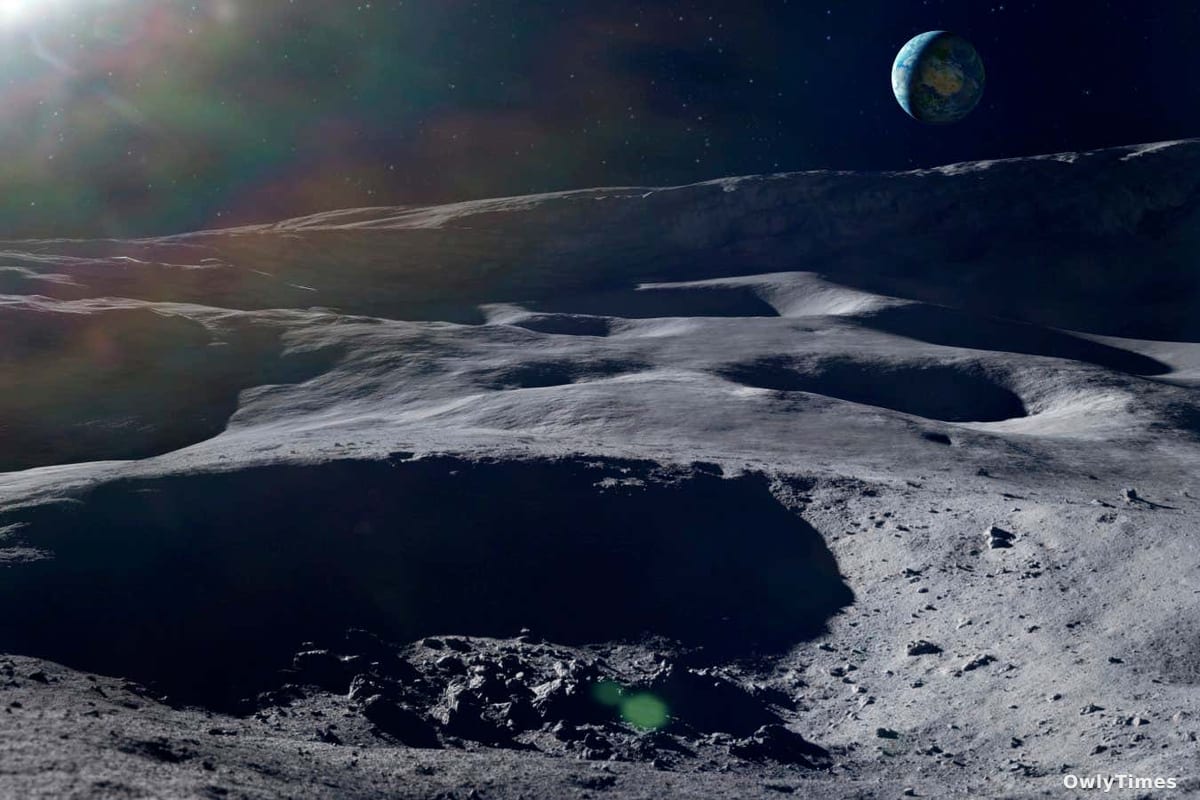
The key lies in the unique characteristics of the permanently shadowed craters at the lunar poles. Because of the moon’s slight axial tilt, these regions never receive direct sunlight, resulting in temperatures plummeting to approximately -253°C (20 kelvin) during the lunar winter. This isn’t merely cold; it’s remarkably stable cold. As Ye explains, “Even as you go through summers and winters on the moon, the temperature still varies between just 20 to 50 kelvin.” This minimal temperature fluctuation, coupled with the moon’s inherent lack of atmosphere and seismic activity, creates a naturally isolated and vibration-free environment. The JILA team envisions constructing an optical cavity – a chamber made of silicon with two mirrors – within one of these craters, mirroring designs already proven in their labs.
The potential leap in performance is significant. While the most advanced terrestrial optical cavity lasers maintain coherence for only a few seconds, researchers estimate a lunar-based laser could sustain coherence for at least a minute, and potentially much longer. This extended coherence isn’t just an academic curiosity. It would allow the laser to serve as a highly accurate reference point for a multitude of lunar activities. Establishing a precise lunar time standard, coordinating formations of orbiting satellites using laser-based ranging, and even improving the accuracy of lunar landing systems are all within reach. Furthermore, Ye points out that the relatively short signal travel time – just over a second for a beam to reach Earth – opens the possibility of using the lunar laser as a reference for terrestrial measurements as well.
However, it’s crucial to understand what this study doesn’t claim. Headlines proclaiming a guaranteed “perfect” laser on the moon are premature. The proposal outlines a promising concept, but significant engineering challenges remain. Simeon Barber at the Open University, UK, acknowledges the feasibility of the idea, stating, “While it will be difficult to implement, the underlying idea makes sense and could help with future moon landings.” He specifically highlights the potential to mitigate issues with vision-based landing systems, which have recently experienced difficulties due to suboptimal illumination conditions during high-latitude lunar landings. The recent struggles of lunar landers underscore the practical need for improved positioning, navigation, and timing systems.
Limitations to consider include the logistical complexities of deploying and maintaining such a delicate instrument in the harsh lunar environment. Dust mitigation, power supply, and remote operation are all substantial hurdles. The study also doesn’t address the cost implications of such a project, which would undoubtedly be considerable. Moreover, the predicted temperature stability within the craters relies on modeling; actual measurements will be necessary to confirm these projections. The long-term effects of micrometeoroid impacts on the laser’s components also remain an open question.
The next crucial step is a dedicated mission to characterize the thermal and vibrational environment within a permanently shadowed crater. This would involve deploying sensors to gather precise data, validating the theoretical models, and assessing the feasibility of constructing and operating a laser system. Beyond that, research will focus on developing radiation-hardened components and autonomous maintenance systems capable of withstanding the lunar environment. The success of this endeavor hinges not just on scientific ingenuity, but on a sustained commitment to lunar exploration and the development of the necessary infrastructure. Will future lunar missions prioritize the establishment of this ultrastable laser network, and if so, what new possibilities in space-based and terrestrial science will it unlock?