
Can exposure to world-class scientific infrastructure early in a student’s academic career fundamentally shift their trajectory toward STEM innovation? This is the core question driving the Maharashtra government’s newly minted Mukhyamantri Vidyarthi Vigyan Yatri scheme. By formalizing a pipeline that connects local science fair success to global research hubs, the state is attempting to quantify whether high-stakes educational travel can incentivize deeper scientific inquiry among students from diverse backgrounds.
A Tiered Pipeline for Scientific Engagement
The architecture of the program, officially cleared by the Cabinet on March 24, is designed as a meritocratic ladder. At the base of this pyramid, the scheme targets the taluka level, where the top six students from each of the state’s 358 talukas will be sent to regional science centers. This involves a massive cohort of 2,148 students and 20 supervisors. Depending on their geography, these students will visit institutions such as the Raman Science Centre in Nagpur, the Pimpri-Chinchwad Science Centre in Pune, or the Nehru Planetarium in Mumbai.
The second tier elevates the experience for district-level winners. Here, 180 students and eight supervisors are slated to visit the Indian Space Research Organisation (ISRO) in Bengaluru. With a budget ceiling of Rs 35,000 per person funded through District Planning and Development Committee (DPDC) allocations, this segment provides a more intimate look at national aerospace capabilities.
Scaling Up to International Research Exposure
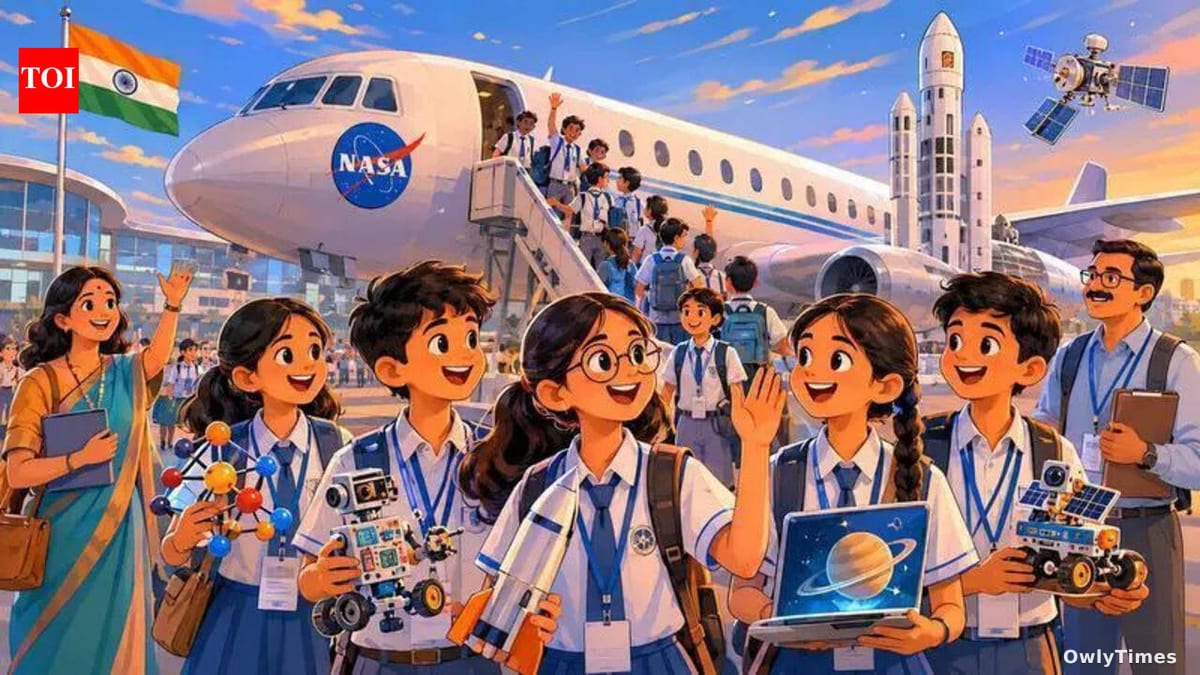
The program’s most ambitious tier—and the one capturing the most public attention—is the state-level awardee trip to the National Aeronautics and Space Administration (NASA) in the United States. The government has approved over Rs 3 crore to facilitate an eight-day educational visit for 51 students, accompanied by one male teacher, one female teacher, and two administrative officers.
While headlines have focused on the prestige of a trip to NASA, it is important to distinguish this from a simple extracurricular excursion. The selection criteria are highly structured to ensure representation. Of the 51 available seats, 17 are reserved for the primary general category and 18 for the secondary general category. To foster inclusivity, four seats each are allocated to the primary and secondary divyang (differently-abled) categories, and four each to the primary and secondary tribal categories.
Critical Considerations for Long-term Success
The initiative was the brainchild of Minister of State (Education) Pankaj Bhoyar, who proposed the plan to Chief Minister Devendra Fadnavis last year with the explicit intent of bolstering the quality of science exhibitions. While the investment is substantial, drawing from the state education budget under the State Science Education Institute, observers should consider the limitations of such programs. The primary challenge lies in the "spillover effect"—ensuring that the excitement of an eight-day trip translates into sustained classroom engagement and research output for the thousands of students who participate at the taluka and district levels, rather than just the small group traveling abroad.
Furthermore, the selection process, which will be managed by a committee chaired by the Director of the State Council of Educational Research and Training (SCERT), Pune, will face the scrutiny of balancing academic performance with equitable access. The success of this policy will not be measured by the photos taken at NASA, but by the longitudinal data regarding how many of these 2,148 initial participants pursue advanced STEM degrees over the next decade. The next reading of participation numbers and subsequent science exhibition enrollment rates will show whether this tiered incentive model effectively raises the baseline for scientific literacy across the state.