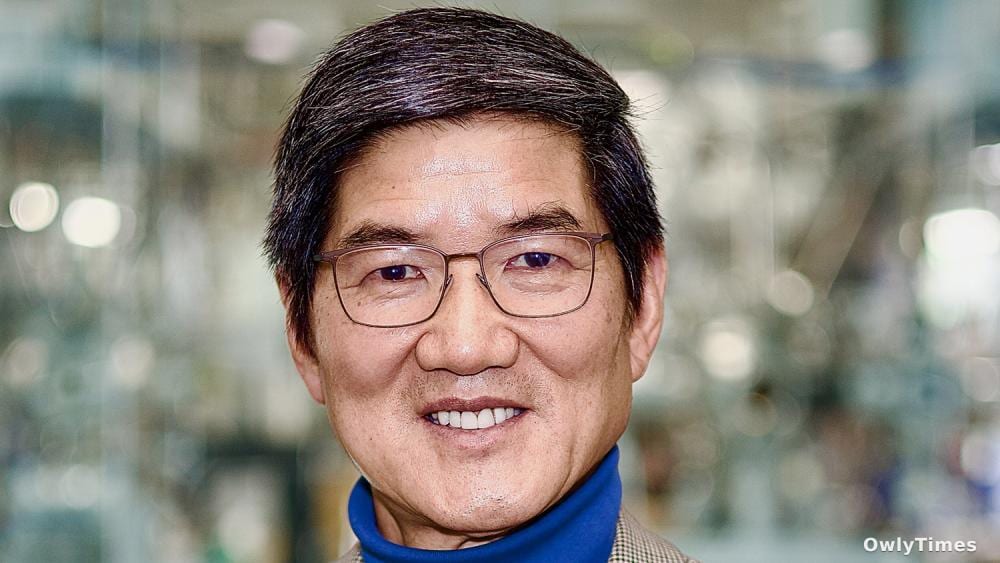

How do we measure the true impact of a lifetime spent at the intersection of materials science, physics, and mathematics? For academic institutions, the answer often lies in recognizing the individuals whose theoretical frameworks define how we understand the physical world. Long-Qing Chen, the Hamer Professor of Materials Science and Engineering at Penn State, has been named an Evan Pugh University Professor, a distinction that highlights the vital role of foundational research in shaping the university’s global reputation.
The Weight of Academic Recognition
The Evan Pugh University Professor title is not a routine administrative promotion. Established in 1960 and named for the university’s founding president, it has been granted to only 84 faculty members in its 66-year history. This select group represents the pinnacle of research and creative activity at the institution. Chen, who joined the faculty in 1992, is one of five individuals to receive the honor in 2026.
While headlines often focus on the prestige of such titles, the selection criteria offer a more rigorous look at what is being measured. Candidates must be acknowledged as national and international leaders in their fields, with the award functioning as a recognition of their cumulative influence on both their discipline and the university’s institutional quality. For Chen, this honor also marks a milestone for his home department; he is the 11th professor from the College of Earth and Mineral Sciences to receive the designation. Lee Kump, the John Leone Dean in the College of Earth and Mineral Sciences, noted that the award reflects Chen’s multifaceted role as a researcher, instructor, and community contributor.
Bridging Theory and Application
Chen’s work is centered in computational mesoscale materials science, a field that seeks to understand how the internal structure of materials changes over time. He is primarily credited with pioneering phase-field models, which allow scientists to predict complex phenomena such as grain growth in polycrystalline materials and domain evolution in ferroelectric materials. These models are not just abstract math; they provide a predictive lens for energy materials, quantum materials, and structural metallic alloys.
The data surrounding his career impact is substantial. According to Google Scholar, Chen’s publications have accumulated more than 110,000 citations, resulting in an h-index of 155. This metric, which balances the number of papers published with the number of times those papers have been cited, suggests a consistent and high-level contribution to the field. He is also recognized as a Clarivate Highly-Cited Researcher in both materials science and physics, underscoring the interdisciplinary reach of his work.
Limitations of Academic Metrics
It is important to view these citation-based metrics with a critical eye. While an h-index of 155 is an indicator of profound influence, bibliometric data is a lagging indicator of success. It captures the historical resonance of a researcher's work rather than the immediate utility of their most recent experiments. Furthermore, the collaborative nature of materials science means that these figures are the product of extensive teamwork, involving postdoctoral scholars and students. Chen himself emphasized this, stating that the recognition reflects the efforts of those he has worked with and his collaborators within and beyond Penn State.
Moving Toward New Material Frontiers
The next phase of this research will continue to rely on the evolution of phase-field modeling as computing power increases. As Chen continues his tenure at Penn State—where he holds professorships in engineering science and mechanics, mathematics, and physics—the trajectory of his work will likely be measured by the practical adoption of his models in the design of next-generation energy materials. The ongoing relevance of his work, as outlined in his textbook, “Thermodynamic Equilibrium and Stability of Materials,” will be tested by the next reading of material innovation benchmarks, specifically in how effectively his theoretical frameworks translate into stable, functional quantum and structural materials.