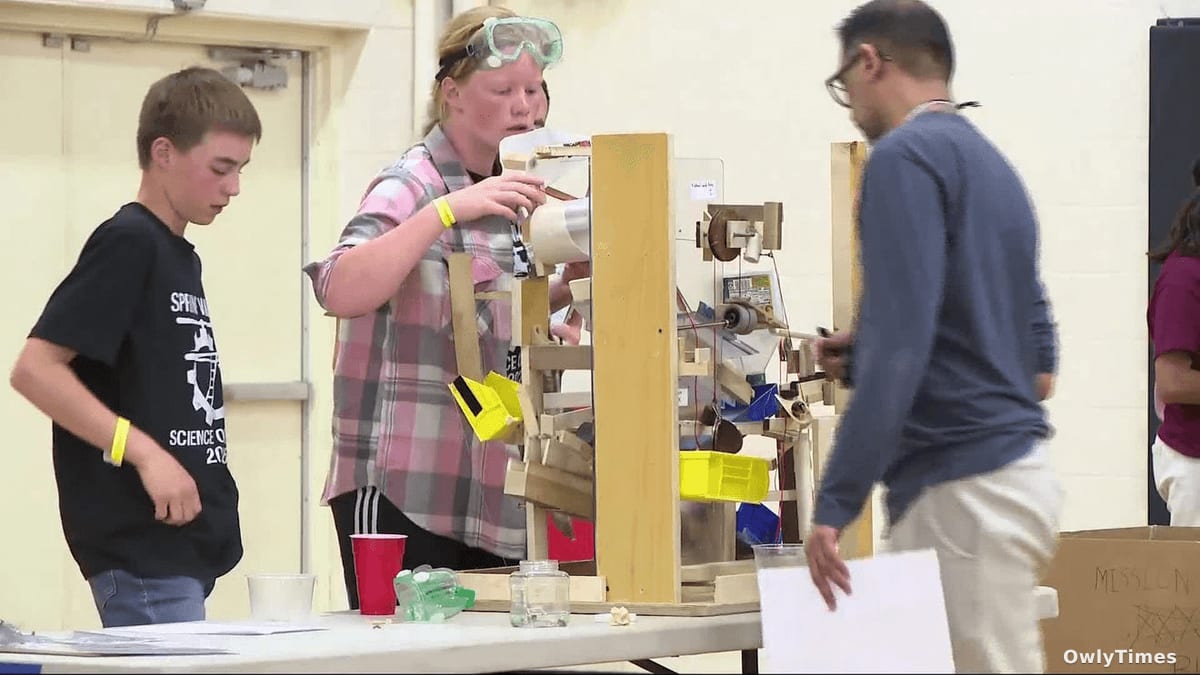

How do we bridge the gap between abstract textbook theories and the practical, high-stakes application of scientific inquiry? For many students, the answer lies in moving beyond the classroom to test their intuition against complex, real-world constraints. This past weekend, the campus of Penn State Altoona served as a laboratory for this exact question, hosting more than 1,000 middle and high school students from across Pennsylvania for the state’s Science Olympiad tournament.
Bridging Classroom Theory and Applied Engineering
The tournament, held on Saturday, April 26, 2026, featured 72 teams tasked with navigating dozens of events across the spectrum of science, technology, engineering, and math. While the general public often views such competitions as simple extracurricular displays, the methodology involved here is designed to mirror professional research environments. Students were required to participate in structured problem-solving, ranging from the technical analysis of mock crime scenes to the iterative design and testing of engineered devices.
What the results of such a tournament represent is not merely a ranking of schools, but a snapshot of how the next generation of researchers approaches systemic challenges. Unlike standard examinations, these events force students to manage variables in real-time, often under strict performance constraints. By shifting the focus from rote memorization to active experimentation, the Science Olympiad functions as a pipeline for future scientific literacy.
Cultivating Academic Longevity
Corey Gracie-Griffin, the Sustainability Experience Center Director, noted the broader intent behind these rigorous exercises. "We are all super excited to see these kids and their excitement about science, right? Like that's what we're here for in Science Olympiad; we want to ignite passion for these subject areas that these kids will take into college and their careers," Gracie-Griffin said. This perspective highlights the fundamental goal of the competition: to sustain interest in STEM fields long after the event concludes.
Headlines often frame these events as simple youth sports for the academically inclined, but the structural value lies in the intensity of the curriculum. These students are engaging with professional-grade lab protocols that exceed the requirements of standard secondary education. By providing this platform, the organizers are creating an early-career socialization process where students learn to articulate scientific findings and collaborate with peers who share similar intellectual trajectories.
Limitations to Consider
While the enthusiasm at Penn State Altoona is clear, it is important to maintain a nuanced view of such extracurricular metrics. A single tournament win or loss is a poor predictor of an individual student's long-term scientific career path. The competitive nature of the Olympiad may favor those with access to superior school resources or specialized coaching, potentially masking the raw aptitude of students from underfunded districts. Furthermore, the "success" of the program is difficult to quantify until these participants actually enter the professional scientific workforce or higher education research institutions.
The Path Toward National Competition
The next phase for these students is already in motion. The top two teams from both the high school and middle school divisions are now preparing to transition from the state level to the national division. This next step will take them to USC in California this May. Whether these teams can replicate their local success on a national stage will serve as a measurable signal of how well regional STEM programs are preparing students for the increasingly competitive landscape of university-level research. The performance of these teams in California will provide a clearer picture of the depth of scientific talent currently being cultivated within the Pennsylvania school system.