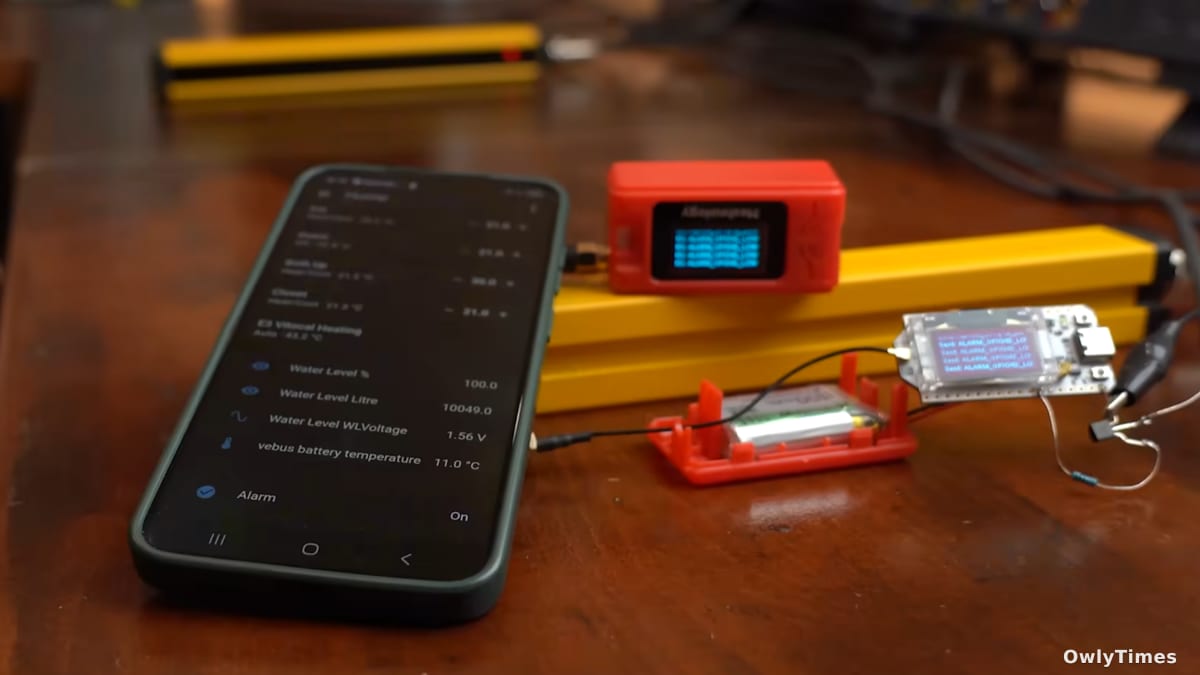

Is the future of home security… a text message? While Ring and SimpliSafe are busy selling you cloud subscriptions and AI-powered doorbell cameras, a quiet revolution is happening in the world of DIY tech, powered by a protocol called Meshtastic. It’s not about slick apps or professional monitoring; it’s about building your own resilient, off-grid communication network. And as GreatScott! recently demonstrated, it’s surprisingly effective at guarding your garden shed. The real story here isn't about a clever alarm system – it's about reclaiming control of your digital infrastructure in an age where everything is a service.
Beyond Broadband: The Appeal of Off-Grid Networks
Meshtastic isn’t trying to compete with your internet provider. In fact, it explicitly doesn’t. It’s a long-range, low-bandwidth radio protocol designed for situations where traditional connectivity fails, or simply isn’t available. Think disaster relief, remote hiking, or, in GreatScott!’s case, a shed too far from the WiFi signal. The protocol has seen a surge in popularity recently, being used for everything from city-wide mesh networks to search and rescue operations. But the core appeal is its independence. Users aren’t reliant on a central server or a corporation’s infrastructure; they build and maintain their own network. This is a direct response to the increasing anxieties around data privacy and the fragility of centralized systems.
Based on the original hackaday.com report.
Shed Security: How It Works in Practice
GreatScott!’s project is beautifully simple in its execution. He built an alarm system for his shed using an LED emitter-detector pair – essentially an infrared beam. Break the beam, and a 12V signal is triggered. This signal is then fed into a Heltec ESP32 LoRa module, which broadcasts a message over the Meshtastic network. A second module, connected to his home WiFi, receives this message and relays it to his Home Assistant server, a popular open-source home automation platform. The initial setup wasn’t without its hurdles. Integrating the Meshtastic modules with Home Assistant required some tinkering, specifically switching to the RadioLib library and an MQTT integration to ensure the alarm signal reliably reached the server. This highlights a key characteristic of DIY tech: it demands a level of technical engagement that most mainstream smart home products actively avoid.
The MQTT Bottleneck and the Power of Open Source
The fact that GreatScott! had to troubleshoot an issue with the signal passing through to Home Assistant is telling. It underscores the challenges of interoperability, even within the open-source world. The initial configuration worked for sending the alarm message, but not for receiving confirmation. This seemingly minor detail speaks to a larger tension: the promise of seamless integration often clashes with the reality of fragmented ecosystems. The solution – switching to the RadioLib library and MQTT – demonstrates the power of open-source collaboration. It wasn’t a proprietary fix from a vendor, but a community-driven solution that unlocked the system’s full potential. This is a crucial distinction. It’s not about waiting for a company to fix your problem; it’s about finding or building the solution yourself.
Why Your Neighbors Should Care
This isn’t just a hobbyist project for tech enthusiasts. The implications of Meshtastic extend far beyond garden sheds. As climate change increases the frequency of natural disasters, reliable communication networks become critical. When cell towers go down and the power grid fails, a Meshtastic network could provide a lifeline for communities. And as concerns about surveillance and data privacy grow, the ability to create a secure, independent communication channel becomes increasingly valuable. Tom Nardi’s ambitious project to connect all of New Jersey with Meshtastic, while perhaps optimistic, illustrates the potential scale of this technology. The cost of entry is low – a Heltec ESP32 LoRa module can be purchased for around $30 – making it accessible to a wide range of users.
Here’s what to watch for: over the next year, expect to see a surge in Meshtastic-based community networks popping up in areas prone to natural disasters or with limited internet access. The question isn’t if this technology will be used in emergency situations, but how quickly communities can organize and deploy these networks before the next crisis hits.