
Moolec Science’s GLASO1 Results Signal a Shift from Survival to Scalability
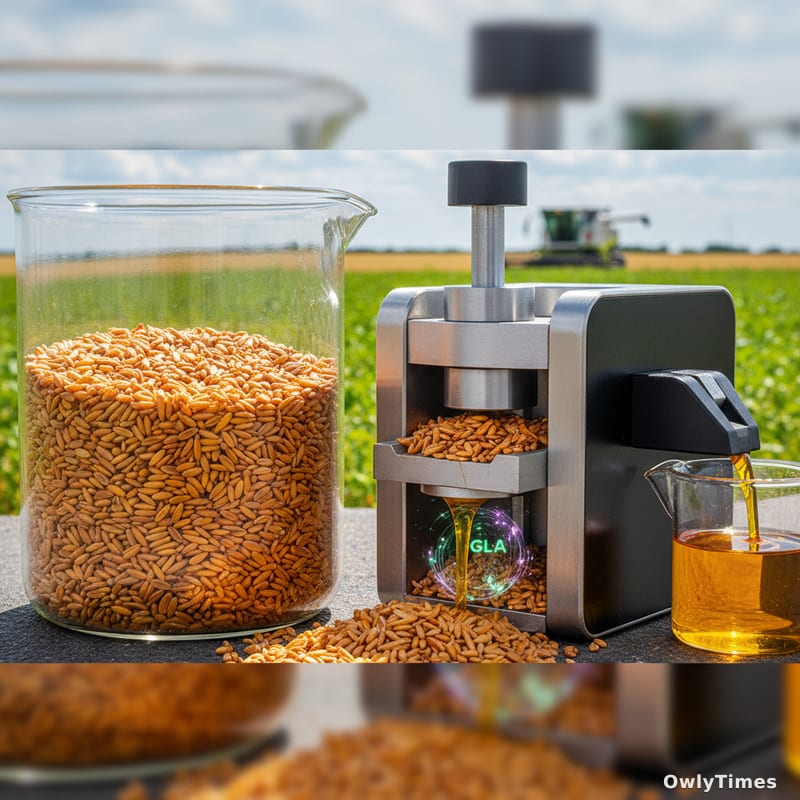
Moolec Science (NASDAQ:MLEC)’s announcement of approximately 45% GLA concentration from its 2025 U.S. GLASO1 safflower campaign isn’t just another incremental data point; it represents a pivotal moment for the company. While recent news surrounding Moolec has been dominated by battles for Nasdaq listing compliance and complex financial maneuvers, this operational milestone signifies a crucial transition – from a company focused on staying public to one demonstrating its potential for commercial viability. The 57% year-over-year yield increase, reaching ~2,200 lbs/acre across 1,100 acres, validates the core technology and suggests a pathway toward sustainable, large-scale production of gamma-linolenic acid (GLA), a valuable functional lipid. This is a narrative shift investors should pay close attention to.
This article draws on reporting from stocktitan.net.
Background & Context: A History of Hurdles
Moolec’s journey has been anything but smooth. Over the past several months, the company has been largely defined by its struggles to meet Nasdaq’s listing requirements. A December 31, 2025, deficiency notice regarding stockholders’ equity triggered a series of actions, including a 15-for-1 share consolidation on January 5, 2026. Subsequent “derecognition gains” – roughly $91.0M, $5.2M, and $4.6M – provided temporary relief, securing a panel exception and continued listing through June 29, 2026, subject to ongoing compliance. This period was characterized by reactive measures designed to avoid delisting, overshadowing the underlying technology. The GLASO1 results, however, represent a departure from this defensive posture. Moolec is pivoting from simply existing as a public entity to actively building a commercially viable business. This is a pattern shift, as the last five tracked events showed price moves aligned with regulatory/compliance tone.
Decoding the Significance of 45% GLA Concentration
The reported 45% GLA concentration is significant for several reasons. GLA is a functional lipid increasingly sought after in the nutrition and dietary supplement markets, prized for its potential health benefits. Moolec’s claim that this concentration “places it among the highest-performing GLA-producing platforms reported at commercial scale” is a bold statement, and requires further independent verification. However, even if slightly conservative, it positions the company favorably within a growing market. Crucially, the successful crushing process confirms compatibility with existing U.S. agricultural and processing infrastructure. This is a critical de-risking factor. Many innovative agricultural technologies falter not because of the plant science itself, but because of the challenges in scaling production and integrating it into established supply chains. Moolec appears to have overcome this hurdle, at least at the crushing stage. The relatively low trading volume (17,117 shares vs. a 20-day average of 881,313) suggests the market hasn’t fully priced in this positive development, potentially presenting an opportunity for informed investors.
What This Means for Stakeholders
The implications of these results extend beyond Moolec’s stock price. For consumers, successful scaling of GLA production could lead to more affordable and accessible supplements with potential health benefits. For the agricultural industry, it demonstrates the potential of “molecular farming” – using genetically engineered plants as bio-factories – to create new revenue streams and diversify crop production. For investors, the results offer a glimmer of hope that Moolec can deliver on its promise of scalable, sustainable protein solutions. However, the company still faces significant challenges. The Nasdaq listing remains precarious, and the ability to translate these agricultural metrics into consistent revenue is far from guaranteed. Competitors in the functional lipid space will be closely monitoring Moolec’s progress, potentially accelerating their own research and development efforts. The company’s focus on “disciplined, execution-led growth” is a smart strategy, but it will require consistent delivery of positive results to maintain investor confidence.
Looking Ahead: From Validation to Revenue Generation
The next six months will be critical for Moolec. The company must demonstrate its ability to convert this operational success into tangible revenue. Investors should watch for updates on sales agreements with U.S.-based market participants, as well as further data on production costs and scalability. The June 29, 2026, deadline for Nasdaq compliance looms large, and any setbacks in commercialization could reignite concerns about the company’s future. Potential scenarios range from continued positive momentum, driven by increasing demand for GLA and successful expansion of the GLASO1 platform, to renewed financial struggles and potential delisting. The key question is whether Moolec can maintain its focus on execution and translate its scientific breakthroughs into a sustainable, profitable business. The GLASO1 results are a promising start, but the real test lies ahead.