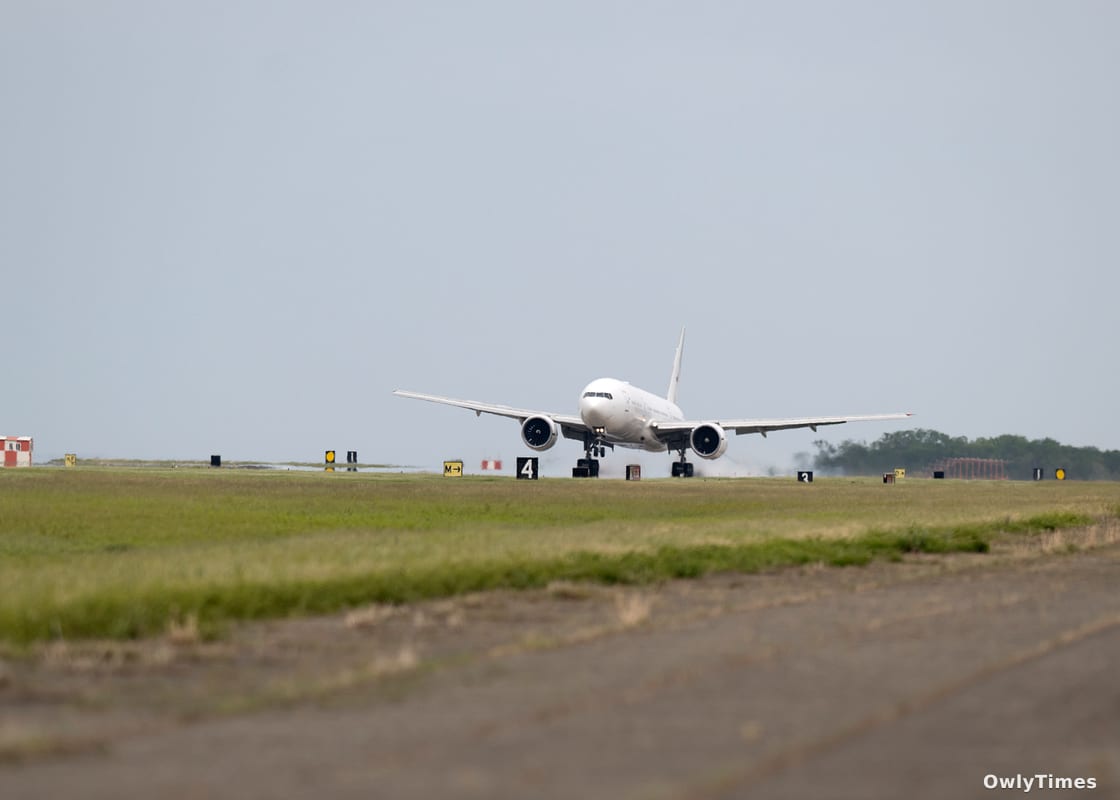

How do we maintain the continuity of critical Earth observation when a legendary platform reaches the end of its service life? This is the central challenge facing atmospheric scientists as they transition away from the retired DC-8, a four-decade stalwart of airborne research. The return of NASA’s Boeing 777 to the Langley Research Center in Hampton, Virginia, on April 22 marks the conclusion of a significant phase in this evolution, signaling a move toward a more robust, high-capacity future for climate data collection.
From Passenger Transport to Scientific Hub
Since January 2025, the aircraft has been stationed in Texas, where it underwent extensive structural modifications to move beyond its origins as a commercial passenger plane. The technical transformation required to turn a wide-body jet into a flying laboratory is profound; it is not merely a matter of clearing seats. The project, led by L3Harris Technologies in partnership with Yulista Holding, LLC, involved installing specialized research stations and complex wiring to allow payload systems to interface with sophisticated sensors, such as lidar and infrared imaging spectrometers.
While headlines often highlight the sheer size of the new platform, the true scientific utility lies in the modifications made to the fuselage. By enlarging cabin windows and installing open portals on the underside of the aircraft, engineers have created a modular environment capable of hosting a diverse array of remote-sensing instruments. This infrastructure will allow researchers to carry 75,000 pounds of scientific equipment—a substantial increase in payload capacity—enabling longer, more complex experiments.
Expanding the Research Envelope
The 777 represents a significant jump in operational scale. With the ability to accommodate between 50 and 100 operators and remain aloft for up to 18 hours, the aircraft effectively doubles the logistical reach of previous platforms. Kirsten Boogaard, the NASA 777 program manager at Langley, notes that this capacity is not just about raw numbers but about the ability to integrate more partners and educational opportunities into a single flight mission.
However, there are limitations to consider as the agency transitions to this new fleet asset. Integrating such a high volume of disparate scientific instruments requires rigorous engineering design and validation to ensure that one sensor’s data acquisition does not interfere with another’s. Furthermore, as the aircraft enters its integration phase, the agency must balance the complexity of these new, highly sensitive systems with the need for consistent flight availability. The success of the 777 will ultimately be measured by its ability to replicate the reliability of the DC-8 while providing the expanded data resolution that modern climate modeling demands.
Mapping the Future of Winter Weather
The first true test of these modifications will occur in January 2027 with the inaugural science mission, NURTURE (North American Upstream Feature-Resolving and Tropopause Uncertainty Reconnaissance Experiment). This deployment is designed to investigate high-impact winter weather events, ranging from severe cold air outbreaks to wind and snow storms. By spanning a region that covers North America, Europe, Greenland, and the Arctic and North Atlantic Oceans, the mission aims to resolve long-standing uncertainties in tropopause behavior.
Derek Rutovic, program manager for the Airborne Science Program at NASA Headquarters, emphasizes that the 777 is intended to improve our understanding of the Earth system as a whole, rather than serving as a narrow-focus tool. As the team moves toward the NURTURE deployment, the next indicator of the program's trajectory will be the successful installation and ground-testing of the full mission payload. Watching the performance metrics of these integrated sensors during upcoming flight tests will determine if the 777 can effectively bridge the gap between satellite-based observations and localized atmospheric data, securing the next generation of climate intelligence.