
The Weight of Distance: NASA’s New Approach to Deep Space Fueling
The fundamental challenge of space travel isn’t simply getting somewhere—it’s the escalating cost of getting further. Each additional mile demands exponentially more fuel, creating a vicious cycle of weight and propulsion needs that currently limits the scope of our ambitions. While headlines often focus on new rocket designs, a quieter revolution is underway at NASA’s Glenn Research Center in Cleveland, where engineers are tackling the problem not by building bigger rockets, but by reimagining how we acquire fuel in space. The CryoFILL project, short for Cryogenic Fluid In-Situ Liquefaction for Landers, represents a significant, though often overlooked, step toward sustainable deep-space exploration.
The core idea behind CryoFILL isn’t new – utilizing resources found on other celestial bodies, a concept known as in-situ resource utilization (ISRU) – but the specific hurdle NASA is addressing is particularly complex. The Artemis program’s goal of establishing a long-term lunar presence hinges on the ability to manufacture propellant from lunar resources, specifically oxygen extracted from water ice in permanently shadowed craters. However, extracting oxygen in a gaseous state isn’t enough. Rocket engines require liquid oxygen, and maintaining that cryogenic state—below minus 300 degrees Fahrenheit—in the harsh environment of the Moon or Mars is a formidable engineering challenge. Many reports have framed this as simply “making fuel on Mars,” but the real innovation lies in the efficient liquefaction process, a step often glossed over in broader discussions of space colonization.
Evan Racine, CryoFILL project manager at NASA Glenn, succinctly captures the problem: “If you think about how much fuel your spacecraft would need to go to Mars and come home, it’s quite a lot.” The sheer volume of propellant needed for a round trip to Mars currently dictates spacecraft size and mission architecture. By producing and liquefying oxygen on the destination planet, landers could be fueled on the surface, drastically reducing the launch weight from Earth and enabling longer, more ambitious missions. This isn’t about eliminating the need for Earth-based launches, but about fundamentally altering the economic equation of deep-space travel.
Drawn from nasa.gov.
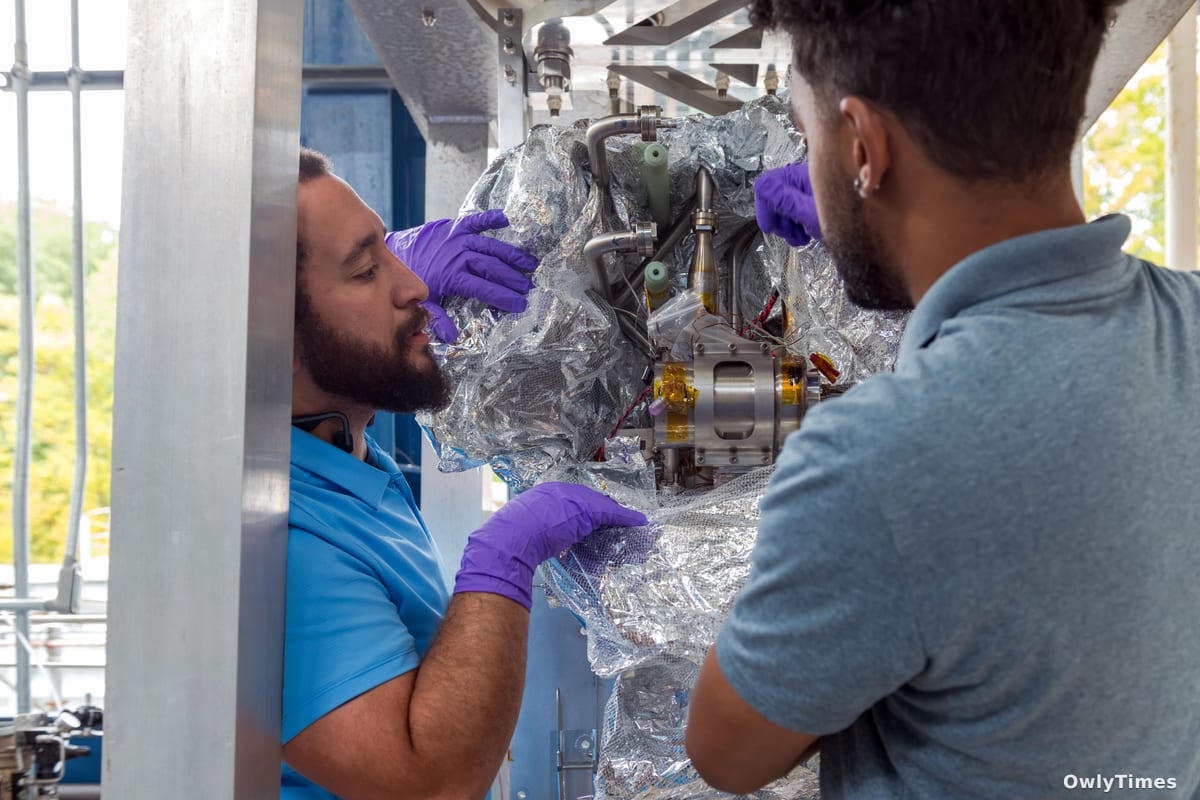
To achieve this, NASA Glenn is employing a flight-like cryocooler, developed by Creare LLC through NASA’s Small Business Innovation Research program. This isn’t a theoretical exercise; the team is actively testing hardware designed to withstand the rigors of space. As Wesley Johnson, CryoFILL lead engineer, explains, “We’re testing with flight-like hardware to see how oxygen liquefies and how the system responds to different scenarios.” These tests, running over the next three months, will focus on validating temperature models and demonstrating the scalability of the technology. The Cryogenic Fluid Management Portfolio Project, a collaborative effort between NASA Glenn and NASA’s Marshall Space Flight Center in Huntsville, Alabama, is comprised of over 20 related technology development activities, highlighting the breadth of research dedicated to cryogenic fluid management.
However, it’s crucial to acknowledge the limitations. The current tests are conducted in a controlled laboratory environment. Translating these results to the lunar or Martian surface introduces variables like dust, radiation, and fluctuating temperatures that could significantly impact performance. Furthermore, the efficiency of oxygen extraction from lunar ice remains a key uncertainty. While water ice has been confirmed, the concentration and accessibility of these deposits are still being mapped. The success of CryoFILL is therefore contingent not only on the liquefaction technology itself, but also on the broader ISRU infrastructure being developed.
The data gathered from these tests will directly inform the design of future systems intended for deployment on the Moon, Mars, and beyond. But the next critical step isn’t simply building a larger version of the current system. Researchers need to focus on automating the entire process – from oxygen extraction to liquefaction and storage – to minimize the need for human intervention. The question now isn’t just can we liquefy oxygen in space, but can we do so reliably, efficiently, and autonomously, paving the way for a truly sustainable future in deep-space exploration? The answer will determine whether we remain tethered to Earth’s resources, or unlock the potential of the solar system.