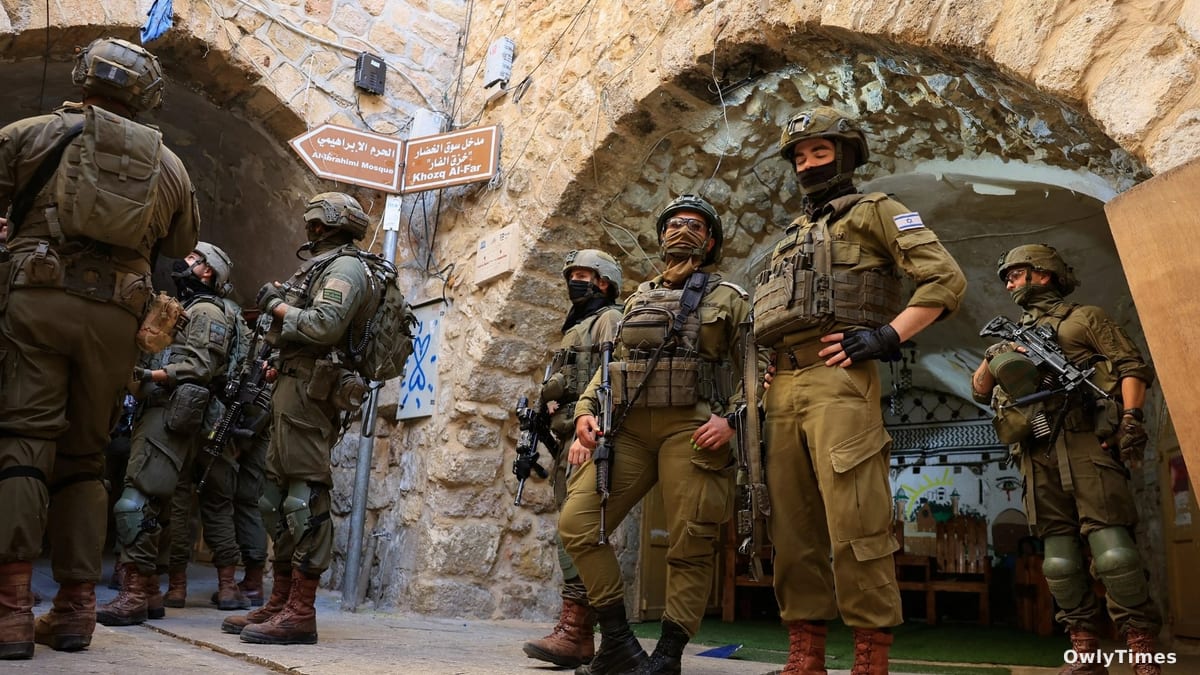

The death toll from a July 24, 2026, clash in the occupied West Bank has reached six—four Palestinians and two Israelis—triggering a sharp pivot in Israeli government policy toward rapid settlement expansion. Prime Minister Benjamin Netanyahu announced a directive for "firm measures," including the demolition of the home belonging to the individual accused of initiating the violence, as reported by Euronews.
Follow the money and the political calculus: the timing of this escalation occurs exactly three months prior to Israel’s general election. According to Al Jazeera, current opinion polls suggest Netanyahu risks losing power, and the aggressive acceleration of land grabs and new illegal outposts serves as a strategic maneuver to solidify his right-wing support base. The government’s response includes not only intensifying military raids but also formalizing the legalization of existing farm outposts, a move confirmed by both CBS News and Euronews.
The incident, which took place near the village of Tell and the settlement of Havat Gilad, remains subject to conflicting narratives. CBS News cites Walid Zidan, the head of the Tell village council, who claims the violence began when approximately 20 settlers entered the village, prompting residents to defend their homes. Conversely, the Israel Defense Forces (IDF) stated that the Israelis were hiking in the area and that a weapon was stolen from an emergency security officer by a Palestinian, leading to an exchange of fire, as noted by Euronews.
The scale of the underlying trend is significant. The United Nations Office for the Coordination of Humanitarian Affairs (OCHA) reported that as of June 11, there had been over 1,000 settler attacks resulting in property damage or casualties in 2026, displacing more than 2,200 Palestinians, according to CBS News. This average of six incidents per day represents the highest frequency on record. Furthermore, the Palestinian health ministry stated that 87 Palestinians have been killed in the West Bank throughout 2026, as reported by Euronews. These figures provide a stark benchmark against the backdrop of the broader regional conflict that began on October 7, 2023.
For investors and stakeholders, this trajectory points toward further volatility in the region’s administrative and legal frameworks. The Israeli government’s recent actions to register land as "state property" have drawn widespread condemnation from Egypt, Qatar, and Jordan, as well as joint criticism from eight Muslim-majority nations, per CBS News. With Netanyahu scheduled to meet with President Trump in Washington next week, the immediate takeaway for those monitoring the market is the heightened risk of international sanctions, similar to the measures enacted by the European Union in May 2026 against specific settlers, as cited by Euronews. Increased diplomatic friction and potential trade instability remain the primary signals to watch as the regional security situation shifts.