
Is our modern obsession with "smart" living blinding us to the fact that we’re currently failing at the most basic survival metric: keeping the temperature at a level where humans don’t expire?
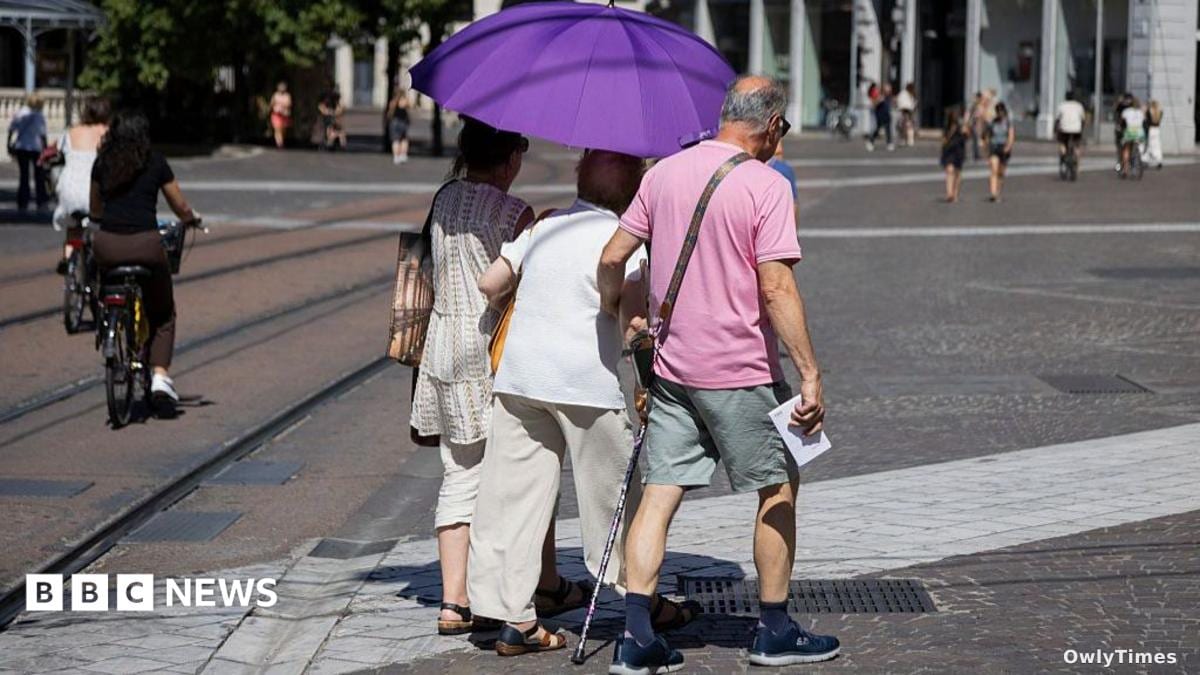
The real story here isn’t just that Europe had a hot summer—it’s that we are witnessing a systemic breakdown of public health infrastructure in the face of a climate that is fundamentally changing. While headlines often focus on travel delays or ruined vacations, the data from this past June reveals a much grimmer reality. According to the BBC, France recorded 2,025 excess deaths during the final week of June alone, a figure that The Guardian confirms represents a 29.1% surge compared to the previous week.
To understand the scale of this, think of it like a massive server farm suffering a cascading power failure: once the cooling systems reach their limit, the hardware begins to fail in predictable, rapid succession. In France, the Paris region saw mortality spike by 62%, as reported by both the BBC and The Guardian. While The Independent cites a preliminary estimate of 1,000 deaths from earlier in the month, the updated tallies from public health authorities show that initial counts were, as is often the case with climate-related crises, significant underestimates.
A Continental Crisis Beyond Borders
The human cost wasn't confined to French borders. The Guardian reports that Belgium suffered roughly 1,200 excess deaths, with 530 of those victims aged 85 or older. Meanwhile, the BBC notes that Dutch authorities confirmed approximately 480 excess deaths. While sources like The Independent focus on the impact to travelers—mentioning that 40 drowning deaths in France were linked to the heatwave—the broader tragedy is that the infrastructure, from electrical grids in Brittany to the Acropolis in Greece, is simply not optimized for these thermal loads.
The Myth of the "One-Off" Heatwave
Tech analysts love to talk about "Black Swan" events, but the science suggests these heatwaves are becoming the new baseline. The Guardian highlights that climatologists from the World Weather Attribution group state these temperatures would have been "virtually impossible" without the influence of climate change. We are effectively running a legacy operating system on hardware that has been overclocked to the point of melting. On June 29, Switzerland’s Rhône Glacier experienced a "Glacier Loss Day," where meltwater was produced at a rate equivalent to filling an Olympic-sized swimming pool every six seconds, according to Matthias Huss of Glacier Monitoring Switzerland, as cited by The Guardian.
The Precarious Path Forward
For the average user, the takeaway isn't to stop traveling, but to stop assuming that the environment is a constant. We are moving into a period where "extreme" is the new average, and our reliance on reactive, rather than proactive, infrastructure will be tested repeatedly. The BBC reports that Météo-France has already issued red alerts for forest fires, with 8,700 hectares burned as of the last update from Prime Minister Sebastien Lecornu.
The next measurable signal of this ongoing crisis will be the government-mandated state of alert in Portugal, which is currently set to expire at midnight this Tuesday. Watch that deadline; if the heat persists, we can expect a scramble for resources that will make current supply chain disruptions look like a minor software glitch.