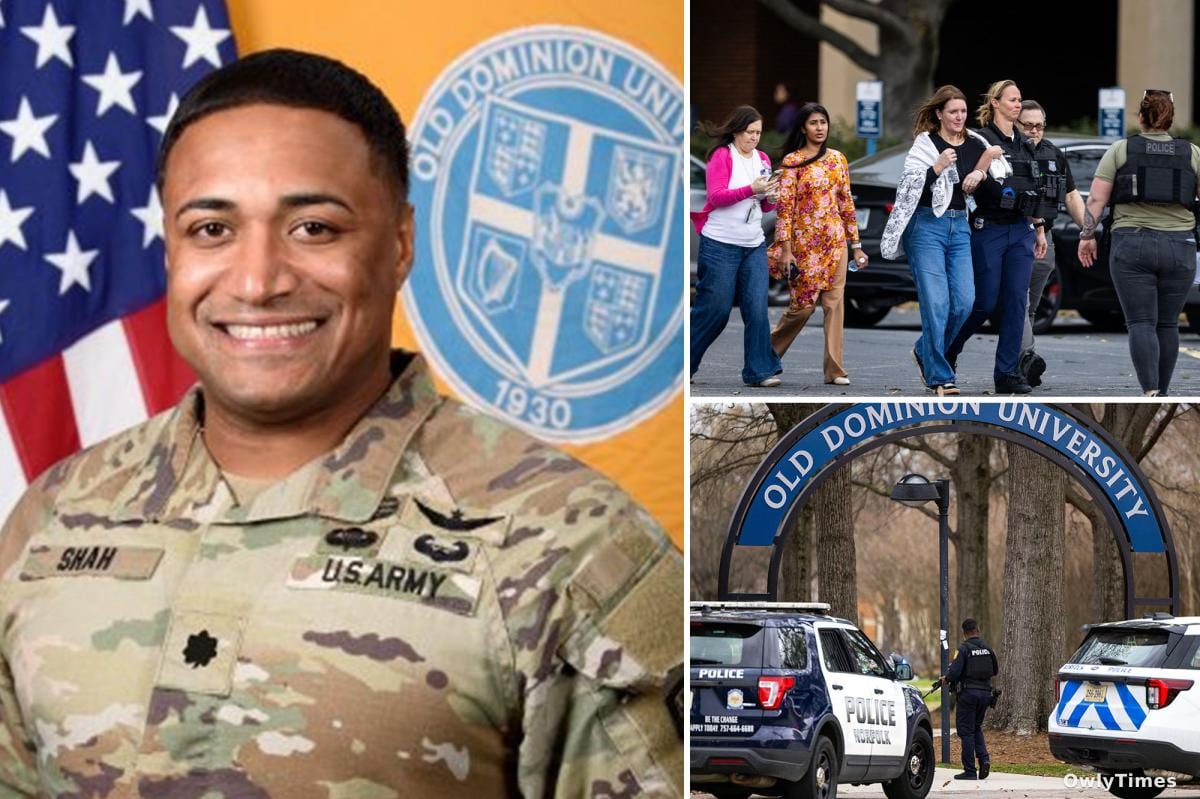

The narrative surrounding the shooting at Old Dominion University on Thursday often frames the event as a tragic, isolated incident of terrorism. However, focusing solely on the extremist ideology of the perpetrator, Mohamed Bailor Jalloh, obscures a more unsettling reality: the specific targeting of a ROTC training exercise by a former member of the Virginia National Guard, and the implications this holds for assessing risk within the military community itself. The question isn’t simply that an ISIS supporter committed an act of violence, but where and against whom that violence was directed, and what vulnerabilities that reveals.
Lieutenant Colonel (LTC) Brandon Shah, chair of Old Dominion University’s military science department, was fatally shot while leading an ROTC course. His record, meticulously detailed in his university biography, speaks to a lifetime of dedicated service – enlisting in 2003, deployments supporting Operation Iraqi Freedom, Operation Enduring Freedom, and Atlantic Resolve, over 1,200 flight hours logged across three aircraft, and a collection of 17 military awards including the Air Medal of Valor. This wasn’t a random victim; Shah represented the very institution Jalloh once belonged to, and seemingly, actively sought to harm. Reports indicate Jalloh, after specifically asking if the class was ROTC, only began firing after receiving confirmation. This detail, confirmed by law enforcement sources to The Post, elevates the incident beyond a generalized act of terror and points to a deliberate targeting.
The connection between shooter and victim extends beyond shared military affiliation. Jalloh was honorably discharged from the Virginia National Guard in April 2015, a mere day before completing six years of service. While the Guard has stated they have no information regarding Shah, the fact that both men were part of the same organization raises critical questions about screening processes and the potential for radicalization within the ranks. The Department of Justice records detail Jalloh’s descent into ISIS ideology following his departure from the National Guard, his admiration for figures like Anwar al-Awlaki, and even his expressed desire to emulate the 2009 Fort Hood shooting. This wasn’t a sudden conversion; it was a process unfolding over years, even while he was ostensibly a member of a uniformed service.
Source material: the New York Post.
The immediate aftermath has been marked by grief and remembrance. Former colleague Jason Fedish described Shah as a “charmer” and “all-around stud,” emphasizing the camaraderie inherent in military life. Virginia Governor Abigail Spangberger lauded Shah’s dedication to service and leadership, highlighting his role in inspiring future generations of military leaders. These tributes, while heartfelt, shouldn’t overshadow the need for rigorous investigation into the circumstances that allowed a convicted ISIS supporter to not only be released from prison – having served 11 years for attempting to provide material support to ISIS – but to also be in a position to carry out another attack. The fact that students, including one armed with a knife, were able to subdue Jalloh before further harm could be inflicted is a testament to their courage, but doesn’t negate the systemic failures that contributed to the situation.
Limitations to Consider
It’s crucial to acknowledge the limitations of the information currently available. The FBI investigation, led by Special Agent Dominique Evans, is ongoing, and definitive answers regarding Jalloh’s motivations and planning remain elusive. While sources suggest a targeted attack, official confirmation is pending. Furthermore, the focus on Jalloh’s radicalization shouldn’t detract from the broader issue of gun violence and the accessibility of firearms, even for individuals with a history of extremist activity. The fact that Jalloh attempted to purchase high-powered weapons upon his return to the US, and ultimately carried out the attack with a firearm, underscores this point.
The Question of Post-Release Monitoring
The case also highlights a critical gap in post-release monitoring of individuals convicted of terrorism-related offenses. Jalloh served his sentence, was released, and yet retained the capacity – and apparently, the intent – to commit another act of violence. This raises the question of whether current rehabilitation programs are sufficient, and whether more robust surveillance and support systems are needed to mitigate the risk of recidivism. The timeframe between Jalloh’s 2015 discharge from the National Guard and his 2017 conviction for ISIS support is also significant. What, if any, monitoring occurred during those two years? Were there any red flags that were missed? These are questions that demand answers.
The tragedy at Old Dominion University isn’t simply a story about terrorism; it’s a story about the complexities of radicalization, the challenges of reintegrating former offenders into society, and the potential for vulnerabilities within the military community. As the investigation unfolds, the focus should not only be on understanding Jalloh’s actions, but on identifying the systemic failures that allowed him to carry them out. The critical question moving forward is this: what changes will be implemented to prevent a similar tragedy from occurring, and will those changes address the potential for radicalization within the institutions tasked with defending our nation?