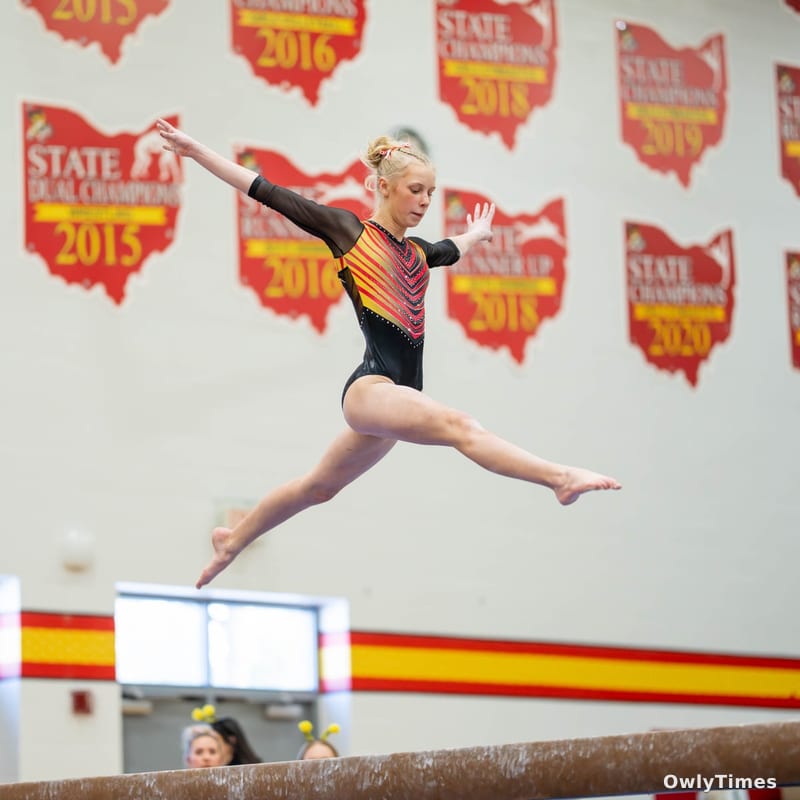

The air in the gymnasium crackled with a tension that had little to do with chalk dust and tumbling mats. For Rachel Kirin and Kyla Haverdill, seniors on the Brecksville-Broadview Heights Bees gymnastics team, Saturday wasn’t about if they’d win the Ohio high school state title, but by how much. Twenty-two years of consecutive victories weigh heavily, transforming expectation into a pressure cooker where a tenth of a point can feel like a chasm. It’s a reality most athletes never face, a dynasty so complete it borders on the surreal, and it speaks to a larger cultural moment where the relentless pursuit of dominance—and the anxieties it breeds—are playing out on fields and courts across the country.
The Bees’ streak, stretching back to 2004, isn’t just a local sports story; it’s a case study in sustained excellence, a phenomenon rarely seen in high school athletics. Consider the UConn Huskies women’s basketball team under Geno Auriemma, or the Golden State Warriors during their peak. Those programs built legacies on short bursts of dominance, three or four titles in a concentrated period. Brecksville-Broadview Heights? They’re chasing a 23rd consecutive championship, a level of consistency that defies the natural ebbs and flows of teenage talent and the unpredictable nature of competition. But unlike those professional teams with recruiting budgets and national visibility, the Bees operate within the constraints of a public school system, unable to actively recruit gymnasts to maintain their reign.
See the original The Guardian story for the full account.
This year, the stakes feel particularly acute. Injuries have limited practice time, forcing coach Maria Schneider and assistant coach Leah Miko to meticulously refine routines, searching for those elusive fractions of a point that separate victory from defeat. Schneider, who openly admits to feeling the same level of nervousness after two decades, and Miko spend countless hours analyzing not just their own team, but scouring social media and meet reports to understand the rising talent across the state. It’s a constant arms race, a testament to their dedication, but also a reflection of the increasingly competitive landscape of youth sports. The pressure isn’t just about winning; it’s about continuing to win, about upholding a legacy that has become inextricably linked to the school’s identity.
The story of the Bees is also deeply rooted in the local gymnastics community, specifically Gym World in Broadview Heights. Founded by Joan and Ron Ganim, the gym has a unique policy of encouraging its club gymnasts to participate in high school competition. This isn’t a feeder system built on exclusivity, but a philosophy rooted in fun and recognition for the hard work these athletes already dedicate to their sport. Kirin and Haverdill both describe Gym World as a second family, a place where they forged lifelong friendships and developed a deep connection with their coaches, including Schneider, who is the daughter of the Gym World founders. This symbiotic relationship highlights a fascinating dynamic: a public school dynasty sustained by a private club’s commitment to holistic athlete development.
Beyond the headlines of consecutive championships, a crucial element of the Bees’ success lies in their focus on mental health. The “Psychobabble” sessions, pioneered by Schneider’s father, equip gymnasts with the tools to manage expectations, build confidence, and navigate the intense pressure that comes with the streak. This emphasis on psychological well-being is a welcome counterpoint to the often-brutal demands of elite athletics, a recognition that a strong mind is just as important as a strong body. The coaches tailor their approach to each individual gymnast, understanding that a one-size-fits-all strategy simply won’t work. This individualized attention, coupled with the team’s close-knit bond, creates a supportive environment where athletes can thrive, even under immense pressure.
The near-loss in 2024 to Magnificat High School, a private school, underscores the inherent inequalities in the system. Winning by “a toe point,” as Haverdill recalls, felt less like a victory and more like a reprieve. It exposed the vulnerability of a public school program competing against institutions with greater resources and the ability to recruit talent. This isn’t simply about fairness; it’s about the broader societal debate surrounding access and opportunity in youth sports. As Nina Mandell’s new book, A Fraction of A Point, explores, the Bees’ story is a microcosm of these larger issues, a compelling narrative about the human cost of relentless pursuit and the delicate balance between tradition and progress.
What happens when the streak inevitably ends? Will the pressure lift, allowing future teams to compete without the weight of history? Or will the loss become a self-fulfilling prophecy, a psychological barrier that prevents the Bees from reclaiming their dominance? The answer to that question will not only define the future of Brecksville-Broadview Heights gymnastics, but also offer a valuable lesson about the enduring power of expectation and the challenges of sustaining excellence in a world obsessed with winning.