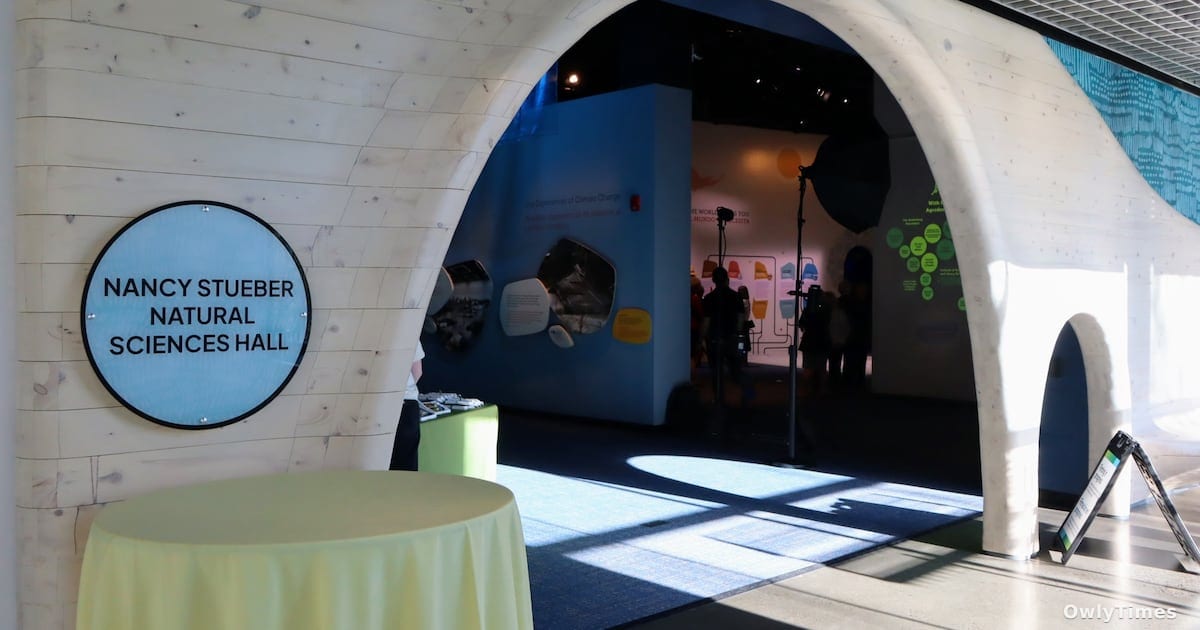

Museums have long struggled with the challenge of translating abstract, global environmental crises into tangible, actionable insights for the general public. As climate change continues to dominate the scientific discourse, the Oregon Museum of Science and Industry (OMSI) in Portland is attempting to bridge this gap not through static warnings, but through a new, immersive environment designed to foster individual agency. The opening of the Nancy Stueber Natural Sciences Hall marks a pivot from traditional passive observation to a model of participatory science.
From Biological History to Environmental Future
The space occupied by the new hall was formerly home to the museum’s prenatal gallery, which famously featured 42 embryos and fetuses preserved in glass cases. This transition is significant; the museum is moving from a focus on the biological origins of life to the environmental conditions that will define its future. While the prenatal gallery is slated to reopen in a different section of the museum early next year, the current 7,000-square-foot hall is entirely dedicated to the Climate of Change/Clima de Cambio exhibit. This shift suggests a strategic institutional decision to prioritize urgent, solutions-oriented scientific literacy over historical biological displays.
The methodology behind this exhibit relies heavily on community-driven development. According to Ciera Iveson, creative director at OMSI, the project has been five years in the making, directly resulting from community listening sessions. By centering the exhibit on public feedback, the museum aims to avoid the common pitfall of climate messaging—inducing "climate fatigue" or apathy—and instead focus on what Iveson describes as the "change makers of tomorrow." The exhibit utilizes immersive visual spaces, soundscapes, and tactile displays to make the science feel immediate rather than distant.
The Intersection of Public Policy and Private Infrastructure
One of the more distinct elements of the new hall is its focus on energy systems, developed in partnership with Portland General Electric (PGE). The collaboration includes an energy-focused display that allows children and adults to interact with concepts related to power generation and consumption. Maria Pope, president and CEO of PGE, emphasizes that these exhibits are intended to help visitors visualize the connection between human infrastructure and the environment.
However, there are limitations to consider regarding this approach. While interactive exhibits are highly effective at engaging younger demographics, they inherently simplify complex socioeconomic and political frameworks into gamified experiences. Whether a 7,000-square-foot exhibit can effectively translate the nuances of regional energy policy remains a challenge for the institution. The exhibit is designed to be accessible to all ages, yet its efficacy in shifting long-term behavior will depend on whether visitors can successfully translate these "solutions-oriented activities" into their own communities, as Erin Graham, president and CEO at OMSI, hopes they will.
A Two-Decade Trajectory
The opening of the Nancy Stueber Natural Sciences Hall on April 25 is merely an initial milestone in a much larger institutional strategy. OMSI has publicly committed to a 20-year goal of advancing the climate change conversation. This long-term vision is the primary metric to watch; the museum’s ability to sustain this level of engagement over the coming years will be the true test of whether such exhibitions can influence public sentiment. As the museum continues to gather data on visitor interaction, the next reading of their community engagement metrics will determine if this shift toward active, climate-focused science communication remains a viable model for the institution's long-term mission.





