
$23 Million in Executive Oversight: The Concentration of Power at OpenAI
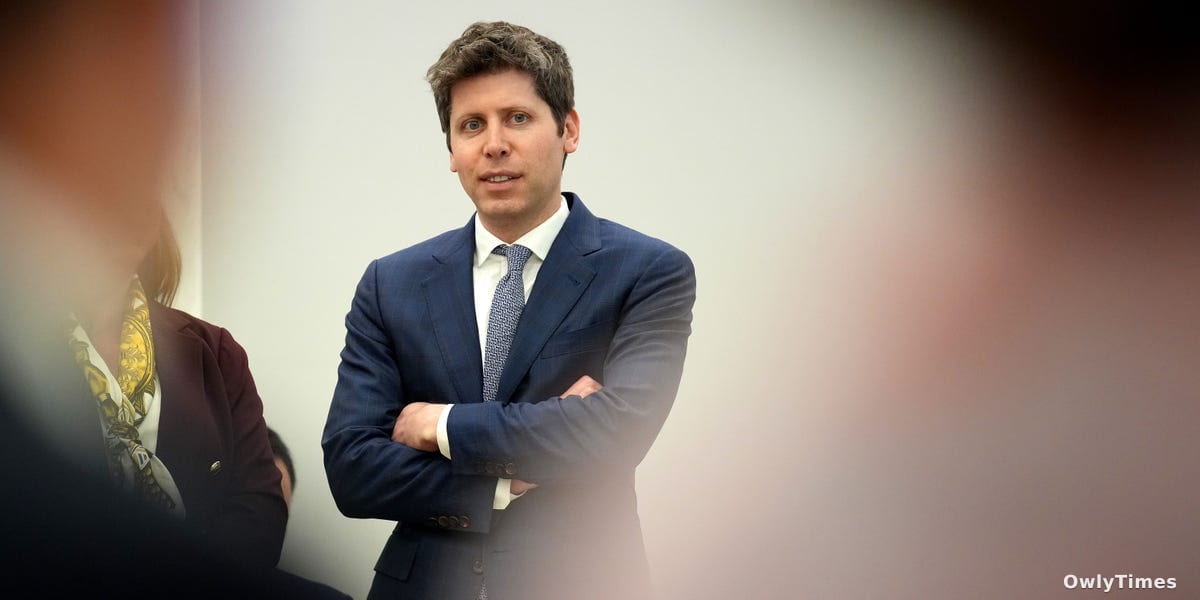
The organizational structure at OpenAI reveals a striking concentration of power, with CEO Sam Altman and applications CEO Fidji Simo collectively overseeing a team directly responsible for navigating a projected IPO and intensifying competition with Big Tech. As of February 2026, these two leaders account for 23 direct reports – a figure that, while smaller than those at comparable tech giants, belies their outsized influence over a company valued at an estimated $80 billion. This isn’t simply about headcount; it’s about control of the levers that will determine whether OpenAI can translate its technological lead into sustainable profitability and justify its premium valuation.
See the original Business Insider story for the full account.
The data points to a deliberate streamlining of decision-making as OpenAI prepares for public scrutiny. While Tesla’s Elon Musk managed 19 direct reports and Nvidia’s Jensen Huang oversaw 36 as of 2025, Altman’s team of 10 and Simo’s 13 represent a more focused command structure. This isn’t necessarily a sign of efficiency, however. It suggests a high degree of centralization, potentially creating bottlenecks and limiting the autonomy of key divisions. The fact that Simo manages nearly two-thirds of the company, according to a source familiar with the structure, despite having fewer direct reports than Altman, underscores this dynamic.
The appointment of Fidji Simo in August 2025, formerly CEO of Instacart and a Facebook app lead at Meta, was a pivotal moment. Simo was explicitly tasked with “scaling the business into a revenue-generating powerhouse,” and the subsequent rollout of advertising and enterprise product updates demonstrates a clear shift in focus. The transfer of key personnel – including Nick Turley, head of ChatGPT, and Sarah Friar, Chief Financial Officer – from Altman’s direct oversight to Simo’s highlights the prioritization of monetization. This move, coupled with the return of Barret Zoph, general manager of B2B, from Thinking Machine Labs, signals a renewed emphasis on enterprise solutions and a willingness to re-acquire talent previously deemed expendable.
Follow the money: the organizational changes directly reflect where OpenAI is seeking growth. The company’s initial success was driven by research and development, reflected in Altman’s early direct reports like Chief Scientist Jakub Pachocki and Chief Research Officer Mark Chen. Now, the emphasis is on productization and sales, hence the expansion of Simo’s team and the focus on revenue-generating initiatives. The recent addition of Charles Porch, Instagram’s head of partnerships, to work directly with Simo, further reinforces this strategy – leveraging celebrity influence to drive user engagement and, ultimately, revenue.
However, this rapid restructuring isn’t without its tensions. The fluidity of OpenAI’s org chart, as noted in the Business Insider report, suggests internal adjustments and potential power struggles. The departure of key figures like Mira Murati, former Chief Technology Officer, to found Thinking Machine Labs, alongside Zoph, raises questions about the long-term stability of the leadership team and the potential for talent drain. The fact that lower-level managers, like Chief Information Security Officer Dane Stuckey, have significantly larger teams than Altman’s or Simo’s direct reports suggests a potential disconnect between strategic direction and operational execution.
What this means for your wallet: The concentration of power within OpenAI and the aggressive push for monetization will likely translate into increased costs for consumers and businesses. Expect to see more subscription tiers, targeted advertising within ChatGPT, and potentially higher prices for enterprise solutions. The question investors – and consumers – should be watching is whether OpenAI can successfully balance its revenue goals with its commitment to responsible AI development, or if the pressure to deliver returns will lead to compromises that erode user trust and long-term value. Will the streamlined structure allow for nimble adaptation to market changes, or will it stifle innovation and create a rigid, profit-driven entity?





