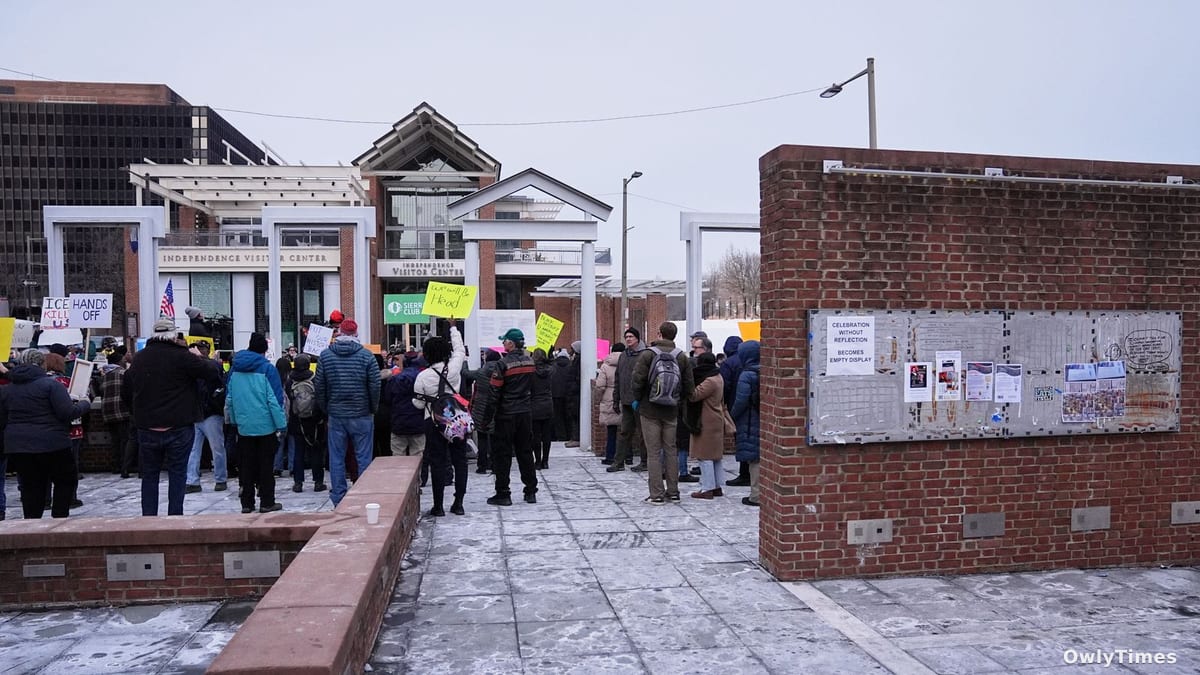

The current legal battles surrounding the National Park Service aren’t simply about flags or exhibits; they represent a fundamental question about the role of federal institutions in preserving – and presenting – a complete, and sometimes uncomfortable, national narrative. While headlines focus on the removal of a Pride flag from Stonewall or the restoration of a slavery exhibit in Philadelphia, the core of the conflict lies in a deliberate reshaping of historical and scientific interpretation within our national parks, spurred by executive orders issued during the Trump administration. The lawsuits filed this week by conservation and historical organizations aren’t about preventing a particular viewpoint, but about defending the integrity of factual representation itself.
The impetus for these legal challenges stems from President Trump’s 2020 executive order aiming to “restore truth and sanity to American history,” and subsequent directives from Interior Secretary Doug Burgum to eliminate “improper partisan ideology” from federally controlled exhibits. The lawsuit, brought by a coalition including the National Parks Conservation Association, American Association for State and Local History, Association of National Park Rangers, and Union of Concerned Scientists, alleges that these orders have led to the systematic removal or censorship of exhibits addressing topics like slavery, civil rights, Indigenous history, and climate change. It’s crucial to understand that this isn’t a case of adding new interpretations; the concern is the active removal of existing, factually-supported information. For example, at Selma to Montgomery National Historic Trail in Alabama, approximately 80 interpretive items have been flagged for removal, while at Brown v. Board of Education National Historical Park in Kansas, even the mention of “equity” triggered a review.
Original reporting: wral.com.
The legal action follows a recent victory for preservationists, where a federal judge ordered the restoration of exhibits detailing the lives of enslaved people at George Washington’s former home in Philadelphia. Judge Cynthia Rufe, appointed by President George W. Bush, notably invoked George Orwell’s 1984 in her ruling, drawing a parallel between the administration’s actions and the novel’s Ministry of Truth – a chilling comparison that underscores the gravity of the situation. This ruling, however, is only one battle in a larger campaign. The Interior Department has appealed the Philadelphia decision, arguing that updated materials “providing a fuller account” were planned, a claim that plaintiffs dispute as a justification for initial censorship. The department, through spokesperson Taylor Rogers, characterizes the lawsuit as “premature” and based on “inaccurate and mischaracterized information,” a statement that directly contradicts the detailed examples provided in the legal filings.
Beyond the specific cases, a pattern of selective interpretation is emerging. Signage at Grand Canyon National Park, which acknowledged the displacement of Native American tribes and the environmental exploitation that enabled the park’s creation, has disappeared. At Glacier National Park in Montana, materials explaining the impact of climate change on the park’s glaciers were ordered removed. These aren’t isolated incidents; they represent a coordinated effort to present a curated version of history that downplays or omits uncomfortable truths. Jeff Mow, a retired Glacier National Park superintendent, described the administration’s order as a “disservice” to the public and a hindrance to the park service’s traditional role as a truthful storyteller. This raises a critical point: the park service’s mandate isn’t simply to celebrate national achievements, but to provide a comprehensive understanding of the American experience, including its complexities and failures.
Limitations to Consider
It’s important to acknowledge the inherent challenges in interpreting historical events and scientific data. Interpretive materials are, by their nature, subject to ongoing revision as new information emerges. However, the current situation isn’t about scholarly debate or updating exhibits with new research; it’s about actively suppressing established facts based on ideological grounds. Furthermore, the legal process is ongoing, and the full extent of the administration’s policies and their impact remains to be seen. The Interior Department’s claim of an “ongoing review” suggests a potential for course correction, but the initial actions and rhetoric raise serious concerns about the future of historical and scientific integrity within the National Park System. The assertion that the lawsuit is “premature” also hinges on the timing of finalized removals – even planned removals represent a chilling effect on park staff and a clear indication of the administration’s intent.
The next steps in these legal battles will be crucial. The courts will need to determine whether the administration’s actions violate the First Amendment rights of park visitors to receive accurate information and whether the executive orders overstep the bounds of presidential authority. Beyond the legal realm, the public will need to remain vigilant in demanding transparency and accountability from the National Park Service. The question isn’t simply whether a Pride flag flies at Stonewall or whether an exhibit on slavery is restored in Philadelphia. It’s whether our national parks will continue to serve as honest and unbiased repositories of American history and scientific knowledge, or become instruments of selective memory and ideological control. We should watch closely for any further directives from the Interior Department regarding interpretive materials, and specifically, whether the agency prioritizes factual accuracy and scholarly integrity over political considerations. The future of how America remembers – and learns from – its past hangs in the balance.





