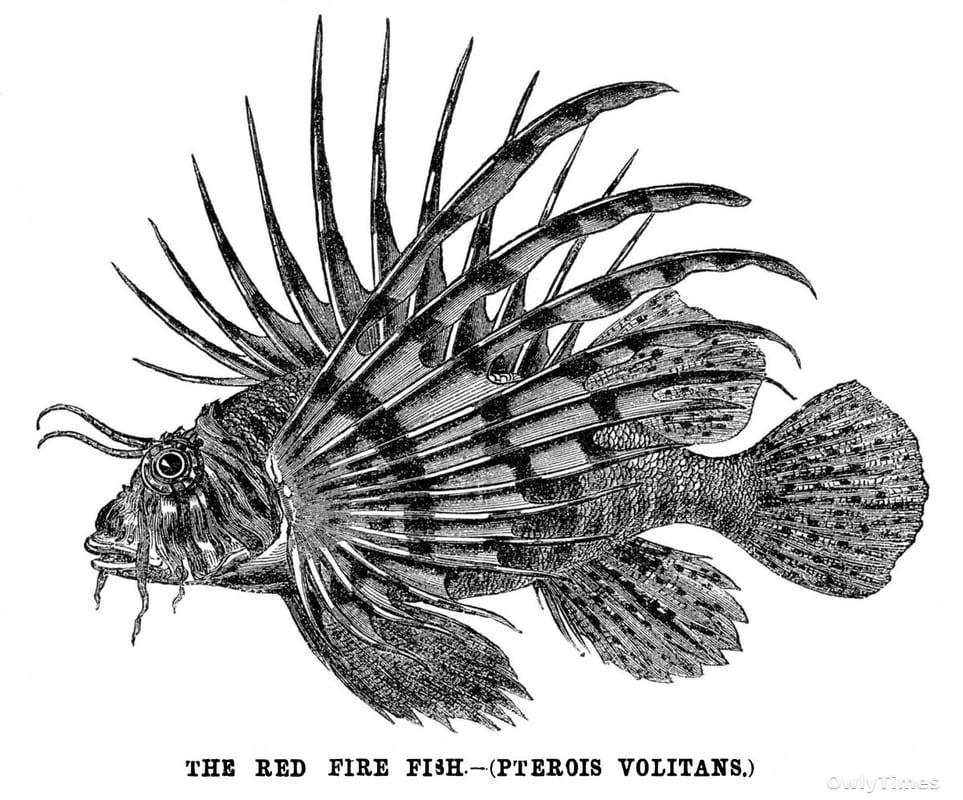

The persistent tension between evidence and belief is a defining characteristic of the scientific endeavor, and a pattern visible even within the archives of Scientific American itself. A recent review of the magazine’s history, stretching from reports on a newly discovered “Red Fire Fish” in 1876 to the ongoing quest to understand the fundamental building blocks of matter, reveals not just scientific progress, but the recurring challenges of communicating that progress to a public often swayed by alternative explanations. This isn’t merely a historical observation; it’s a crucial context for understanding contemporary debates, from textbook controversies to the public perception of risk – as exemplified by the long and complex story of asbestos.
The Shifting Sands of Subatomic Understanding
For decades, the idea of quarks – fundamental constituents of protons and neutrons – existed as a compelling hypothesis with limited proof. As Jeanna Bryner details in a recent look back at the magazine’s coverage, the quark theory, first proposed more than a dozen years prior to 1976, began to gain traction only in the past two years of that decade. The key evidence came from high-energy particle collisions. If quarks didn’t exist, the resulting debris from these collisions would scatter randomly. Instead, physicists observed particles emerging in focused “jets,” precisely as the quark theory predicted. This confirmation, achieved by extending measurements to higher energies, was a significant step. However, the story doesn’t end with validation. Even among those convinced of quarks’ existence, disagreement persisted – and continues today – regarding how many types of quarks there are. The initial theory posited three, then a fourth (“charm”) was proposed in 1964. The possibility remains open that the quark spectrum extends far beyond these four, with no clear indication of where it might stop. It’s important to note that this isn’t a failure of the theory, but a demonstration of the iterative nature of scientific inquiry. We’ve confirmed a foundational element, but the full picture remains incomplete.
A Century of Asbestos: From Ancient Ritual to Modern Concern
The story of asbestos, first reported in Scientific American in 1876, offers a stark illustration of how our understanding of materials – and their risks – evolves. Initially lauded for its remarkable properties – flexibility, strength, and incombustibility – asbestos was historically limited in its application. Ancient civilizations used it for cremation cloths and fireproof napkins, while 19th-century uses were similarly niche, like specialized wallpaper. The article highlights a curious delay: despite knowing its valuable qualities “since time immemorial,” widespread use only began “during recent years.” This delay wasn’t due to a lack of the material, but a lack of inventive application. What the 1876 article couldn’t foresee, of course, was the devastating health consequences associated with asbestos exposure. It would take decades of epidemiological studies to link asbestos fibers to lung cancer, mesothelioma, and other debilitating diseases. The initial enthusiasm, based on limited understanding, ultimately gave way to widespread regulation and, in many cases, complete bans. This isn’t a condemnation of the original researchers; it’s a reminder that scientific knowledge is always provisional, and that even seemingly beneficial materials can harbor hidden dangers.
Drawn from scientificamerican.com.
Echoes of Doubt: Textbook Controversies and the Resistance to Science
The 1976 issue also revisited a 1969 controversy surrounding biology textbooks in California. The California Board of Education had proposed guidelines that would give “equal time” to the biblical account of creation alongside the theory of evolution. This wasn’t an isolated incident. As the article points out, these “textbook critics” represent a broader “romantic resistance to science,” aligning with the popularity of astrology, pseudoscientific cosmologies, and other non-evidence-based belief systems. Crucially, the resistance wasn’t solely intellectual; it was also “a political resistance to science,” manifesting in opposition to innovation and demands for lay control over scientific decisions. This dynamic is remarkably consistent. The impulse to prioritize pre-existing beliefs over empirical evidence, and to politicize scientific findings, continues to shape debates today. The California case wasn’t about a genuine scientific challenge to evolution; it was about imposing a particular worldview onto the curriculum, regardless of the scientific consensus. The framing of the debate – “special creation” versus “organic evolution” – falsely presented two equally valid perspectives when, in reality, one was based on rigorous scientific methodology and the other on faith-based conviction.
From Stadiums to Spectacle: The Scale of American Pastimes
While seemingly disparate, the 1976 report on the growth of collegiate football provides another lens through which to view societal shifts. The article notes the dramatic increase in stadium capacity, from 10,000 spectators in the early 20th century to crowds exceeding 80,000 by the 1970s. The transition from wood to steel and concrete construction, and the careful design of seating arrangements, reflect a commitment to accommodating this growing demand. As of 2026, Michigan Stadium holds over 107,000 fans. This isn’t simply a story of architectural innovation; it’s a reflection of changing leisure habits and the increasing cultural significance of sports. The sheer scale of these stadiums, rivaling the ancient Colosseum, speaks to a collective desire for shared experiences and communal spectacle. This observation, while seemingly tangential, underscores a broader point: scientific advancements aren’t isolated events. They occur within a complex social and cultural context, and are often intertwined with other forms of human endeavor.
Looking ahead, the ongoing refinement of the Standard Model of particle physics – the framework that incorporates quarks – will be critical. Researchers are now focused on searching for evidence of even more fundamental particles and forces, and on resolving discrepancies between the Standard Model and observed phenomena like dark matter and dark energy. Simultaneously, continued research into the long-term health effects of environmental toxins, like asbestos, is essential, even decades after exposure has ceased. But perhaps the most pressing challenge lies in fostering a more scientifically literate public, capable of critically evaluating information and resisting the allure of unsubstantiated claims. Will future generations be better equipped to navigate the complex interplay between scientific evidence and societal belief, or will we continue to see cycles of resistance and misinformation? The answer to that question will determine not only the future of scientific progress, but the health and well-being of our society.





