
Beyond “Restoring Truth”: The Battle for Historical Narrative in National Parks
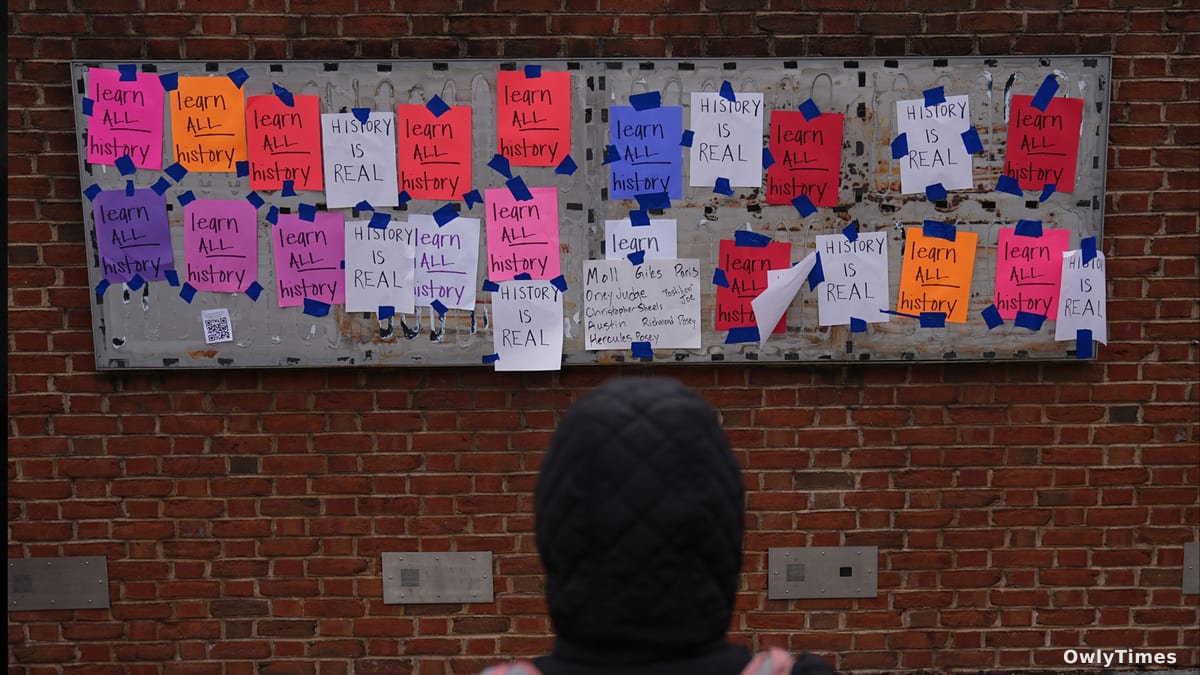
The question of who controls the narrative of American history isn’t abstract; it’s playing out in real-time within the boundaries of our National Parks. While headlines focus on the restoration of a single exhibit about enslaved people at Independence National Historical Park in Philadelphia – a victory secured by a federal judge’s order on Presidents Day – the broader story is a systematic effort, initiated under the Trump administration and continuing to reverberate, to reshape how the National Park Service interprets and presents American history and scientific understanding. This isn’t simply about correcting inaccuracies; it’s about selectively emphasizing certain aspects of the past while downplaying or removing others, raising fundamental questions about the role of publicly funded institutions in confronting difficult truths.
Original reporting: 6abc.com.
The lawsuit filed Tuesday in Boston by a coalition including the National Parks Conservation Association, American Association for State and Local History, Association of National Park Rangers, and Union of Concerned Scientists details how directives from President Trump and Interior Secretary Doug Burgum have led to the censorship or removal of exhibits addressing topics like slavery, the civil rights movement, Indigenous histories, and climate change. The impetus, according to the executive order cited in the suit, was “restoring truth and sanity to American history,” a phrase that, to the plaintiffs, translates to a deliberate effort to sanitize the nation’s past. Burgum’s subsequent direction to remove “improper partisan ideology” further broadened the scope of potential censorship, creating a chilling effect on park staff tasked with interpreting complex historical events. It’s crucial to understand that the legal challenge isn’t about objecting to all revisions of park exhibits – the National Park Service routinely updates displays for accuracy – but about the motivation and pattern of these changes, which the plaintiffs argue are ideologically driven and legally questionable.
The case in Philadelphia, where explanatory panels detailing the lives of the nine enslaved people owned by George Washington were removed last month, serves as a particularly stark example. Judge Cynthia Rufe’s ruling, which ordered the immediate restoration of the exhibit pending the outcome of the lawsuit, wasn’t merely a procedural victory. In a striking move, she opened her written order with a quote from George Orwell’s 1984, explicitly drawing a parallel between the administration’s actions and the novel’s Ministry of Truth – a chilling comparison that underscores the gravity of the situation. The Department of the Interior’s appeal of this ruling, framed as a desire to install “updated interpretive materials providing a fuller account of the history of slavery,” feels disingenuous given the broader context of removals occurring across the park system.
Beyond Philadelphia, the scale of the issue is becoming clearer. At the Selma to Montgomery National Historic Trail in Alabama, approximately 80 interpretive items have been flagged for removal. The exhibit at Brown v. Board of Education National Historical Park in Kansas is under scrutiny for mentioning “equity,” a term apparently deemed ideologically unacceptable. Even symbolic gestures, like the removal of a Pride flag at the Stonewall National Monument in New York City, have become part of this pattern. Perhaps most telling is the case of Grand Canyon National Park, where signage acknowledging the displacement of Native American tribes and the environmental exploitation that enabled the park’s creation has disappeared. These aren’t isolated incidents; they represent a coordinated effort to present a curated, and arguably incomplete, version of American history. Alan Spears, senior director of cultural resources at the National Parks Conservation Association, succinctly captured the concern: “Censoring science and erasing America's history at national parks are direct threats to everything these amazing places, and our country, stand for.”
Limitations to Consider
While the lawsuit and Judge Rufe’s ruling represent significant pushback, it’s important to acknowledge the limitations of this legal challenge. The legal standard for proving ideological censorship within the National Park Service is high. The administration can argue, and is arguing, that exhibit changes are motivated by a desire for historical accuracy, not political bias. Furthermore, the appeal of the Philadelphia ruling demonstrates a continued commitment to reshaping the narrative, even in the face of legal opposition. The lawsuit also focuses primarily on exhibits that have already been altered or flagged for removal; it doesn’t address the potential for more subtle forms of censorship, such as the omission of certain topics or the framing of historical events in a particular light. The long-term impact of these changes will depend not only on the outcome of the lawsuit but also on the priorities of future administrations and the willingness of park staff to resist political pressure.
The next crucial step is to understand the full extent of the interpretive material flagged for removal or revision across the entire National Park system. The coalition bringing the suit is actively seeking this information through discovery, but the process is likely to be slow and contentious. More importantly, we need to ask ourselves what a truly inclusive and accurate historical narrative looks like in our National Parks. Should these spaces solely celebrate national triumphs, or should they also grapple with the darker chapters of American history? And how do we balance the need for historical context with the desire to avoid “inappropriately disparaging” any group, as the Trump executive order demands? These are not easy questions, but they are essential to ensuring that our National Parks remain vital centers of learning and reflection. Will future visitors to these parks encounter a complete and honest account of the American experience, or a carefully constructed version designed to reinforce a particular ideology? The answer to that question will define not only the future of our National Parks but also our collective understanding of who we are as a nation.





