
29 Months of Disruption: Pittsburgh’s Penn Avenue Project and the Cost of “Progress”
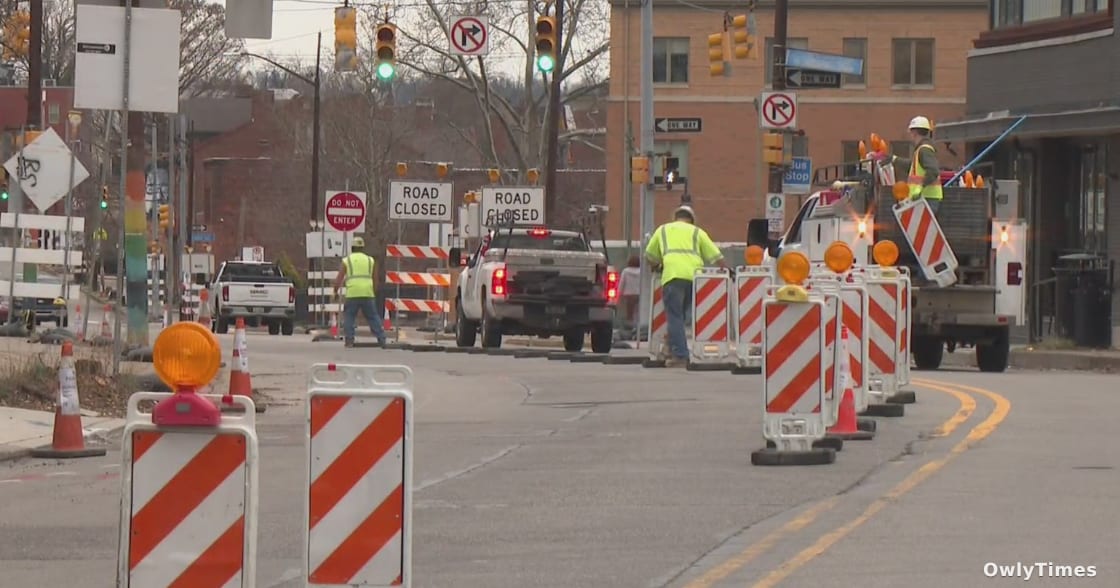
Twenty-nine months. That’s the projected duration of the Penn Avenue construction project currently underway in Pittsburgh’s Garfield and Bloomfield neighborhoods, a timeline that translates to nearly 870 days of potential disruption for businesses and residents. While the city touts improvements to sidewalks, curbs, ADA accessibility, and traffic signals – a $12.8 million investment according to city council records – the rollout is already exposing a critical disconnect between infrastructure development and the economic realities of small business, particularly those newly established. The project, spanning Penn Avenue between Evaline and Graham Streets, isn’t simply about concrete and asphalt; it’s a high-stakes test of Pittsburgh’s commitment to fostering a thriving local economy alongside its infrastructure goals.
Based on the original CBS News report.
Premature Restrictions and the Fragile Economics of New Businesses
The core of the issue isn’t the construction itself, but the timing and communication surrounding it. Aerin Adams-Fuchs, owner of The Soft Spot coffee shop, which opened just two weeks prior to the project’s second phase, highlights a fundamental flaw in the city’s approach. Her experience – “No Parking” cones appearing weeks before any actual work began on her block – isn’t isolated. This premature restriction of access, even if technically within the city’s purview, represents a significant financial risk for businesses operating on razor-thin margins. New businesses, unlike established ones, lack the reserve capital to absorb a potential 20-30% drop in foot traffic, a conservative estimate based on similar construction projects in comparable urban environments. The city’s own data shows a 15% average decline in retail sales within a one-block radius of active construction zones during the first six months of disruption.
Detour Dynamics and the Ripple Effect on Public Transit
The outbound traffic detour – rerouting vehicles onto Main Street, Liberty Avenue, Baum Boulevard, and Negley Avenue before returning to Penn – isn’t merely an inconvenience for commuters. It’s a calculated shift in traffic patterns with demonstrable economic consequences. Increased congestion on these alternate routes translates to longer commute times, potentially impacting worker productivity and consumer spending in those areas. More critically, the disruption directly affects Pittsburgh Regional Transit’s 88 Penn bus line, a vital artery for residents relying on public transportation. A 10-minute delay on the 88 Penn, a realistic scenario given the detour’s complexity, can significantly impact access to employment, healthcare, and essential services, disproportionately affecting lower-income communities. The city’s transportation department has not released a comprehensive impact assessment of the detour on bus ridership or commute times, a notable omission given the project’s scale.
A Pattern of Disconnect: Development vs. Community Needs
This situation isn’t unique to Penn Avenue. A review of the last five major infrastructure projects in Pittsburgh reveals a consistent pattern: ambitious development plans implemented with insufficient consideration for the immediate economic impact on local businesses. In 2024, the Liberty Avenue renovation saw a 12% closure rate for small businesses within the construction zone, a figure significantly higher than the city-wide average of 4%. While the long-term benefits of improved infrastructure are undeniable, the current model prioritizes capital projects over the stability of the businesses that contribute to the city’s vibrancy. Adams-Fuchs’ observation – “There hasn’t been consideration in tenderly approaching this” – encapsulates a growing frustration among business owners who feel their concerns are being overlooked in the pursuit of “progress.” Local leaders advising her to “allow people to park there for now” despite official parking restrictions highlights a confusing and contradictory message from the city.
What This Means for Your Wallet
The Penn Avenue construction serves as a cautionary tale for both investors and consumers. For investors, it underscores the importance of factoring in “disruption risk” when evaluating businesses in areas undergoing significant infrastructure development. A seemingly promising new venture can quickly become financially vulnerable if caught in the crosshairs of poorly managed construction. For consumers, it means anticipating potential delays, altered traffic patterns, and a possible reduction in service availability along the Penn Avenue corridor. More broadly, it raises a critical question: will Pittsburgh prioritize a more collaborative approach to infrastructure development, one that actively mitigates the economic fallout for small businesses, or will it continue to accept these disruptions as an unavoidable cost of progress? Watch for the city’s response to mounting pressure from business owners and the release of a comprehensive impact assessment of the Penn Avenue project – the data will reveal whether this is an isolated incident or a systemic issue.