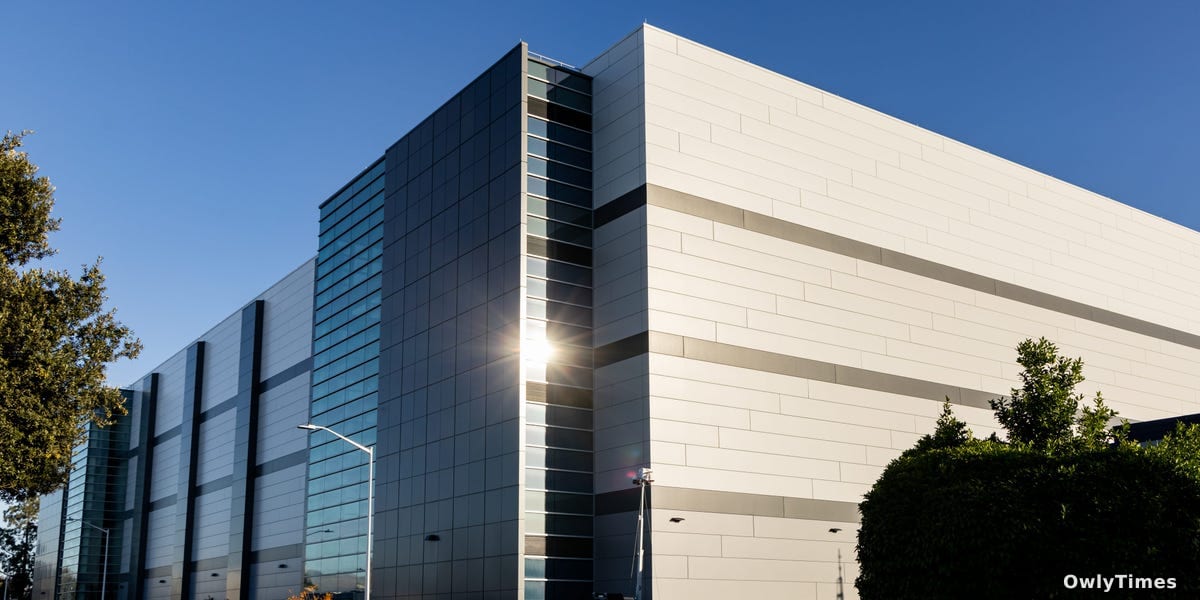

Is the AI gold rush already running on fumes? That’s the question simmering beneath the surface of a stalled $4 billion data center project in Pennsylvania, where Blue Owl Capital couldn’t find lenders willing to touch the debt. The narrative being spun is about a routine exploration of financing options, a project “fully funded, on time, and on budget” as Blue Owl insists. The real story here isn't a single stalled project – it’s a growing unease about the financial foundations of the AI infrastructure boom, and the shaky credit of the companies poised to dominate it.
Blue Owl, a firm that’s made a name for itself as a creative financier in the data center space, was attempting to secure funding for a facility in Lancaster, Pennsylvania, slated to be occupied by CoreWeave, an AI cloud computing provider. CoreWeave has rapidly become a focal point in the AI race, fueled by billions in debt. But that debt, and the company’s resulting B+ credit rating from S&P Global Ratings, is now giving lenders pause. As one senior executive at a large specialty lender bluntly put it to Business Insider, “We saw it. We passed.” This isn’t about a lack of belief in AI; it’s about a cold, hard assessment of risk.
See the original Business Insider story for the full account.
The reluctance to fund the Lancaster project echoes a similar situation just months prior, where banks struggled to offload $38 billion in debt tied to data centers anchored by Oracle. Concerns centered on Oracle’s massive AI spending and the potential impact on its credit rating, prompting the tech giant to scramble for $50 billion in cash through stock and bond offerings. These aren’t isolated incidents. They represent a pattern: the initial euphoria surrounding AI is colliding with the realities of financing massive infrastructure projects, and the creditworthiness of the companies driving the demand. The average data center project requires significant upfront capital, and lenders are increasingly scrutinizing the ability of AI-focused tenants to reliably generate revenue and service their debts.
CoreWeave’s model, while aggressive and rapidly expanding, relies heavily on taking on debt to fuel growth. Last summer, the company announced plans to lease 100 megawatts of capacity at the Lancaster facility, potentially expanding to 300 megawatts with a $6 billion investment in chips and infrastructure. This ambition is impressive, but it also demands a constant influx of capital. Blue Owl’s previous successes, like partnering with Meta to leverage its strong credit for a $27.3 billion bond offering, highlight a key strategy in this space: attaching AI projects to companies with established financial stability. The Lancaster project lacks that safety net.
The situation underscores a critical tension. The AI narrative is built on disruption and speed, but the underlying infrastructure requires the slow, deliberate process of securing financing. Blue Owl is exploring alternatives, potentially tapping into the credit of CoreWeave’s customers – perhaps even Nvidia, which has a significant stake in the company – or pooling funds from institutional investors. These are viable options, but they add complexity and cost. The reliance on “investment-grade credit support,” as seen with Fluidstack’s deals with Google, is becoming the norm, not the exception. This means the future of AI infrastructure isn’t solely about technological innovation; it’s about who can afford to build it, and who can guarantee its financial viability.
What happens when the hype cycle cools and the need for constant expansion slows? Watch for a consolidation in the AI infrastructure market. The companies with access to cheap capital and strong credit – the Metas and Googles of the world – will likely dominate, while those reliant on debt and rapid growth, like CoreWeave, will face increasing pressure to demonstrate profitability and secure long-term financing. The next six months will reveal whether Blue Owl can navigate this challenge, and more importantly, whether the broader AI infrastructure boom can sustain itself beyond the initial wave of investment.