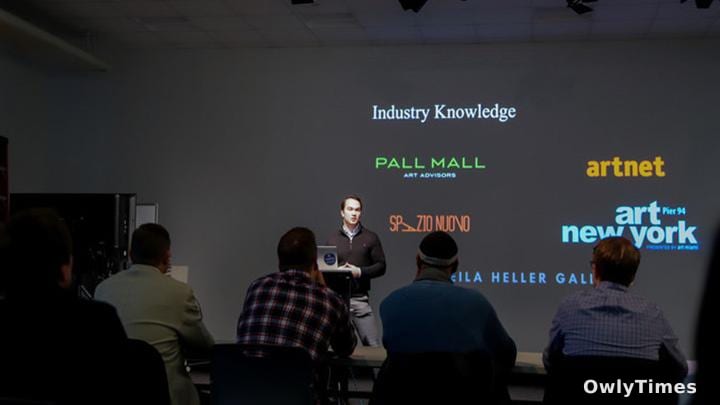

$10,000 in seed funding is about to be injected into the Penn State ecosystem, but the real story isn’t the money—it’s what that money signals about the shifting economics of arts education. The Penn State College of Arts and Architecture’s 2026 Arts Business Idea Competition, now accepting entries, isn’t simply a feel-good student showcase; it’s a calculated bet that entrepreneurial skills are now as crucial for artists as artistic talent itself. This isn’t a new concept, but the formalized structure and dedicated funding—$5,000 for first place, $3,500 for second, and $1,500 for third—demonstrates a significant institutional pivot.
Beyond the Brushstroke: The Rise of Arts Entrepreneurship
For decades, arts programs operated under a largely patronage-based model: cultivate talent, hope for grants, and aim for a select few “successful” careers. But the data paints a different picture. According to the National Endowment for the Arts, employment for artists—defined broadly—has remained relatively flat since 2010, hovering around 2.1 million. Meanwhile, the number of graduates with arts degrees continues to rise. This creates a supply-demand imbalance, forcing artists to become increasingly self-reliant. Penn State’s competition directly addresses this reality by incentivizing students to think beyond traditional career paths. The fact that the competition is open to all majors, not just those within the College of Arts and Architecture, is particularly telling. It suggests a recognition that artistic skills—creativity, problem-solving, communication—are valuable assets across disciplines, and that a business mindset can amplify their impact.
See the original psu.edu story for the full account.
A $10,000 Investment, A Larger Economic Trend
The $10,000 prize pool, while substantial for a student competition, represents a tiny fraction of Penn State’s overall budget. However, “follow the money” reveals a broader trend. Universities are increasingly under pressure to demonstrate a return on investment for tuition dollars. Simply producing artists isn’t enough; institutions need to show they’re equipping graduates with the skills to contribute to the economy. This competition, and others like it, are a direct response to that pressure. Consider the parallel rise of “maker spaces” and entrepreneurship centers on college campuses nationwide. These initiatives aren’t about fostering hobbies; they’re about building a pipeline of innovators and job creators. Jonathan Gangi, assistant professor of music and arts entrepreneurship and the competition administrator, is at the center of this shift, tasked with evaluating not just artistic merit, but also business viability.
The PDF Submission: A Gatekeeper to New Opportunities
The competition’s entry requirement—a PDF business plan submitted to Gangi by April 1st—is deceptively simple. It’s a filter, designed to separate those with a genuine entrepreneurial drive from those simply seeking validation for an artistic idea. The fact that the competition welcomes “freelance, nonprofit, for-profit, hybrid and small or large-scale ideas” indicates a deliberate attempt to avoid limiting creativity. This is a smart move. The arts sector is incredibly diverse, and successful business models vary widely. However, the business plan requirement itself introduces a barrier to entry. Students without prior business training may be at a disadvantage, highlighting a potential need for more robust entrepreneurial education within the arts curriculum. Semifinalists, announced by April 8th, will face a live pitch to a panel of judges on April 13-14, adding another layer of scrutiny.
What This Means for Your Wallet
This competition isn’t directly impacting consumer prices today. However, it’s seeding the next generation of arts entrepreneurs, and their success—or failure—will shape the future of the creative economy. If these students develop viable businesses, we can expect to see more innovative arts experiences, potentially at lower costs due to streamlined operations and direct-to-consumer models. But the more immediate question for consumers is this: will this shift towards arts entrepreneurship lead to a decline in traditional arts funding? If universities prioritize self-sustaining arts ventures, will they reduce support for grant-dependent organizations? Watch closely to see if the rise of the arts entrepreneur coincides with a contraction in public and private funding for the arts—that’s where the real economic impact will be felt.





