
Beyond the Green: What Penn State’s Turfgrass Dominance Reveals About Workforce Development
The consistent success of Penn State’s turfgrass science students isn’t simply a feel-good sports story for agricultural enthusiasts. It’s a signal – and a potentially crucial one – about the evolving demands of a specialized workforce and the effectiveness of programs designed to meet them. While headlines celebrate another national title – the seventh since 2015, secured across both the Sports Field Managers Association and Golf Course Superintendents Association of America competitions – a closer look at how these students succeed reveals a strategic approach to education that other institutions might want to emulate. This isn’t about growing better grass; it’s about cultivating a generation prepared to solve complex, real-world problems in a rapidly changing industry.
See the original psu.edu story for the full account.
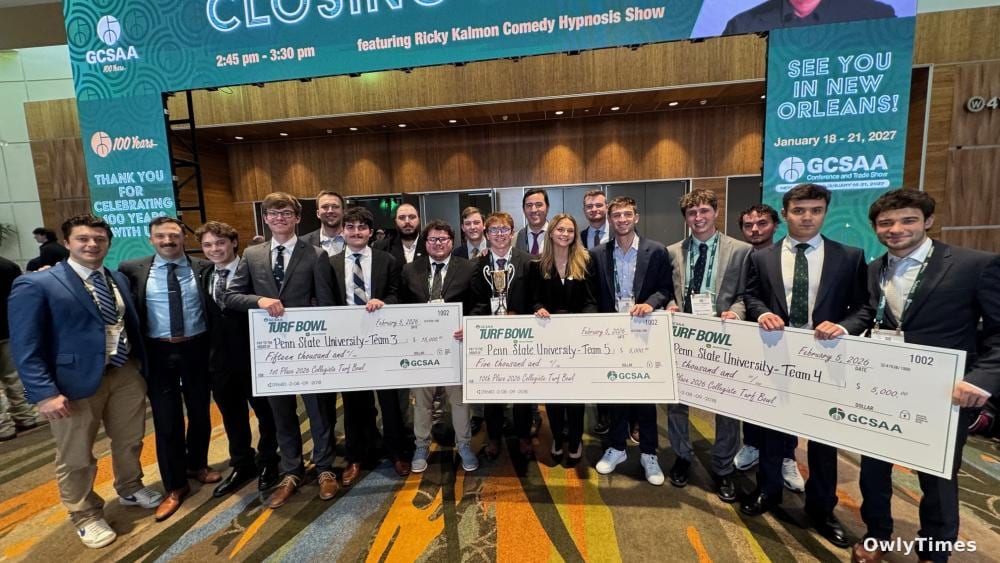
Recently, students from Penn State’s College of Agricultural Sciences brought home $25,000 in awards, topping fields of competitors at both the Sports Field Managers Association Student Challenge in Fort Worth, Texas, and the Golf Course Superintendents Association Turf Bowl in Orlando, Florida. The competitions themselves are rigorous, testing students on everything from turfgrass identification and soil science to irrigation and pest management. Teams of undergraduates, ranging from two-year certificate programs to four-year bachelor’s degrees, face exams that mimic the pressures faced by professionals – diagnosing diseases, calculating irrigation needs, and even understanding the precise dimensions of a baseball infield. Wilson Kreitz, Joseph Lofland, Carter Marshall, and Jacob Straw were instrumental in securing first place at both events, a repeat victory for the team at the Sports Field Managers Association challenge.
The sheer consistency of Penn State’s performance – five wins for their four-year teams since 2016 – isn’t attributable to luck. Ben McGraw, associate professor of turfgrass science and the team’s academic advisor, emphasizes the “countless hours” students dedicate to preparation. But the program’s success isn’t solely about individual effort. McGraw points to the students’ ability to “work as teams under pressure,” a skill he believes is directly transferable to leadership roles in the profession. This focus on collaborative problem-solving is a deliberate component of the curriculum, mirroring the demands of managing large-scale sports facilities or golf courses where decisions are rarely made in isolation. The competitions aren’t just knowledge tests; they’re simulations of professional environments.
However, it’s important to understand what these competitions don’t measure. While the exams cover a broad range of technical skills, they primarily assess theoretical knowledge. The real-world application of these principles – dealing with unpredictable weather patterns, managing limited resources, navigating complex regulatory landscapes – requires a different skillset. Furthermore, the student body participating in these competitions is, by its nature, self-selected. These are highly motivated individuals already committed to the field of turfgrass science. The challenge remains to broaden access to these programs and attract a more diverse range of students, ensuring the industry benefits from a wider pool of talent.
The financial reward of $25,000 is significant, earmarked for future travel to these competitions, creating a positive feedback loop. But the true value lies in the program’s ability to attract and retain top students, and to demonstrate the relevance of turfgrass science as a viable and intellectually stimulating career path. As climate change increasingly impacts turfgrass health – requiring innovative solutions for water conservation and disease resistance – and as the demand for high-quality recreational spaces continues to grow, the need for skilled professionals in this field will only intensify. The question now is whether other institutions will adapt their curricula to prioritize the same blend of technical expertise, collaborative skills, and real-world problem-solving that has made Penn State’s turfgrass program a national powerhouse. Will we see a broader investment in these specialized agricultural sciences, or will the industry continue to rely on a select few programs to supply its future leaders?





