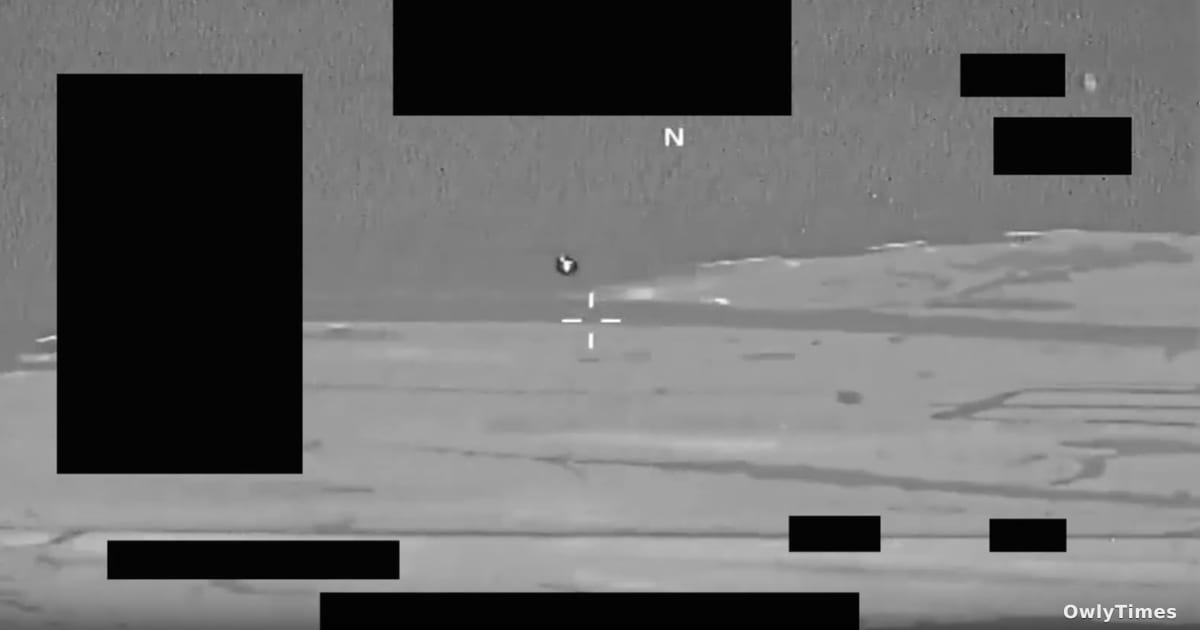

The pursuit of understanding the unknown—whether it manifests in the high-altitude skies of Earth or the silent reaches of our solar system—drives the latest wave of scientific disclosure and exploration. On Friday, the Pentagon released its fourth installment of declassified files concerning unidentified anomalous phenomena (UAP), a move mandated by an executive order signed by President Trump earlier this year. Simultaneously, global space agencies have reached a significant milestone in deep-space exploration, as the Chinese spacecraft Tianwen-2 successfully rendezvoused with the asteroid Kamo’oalewa.
Declassifying the Unexplained
The latest UAP disclosure, hosted on the official Pentagon website, consists of 40 files, including 14 documents, 19 videos, four audio files, and three images sourced from agencies such as NASA, the FBI, the CIA, and the Department of Energy. According to CBS News, the collection features a mix of historical records and modern sensor data. Among the more notable historical entries is a transcript from a 1949 conference in Los Alamos, New Mexico, where physicists—including veterans of the Manhattan Project—struggled to identify "green fireballs" spotted over nuclear facilities.
While headlines often gravitate toward the most sensational reports, the actual findings represent a granular look at military data collection. CBS News highlights a 2015 report from the Pantex nuclear facility in Texas, where officers observed an object that made no sound and lacked an identifiable propulsion system. Another 2019 incident involves a veteran aviator describing a high-speed, rectangular object that displayed flight characteristics "unlike anything I had seen" in 28 years of service. Conversely, Engadget points out that these releases are part of a rolling transparency initiative, now supported by a newly established panel led by theoretical physicist Avi Loeb, tasked with evaluating national security risks.
Scientific Limitations and Context
It is important to maintain a measured perspective when interpreting these documents. Many of the reports are "range fouler debriefs," which are standardized forms used to log airspace intrusions during training exercises. The data remains highly variable: some files contain clear infrared footage, while others are heavily redacted, such as a 2020 Navy report describing a maroon object that appeared structurally similar to a "deformed balloon." As noted by CBS News, the Pentagon’s spokesman Sean Parnell has confirmed that further releases are currently in development, meaning the full picture of these encounters remains incomplete.
A New Frontier in Asteroid Research
While the Pentagon probes the domestic skies, the WIRED report details the successful arrival of Tianwen-2 at Kamo’oalewa, an asteroid that orbits the sun in a path nearly identical to Earth’s. Capturing its first images from a distance of 20 kilometers on July 2, 2026, the probe concludes a 400-day, 1-billion-kilometer journey. The mission is scientifically vital because Kamo’oalewa is a "quasi-satellite," an object that loops around our planet without ever drifting far away, as Engadget notes, citing Paul Chodas of NASA’s Center for Near-Earth Object Studies.
Determining the origin of this asteroid is a central research goal. While long believed to be a fragment of the moon, recent simulations by an international team, including the Chinese Academy of Sciences, suggest the asteroid may actually originate from the Flora family in the asteroid belt, according to WIRED. The probe plans to conduct detailed observations of the asteroid's internal structure and material composition. Next steps involve a delicate landing and sample collection process; if successful, the mission will deliver these materials to Earth in November 2027, providing potentially primordial data on the formation of our solar system.