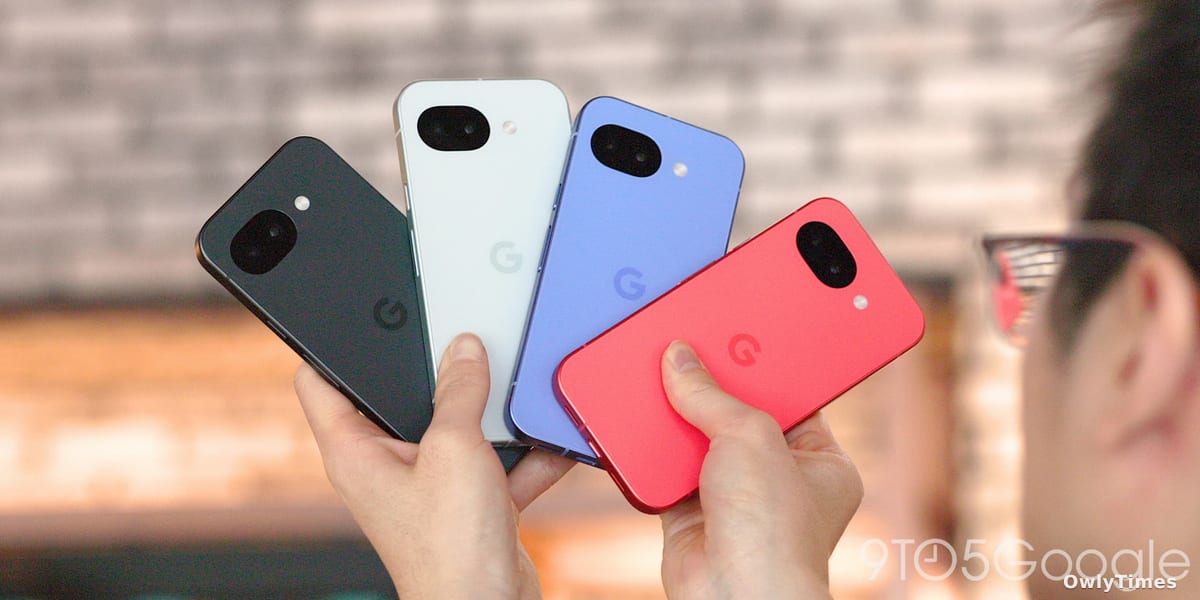

Is the smartphone even trying anymore? For years, the industry has chased diminishing returns – folding screens, ever-increasing megapixel counts, and charging speeds that border on reckless. But Google’s announcement of the 2026 Pixel 10a feels…different. It’s not about revolution, it’s about refinement. And the real story here isn’t the incremental upgrades, it’s Google quietly signaling that peak smartphone might not be about more, but about just right.
After briefly checking it out in person, the Pixel 10a is, frankly, my platonic ideal of a smartphone. It’s a statement that will likely raise eyebrows in a market obsessed with chasing the next big thing, but the 10a isn’t trying to be the most powerful, the most feature-packed, or the most visually arresting phone. It’s aiming for something far more elusive: a genuinely pleasant, functional object. The most striking element is the complete lack of a camera bump. In a world of protruding lenses and awkwardly balanced devices, the Pixel 10a sits flat, a clean slate on any surface. Google has actually gone all the way with the flat design, eliminating even the minimal wobble present in last year’s 9a.
Drawn from 9to5Google.
The physical changes, while subtle on paper, add up to a surprisingly impactful experience. The 10a is 0.8 mm shorter and 0.3 mm narrower, but 0.1 mm thicker, coming in at 153.9 mm x 73.0 mm x 9.0 mm. It’s also 2.9 grams lighter. These aren’t numbers that scream innovation, but they contribute to a phone that feels remarkably solid and comfortable in hand. Coupled with the satin aluminum frame and IP68 water/dust protection, Google is positioning the 10a as its most durable A-Series device yet, a welcome change for users tired of fragile glass sandwiches. The upgrade to Gorilla Glass 7i from the A-Series’ long-standing Gorilla Glass 3 is a significant step towards longevity, addressing a common pain point for budget-conscious buyers.
But durability isn’t just about surviving drops. It’s about resisting planned obsolescence. And here, Google’s choices are more complicated. The 10a boasts a 5100 mAh battery – identical to the 9a – but with an improved Extreme Battery Saver mode extending potential usage to a staggering 120 hours. Wired charging bumps up to 30W (from 27W), and wireless charging sees a modest increase to 10W. These are sensible improvements, but the omission of Pixelsnap magnets is a baffling decision. While Google cites affordability as the reason, removing compatibility with the Qi2 ecosystem feels like a short-sighted cost-cutting measure. For anyone who’s experienced the convenience of magnetic wireless charging, going back to fiddling with alignment feels like a step backward. It’s a clear signal that Google is prioritizing immediate price point over future-proofing, a trade-off that will likely frustrate power users.
The display, a 6.3-inch Actua OLED panel, receives a welcome boost in brightness, reaching 2000 nits (HDR) and 3000 nits (peak), up from 1800 and 2700 nits respectively. Bezels have been trimmed by 10%, creating a more immersive viewing experience. While still thicker than those found on flagship devices, the difference is negligible in everyday use. The 10a is powered by the Tensor G4 chip with 8 GB of RAM, the same configuration as the previous A-Series. However, this is the first time Google hasn’t used the same chip family as its current flagship, citing affordability. While the Tensor G4 isn’t the latest and greatest, it’s still a capable processor, and on-device AI features aren’t yet critical for most users. The inclusion of a Samsung Exynos 5400 modem enables Satellite SOS connectivity, offering a two-year free trial for emergency services access in areas without cellular coverage.
The camera setup remains largely unchanged – a 48 MP main lens, a 13 MP ultrawide, and a 13 MP front-facing camera. However, the 10a benefits from new Pixel features like Auto Best Take and Camera Coach, leveraging Google’s Gemini AI models to enhance image capture. Perhaps the most significant long-term benefit is the promise of seven years of OS, security, and Pixel Drop updates, a commitment that rivals even Apple. And in a surprising move, the Pixel 10a will launch with native Quick Share support for AirDrop, bridging the gap between Android and iOS.
The Pixel 10a, available March 5th for $499 (128 GB) and $599 (256 GB), isn’t a phone designed to dominate headlines. It’s a phone designed to be useful, reliable, and genuinely enjoyable to use. It’s a quiet rebellion against the relentless pursuit of excess. But here’s what to watch for: will consumers actually reward Google for prioritizing refinement over revolution? If the Pixel 10a succeeds, it won’t just be a good phone – it will be a signal that the smartphone industry is finally ready to grow up.