
Is Google actually trying to not sell you a phone? The unveiling of the Pixel 10A this week felt less like a product launch and more like a carefully calibrated exercise in maintaining market share while actively discouraging upgrades. While the tech press dutifully reported on the incremental improvements – faster charging, AirDrop compatibility – the real story here isn't the new features, it’s the unsettling message Google is sending about the value of innovation, and what that means for the average consumer.
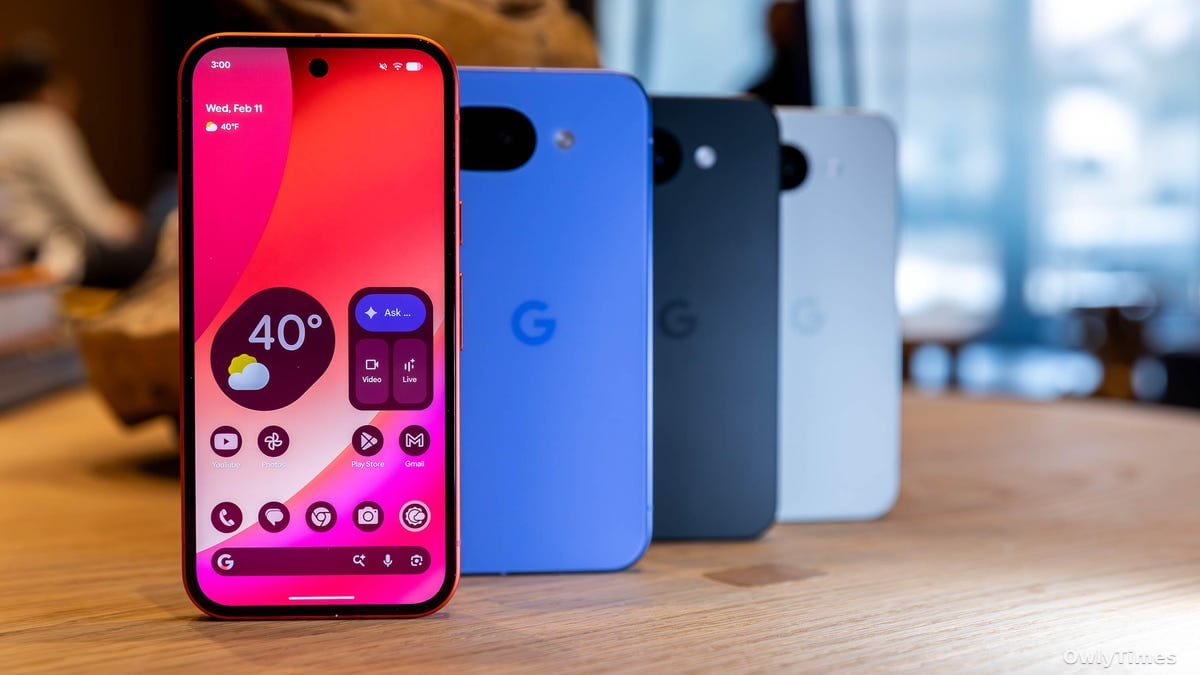
Mike Sorrentino, Senior Editor for Mobile at CNET, noted the phone’s stability amidst RAM shortages and rising electronics costs, but that feels like a justification, not a strategy. The Pixel 10A, starting at $499 for 128GB (the same price as last year’s 9A), is almost identical to its predecessor. Same 5,100-mAh battery, same cameras (48-megapixel wide, 13-megapixel selfie, 13-megapixel ultrawide), even the same flat camera island. It’s a refresh, not a revolution, and in a market obsessed with yearly leaps, that’s… strange. Google is essentially saying, “This is good enough.”
The most significant internal change – the inclusion of the Tensor G4 processor from the Pixel 9 series instead of the newer G5 – is particularly telling. Why equip a new phone with slightly older silicon? It’s a cost-saving measure, undoubtedly, but it also subtly devalues the entire Pixel 10 line. Consumers who shelled out more for the 10 and 10 Pro might reasonably feel shortchanged, knowing the “budget” model is running on a near-equivalent chip. This isn’t about offering affordability; it’s about carefully managing expectations and preventing cannibalization of higher-margin products.
Based on the original cnet.com report.
Of course, Google is touting the “quality-of-life” improvements. 30-watt wired charging (up from 23W) and 10W wireless charging are welcome, but hardly groundbreaking. The addition of AirDrop-like functionality via Quick Share is a smart move, acknowledging the reality of a multi-platform world, and a direct response to Apple’s walled-garden approach. But even this feels reactive, not proactive. The omission of PixelSnap magnets – the magnetic accessory system found on the rest of the Pixel 10 series – is framed as a cost-cutting measure, and while a Google representative confirmed this to CNET, the lack of even a first-party magnetic case option feels particularly stingy.
The inclusion of Satellite SOS and Bluetooth 6 are genuinely useful additions, bringing the 10A in line with the more expensive iPhone 16E in terms of emergency connectivity. And the promise of seven years of software and security updates is a significant win for longevity, a rarity in the Android world. But these features feel like table stakes, not differentiators. They’re catching up to the competition, not surpassing it. The AI-powered Camera Coach, while interesting, is another feature borrowed from the higher-end models, repackaged for a lower price point. It’s a clever trick, but it doesn’t fundamentally change the photography experience.
This launch arrives at a precarious moment. Samsung’s Galaxy S26 is looming, and Apple is holding an event next week potentially unveiling a cheaper iPhone. Google isn’t trying to win a head-to-head battle; it’s trying to hold the line. The Pixel 10A isn’t designed to excite, it’s designed to prevent customers from switching to a competitor. It’s a defensive play in a market increasingly dominated by premium devices and subscription services. And that, more than any spec sheet, is what should worry consumers.
Here’s what to watch for: over the next six months, pay attention to how aggressively Google discounts the Pixel 10 and 10 Pro. If they start slashing prices dramatically, it will be a clear signal that even Google doesn’t believe in the value proposition of its flagship phones, and that the Pixel 10A isn’t a stepping stone to innovation, but a holding pattern until something truly disruptive arrives.