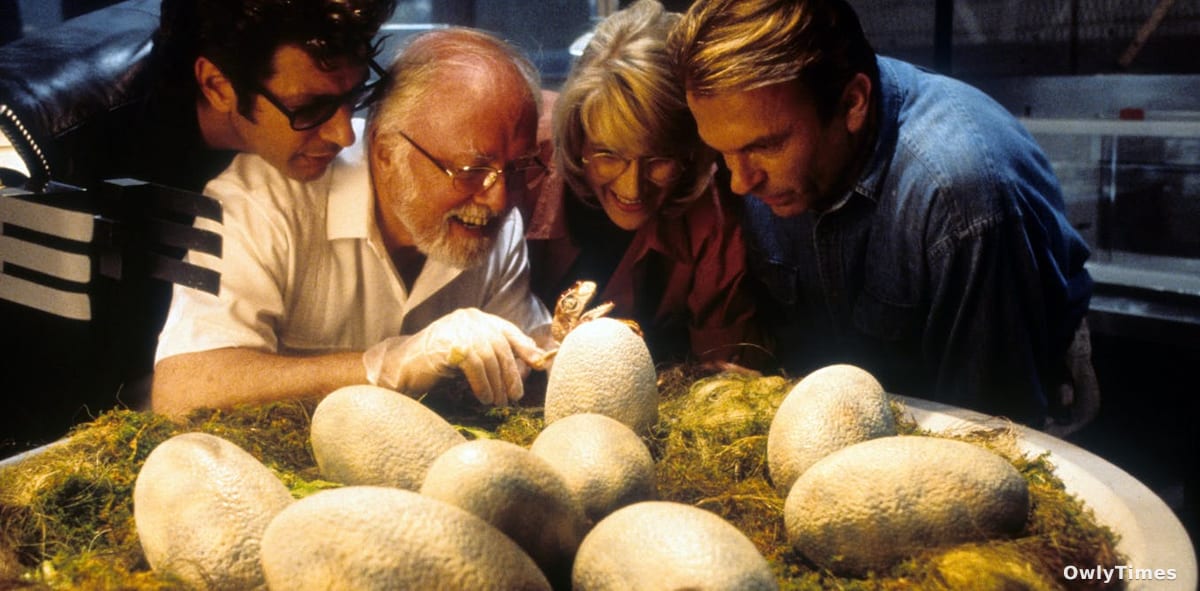

The question of whether we can do something has long driven scientific inquiry, but a growing body of evidence suggests we need a more urgent conversation about whether we should. This isn’t a new philosophical debate, but one increasingly shaped – and perhaps constrained – by the stories we tell ourselves. From the chilling warnings of “Jurassic Park” to the fungal pandemic depicted in “The Last of Us,” popular narratives aren’t simply reflections of scientific possibility; they actively mold public perception, influence research directions, and even seep into the language scientists use to describe their work. The implications are profound, suggesting that funding decisions, ethical considerations, and ultimately the future of innovation are all, to some extent, being written by Hollywood.
The most visible example is the field of de-extinction. When Colossal Biosciences announced its ambitious plan in 2021 to resurrect the woolly mammoth, the immediate and ubiquitous comparison was to “Jurassic Park.” This wasn’t accidental. The 1993 film, with its cautionary tale of unchecked scientific ambition – “Your scientists were so preoccupied with whether or not they could, they didn’t stop to think if they should” – provided an instant, readily understood framework for evaluating the project. This framing isn’t merely rhetorical flourish; it actively shapes the discourse. News articles routinely describe de-extinction efforts as “real-life Jurassic Park,” and ethical debates consistently invoke the film’s central warning. This pre-existing narrative, while engaging, risks oversimplifying a complex scientific endeavor and potentially fostering unrealistic expectations about the process and its outcomes.
Based on the original theconversation.com report.
This influence extends beyond broad ethical anxieties. Scientists themselves are demonstrably influenced by the cultural landscape. The naming of DNA elements incorporating foreign genetic material as “Borgs,” after the assimilating aliens from “Star Trek,” illustrates a playful but significant point: even within the scientific community, pop culture provides a shorthand for understanding and communicating complex concepts. More seriously, the release of HBO’s “The Last of Us” sparked renewed public and scientific interest in fungal pathogens. While the show’s premise – a rapidly spreading, mind-controlling fungal pandemic – is largely biologically implausible given human body temperature, it prompted immunologists and mycologists to re-examine the potential for fungal adaptation, particularly in the context of climate change and fungicide overuse. Dr. Arturo Casadevall, a mycologist at Johns Hopkins, noted the show’s impact on raising awareness, but cautioned against equating fictional scenarios with imminent reality. This demonstrates a crucial dynamic: pop culture can act as a catalyst for scientific inquiry, even when based on fantastical premises.
Perhaps the most pressing example of this interplay is unfolding in the realm of artificial intelligence. Decades of science fiction, from “Ex Machina” to “The Terminator,” have ingrained a narrative of AI as a potential existential threat. This narrative, often depicting deceptive superintelligences and the potential for human extinction, has deeply permeated public consciousness. Today, prominent AI researchers like Nick Bostrom, Eliezer Yudkowsky, and even former Google AI leader Geoffrey Hinton, are voicing similar concerns, warning about the risks of advanced AI and scenarios that echo those previously explored in fiction. While these warnings are rooted in rigorous technical and philosophical analysis, their resonance is undeniably amplified by their alignment with pre-existing cultural narratives. It’s not that the concerns are because of the fiction, but that the fiction provided a pre-existing framework for understanding and accepting those concerns.
However, it’s crucial to acknowledge the limitations of this analysis. Attributing direct causality – proving that “Jurassic Park” caused a specific shift in public opinion or research funding – is exceedingly difficult. Correlation does not equal causation, and numerous other factors influence scientific development and public perception. Furthermore, the influence isn’t unidirectional. Scientific breakthroughs continually feed back into pop culture, providing new material for storytellers and shaping the futures we imagine. The current surge in AI-themed narratives, for example, is directly linked to recent advancements in machine learning.
Looking ahead, the critical research question isn’t simply can we de-extinct a species or can we create artificial general intelligence, but how are our cultural narratives shaping the questions we ask and the answers we deem acceptable? We need to move beyond treating pop culture as mere entertainment and recognize its powerful role in shaping the scientific landscape. Specifically, researchers and policymakers should investigate how prevalent fictional tropes influence funding priorities, regulatory frameworks, and public engagement with emerging technologies. If we fail to understand this feedback loop, we risk allowing our fears and fantasies – rather than careful consideration of risks and benefits – to dictate the future of science.





