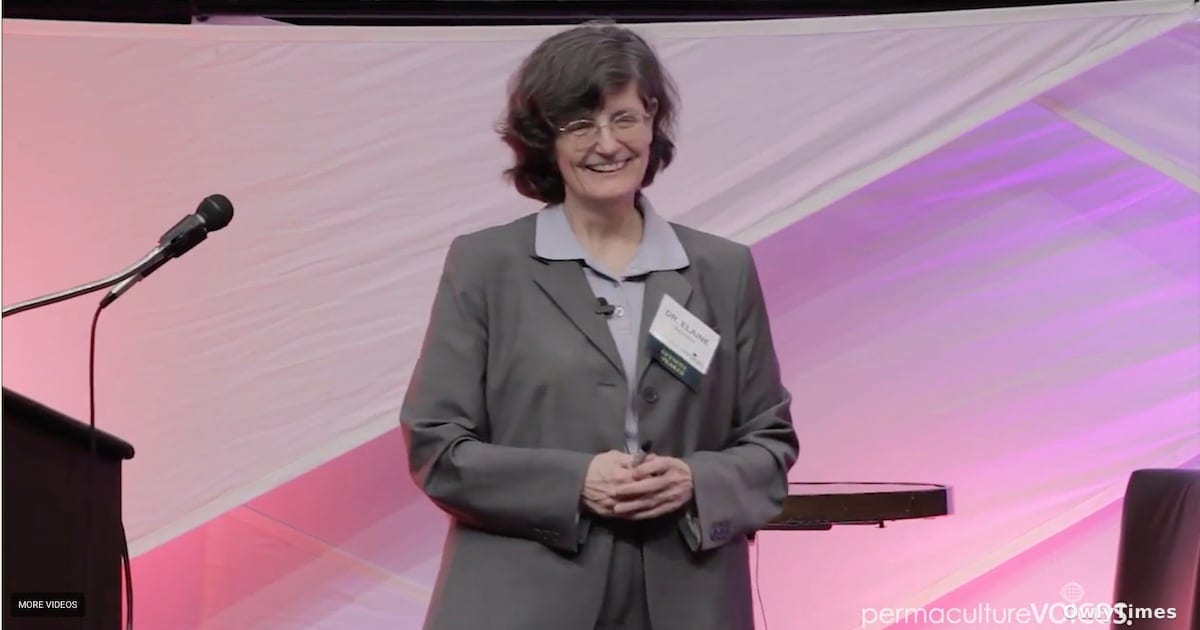

The quiet passing of Dr. Elaine Ingham last month marks not simply the loss of a scientist, but the fading of a revolutionary perspective that is, surprisingly, now foundational to much of modern gardening and agricultural advice. While many may not recognize the name, the principles she championed – the understanding that soil isn’t a dead medium, but a vibrant, bustling ecosystem – are likely already guiding your own practices. The current surge in interest in regenerative agriculture, compost teas, and “no-till” gardening isn’t a spontaneous trend; it’s the legacy of a researcher who, decades ago, peered through a microscope and saw a world teeming with life beneath our feet.
Ingham’s central contribution was the articulation of the “soil food web,” a concept that moved beyond viewing soil as a collection of inert minerals to recognizing it as a complex network of organisms – bacteria, fungi, protozoa, nematodes, arthropods – all consuming and being consumed in a dynamic cycle. This wasn’t merely a descriptive exercise; it fundamentally altered how we understand plant nutrition. She demonstrated that plants aren’t passively absorbing nutrients, but actively soliciting them through root exudates, attracting specific microbes that then process those nutrients into forms the plant can readily use. Crucially, she showed this process isn’t just chemical, but electrical – microbes impart a charge to nutrient molecules, facilitating uptake. This is a departure from the traditional focus on simply adding fertilizer salts, a practice Ingham actively cautioned against, advocating instead for fostering a robust microbiological system.
Source material: adn.com.
The story of Ingham’s impact is particularly striking given the tools at her disposal. As recounted by Jeff Lowenfels, a long-time collaborator and author of “Teaming With Microbes” (a book born directly from Ingham’s teachings), her discoveries were made with what would now be considered “primitive microscopy.” Yet, she was able to discern patterns and relationships that eluded others. Lowenfels recalls attending a lecture at the Julia Child Foundation where Ingham presented the soil food web, describing the experience as akin to understanding geometry – a system where all the pieces fit together perfectly. This intuitive grasp of ecological relationships was a hallmark of her work. One early example of her insight involved a sample of Alaskan peat, dismissed by locals as sterile, which Ingham recognized as remarkably rich and diverse in microbial life, more accurately described as humus – a highly stable, biologically active compost.
However, it’s important to clarify what Ingham’s work established versus what popular interpretations sometimes claim. She didn’t simply advocate for “more microbes”; she meticulously detailed which microbes thrive under specific conditions and how those conditions impact plant health. For instance, she discovered that annual plants and row crops benefit from bacteria-dominated soil, while trees and perennials flourish in fungal-dominated environments. This distinction is critical, as different mulches and management practices favor one type of microbial life over another. This nuance is often lost in simplified messaging, leading to blanket recommendations that may not be optimal for all plants or ecosystems. The emphasis on avoiding tillage, a practice she recognized as destructive to fungal networks, is another area where her work has had a lasting impact, yet the extent of disruption caused by minimal disturbance is still an area of ongoing research.
Limitations to consider surround the scalability of Ingham’s methods. While her principles are readily applicable to home gardens, translating them to large-scale agriculture presents challenges. Maintaining the diversity and balance of the soil food web requires a holistic approach that can be difficult to implement in conventional farming systems reliant on monoculture and synthetic inputs. Furthermore, the precise composition of the soil food web varies significantly depending on geographic location, climate, and soil type, meaning that a one-size-fits-all approach is unlikely to be effective. The initial investment in understanding and implementing these practices can also be a barrier for farmers operating on tight margins.
Looking ahead, the next crucial research steps involve refining our understanding of the specific interactions within the soil food web and developing tools to accurately assess its health and function. We need more sophisticated methods for identifying and quantifying microbial communities, as well as a deeper understanding of how plant genetics and environmental factors influence these communities. Perhaps most importantly, we need to explore how to integrate the principles of the soil food web into sustainable agricultural practices that can feed a growing population while protecting our planet. The question now isn’t simply whether soil is alive, but how we can best nurture that life to create resilient and productive ecosystems. Will we see a widespread adoption of soil food web principles in commercial agriculture, or will the convenience and short-term gains of conventional methods continue to prevail? The answer will shape the future of our food system.





