
The theater smelled of popcorn and possibility last week as audiences settled in for “Project Hail Mary,” the adaptation of Andy Weir’s runaway sci-fi hit. But beyond the dazzling visuals of interstellar travel and the charismatic performance of Ryan Gosling, something else was quietly captivating viewers: the science. Not in spite of the fantastical premise – a lone astronaut tasked with saving Earth from a sun-dimming microbe – but because of it. The film isn’t shying away from the complex astrophysics at its core, and that’s a surprisingly rare and potent ingredient in modern blockbusters. But how much of what we’re seeing is grounded in reality, and where does “Project Hail Mary” boldly leap into the realm of pure imagination?
The Fine Line Between Plausible and Possible
Jacqueline McCleary, an assistant professor of physics at Northeastern University, has become something of a de facto science consultant for curious moviegoers. She’s been fielding questions about the film’s accuracy, and her assessment is nuanced. “The way ‘Project Hail Mary’ approaches concepts in astrophysics, orbital mechanics and even spacecraft engineering is treated very fairly,” she explained. “It’s a grammar unto itself, but it’s legible.” This isn’t a case of Hollywood completely disregarding scientific principles; instead, the film builds a fictional world on a foundation of real science, stretching the boundaries but maintaining internal consistency. That’s a crucial distinction, and one that elevates the film beyond simple escapism. It’s a testament to Weir’s original novel, too, which similarly prioritized scientific plausibility.
Reporting from news.northeastern.edu informs this analysis.
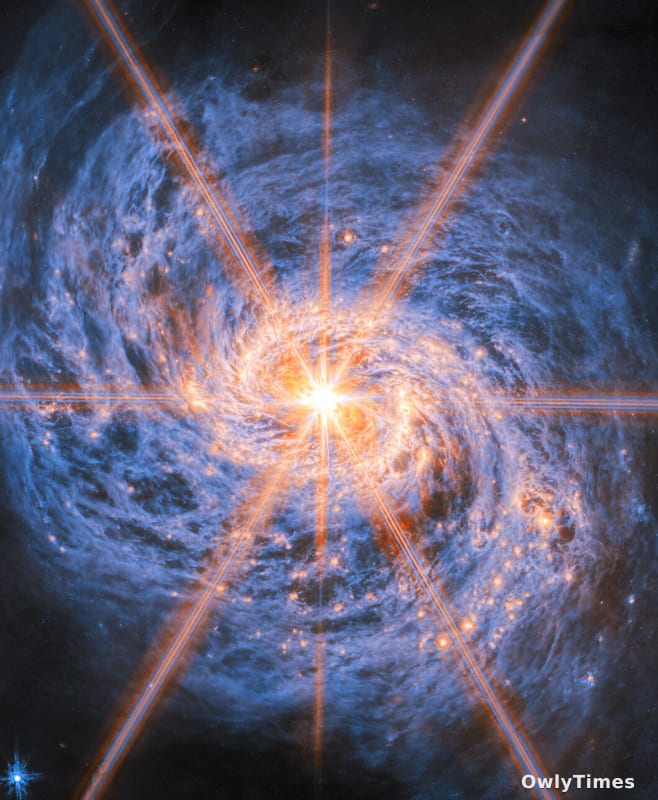
The film’s central conflict revolves around “astrophage,” a microorganism that consumes the sun’s energy, threatening to plunge Earth into an ice age. This is where the film’s scientific footing begins to wobble. While microbes do absorb sunlight for energy, the scale of the astrophage’s energy consumption is, as McCleary puts it, an “orders of magnitude mismatch.” The sun emits 10<sup>26</sup> Joules per second – enough energy to power all of Earth’s annual consumption in mere seconds. For astrophage to even begin to make a dent, let alone dim the sun, it would need to withstand temperatures upwards of 5 million degrees Fahrenheit and possess an energy storage capacity that defies known biological limits. It’s a dramatic premise, certainly, but one that requires a significant suspension of disbelief.
Beyond the Microbe: A Surprisingly Realistic Spaceship
Interestingly, while the core threat feels far-fetched, some of the film’s more imaginative elements are rooted in surprisingly solid physics. The Hail Mary spaceship itself, with its rotating front section designed to generate artificial gravity, isn’t as outlandish as it appears. McCleary points to the use of centrifugal force – the same force you feel when turning sharply in a car – as a “totally conventional, well-accepted” principle. By spinning the front half of the ship, the crew can experience a force mimicking gravity, allowing them to live and work in a more comfortable environment. This isn’t a futuristic fantasy; it’s a logical extension of existing physics, a testament to the film’s commitment to grounding its science fiction in reality.
But the film’s most compelling scientific achievement might be its portrayal of cross-species collaboration. Gosling’s character, Ryland Grace, forms an unlikely alliance with Rocky, a silicon-based alien lifeform facing the same existential threat. The depiction of Rocky, with its unconventional biology and non-verbal communication (communicating through musical tones), is remarkably thoughtful. McCleary suggests this is more plausible than many stereotypical alien depictions. “People are now starting to talk about sentient plasmas as a potential lifeform,” she noted, highlighting the growing scientific acceptance of the possibility of life forms radically different from our own. The film’s emphasis on the challenges of communication – the need to learn a new language, to understand a fundamentally different perspective – feels particularly resonant in our increasingly interconnected world.
The Human Heart of Scientific Inquiry
Ultimately, “Project Hail Mary” isn’t just about saving the world; it’s about the human drive to understand it. McCleary believes the film’s most accurate portrayal is of the scientific process itself. “We like to come together to solve problems or learn something new about the universe,” she said. “You’re willing to bridge wide gaps in order to work together to solve what’s fundamentally an intellectual problem.” This collaborative spirit, the willingness to embrace the unknown, is at the heart of both the film’s narrative and the scientific endeavor.
“Project Hail Mary” isn’t a perfect scientific simulation. It takes liberties, it stretches credulity, and it occasionally jumps the shark. But in its earnest attempt to engage with real scientific ideas and its genuine appreciation for the spirit of scientific inquiry, it offers something genuinely valuable. The film’s success isn’t just a win for blockbuster entertainment; it’s a signal that audiences are hungry for stories that respect their intelligence and acknowledge the wonder of the universe. The question now is: will this spark a renewed interest in STEM fields, inspiring a new generation of scientists to tackle the challenges facing our planet – and perhaps even beyond?