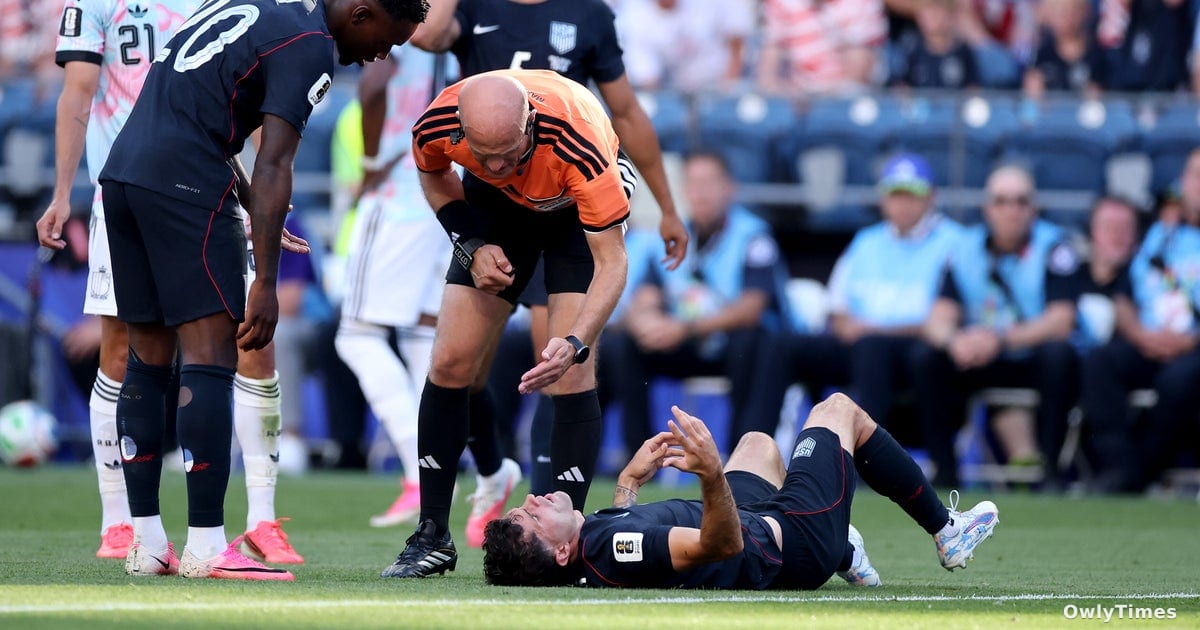

The image of Christian Pulisic hobbling off the pitch at Seattle Stadium on July 6, 2026, became the definitive frame of a bittersweet night for American soccer. While the U.S. Men’s National Team’s 4-1 exit at the hands of Belgium was a crushing blow on the scoreboard, the match simultaneously shattered viewership records, drawing an average of 33.086 million viewers, according to Variety. It was the most-watched soccer telecast in U.S. history and the largest non-NFL audience on any network since the 2016 World Series, Deadline reports.
A Star Sidelined Amidst the Chaos
Beyond the record-breaking spectacle, the physical toll on the team’s talisman was severe. CBS News confirms that the 27-year-old Pulisic suffered a bone bruise and a microfracture of his tibia and fibula. The injury occurred in the 52nd minute when Pulisic struck the leg of Belgium captain Youri Tielemans while attempting a shot. Although he remained on the field briefly, he was replaced by Sebastian Berhalter in the 59th minute.
The BBC notes that while U.S. Soccer has not provided a definitive recovery timeline, reports from The Athletic suggest he will be sidelined for "several weeks but not months." Both CBS News and the BBC confirm that U.S. Soccer and Pulisic’s club, AC Milan, are coordinating his rehabilitation, with the forward expected to return before Milan's August 23 Serie A opener against Torino.
The Culture of Grit Under Scrutiny
The aftermath of the defeat sparked a fierce debate over the expectations placed on modern stars. In an interview cited by The Guardian, Pulisic remarked, "I just totally twisted my ankle and my knee in one play… I have time to rest. It’s just unfortunate way to finish." This sentiment drew sharp rebuke from former USMNT captain Landon Donovan, who stated on his Unfiltered Soccer podcast that he would have "punched the doctor in the face" rather than leave a World Cup knockout game, per The Guardian and the BBC.
Former USWNT star Carli Lloyd also criticized Pulisic’s performance and his decision to prioritize rest in previous years. Writing on X, Lloyd noted, "You rest when your playing career is over. Period," as reported by both The Guardian and the BBC. This tension between the demands of high-stakes international performance and athlete welfare highlights the growing pressure on players who are now tasked with carrying the weight of a nation’s newfound soccer obsession.
A New Reality for American Soccer
The sheer scale of the viewership—peaking at 41.03 million between 9:15 and 9:30 p.m. ET—signals a fundamental shift in the American sporting landscape. Deadline quotes Mike Mulvihill, president of insights and analytics for Fox, who compared the tournament's reach to "having a second NFL season." While the U.S. exit is a tactical setback, the data suggests the sport has moved beyond niche status. As the tournament marches toward its July 19 conclusion, the industry is left to grapple with the reality that soccer in the U.S. is no longer a "growing" sport—it has arrived, bringing with it the intense, unforgiving scrutiny typically reserved for the country’s most entrenched athletic institutions.