
The holiday weekend began with a stark juxtaposition of American ideals: while NASA celebrated the nation’s 250th anniversary by unveiling James Webb Space Telescope imagery of “cosmic fireworks” in the FS Tau star system, the halls of Congress were grappling with the deeply human, and often contentious, realities of the American experience. For many, the holiday is a time for reflection on national identity, but as reported by CBS News, the debate over what it truly means to be an American has moved from the abstract to the legislative front lines.
Defining the American Experience
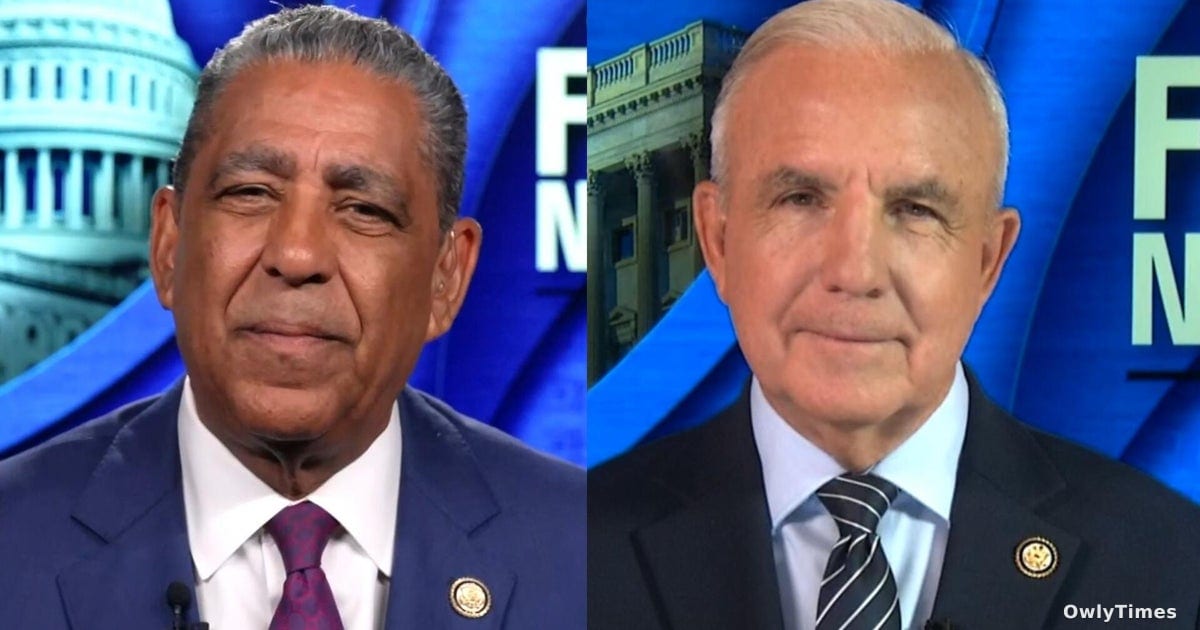
In an interview taped on July 2, 2026, for Face the Nation, Representatives Adriano Espaillat (D-NY) and Carlos Gimenez (R-FL) offered a personal look at the immigrant experience that defines much of the U.S. political landscape. Both men arrived in the country as children—Espaillat from the Dominican Republic at age nine, and Gimenez from Cuba at age seven—and both credited their parents' pursuit of freedom as the catalyst for their eventual service in Congress.
However, the conversation quickly shifted to the current friction over immigration policy. CBS News highlighted a widening divide regarding birthright citizenship. While Gimenez acknowledged that the Supreme Court has affirmed birthright citizenship as a constitutional guarantee for 130 years, he signaled a desire for Congress to curb what he termed a "cottage industry" of mothers traveling to the U.S. solely to secure citizenship for their children. This political tension underscores a broader trend: as the nation marks a quarter-millennium of existence, the mechanisms of belonging remain a primary point of friction between the executive branch—where Deputy Chief of Staff Stephen Miller has recently challenged the universality of birthright citizenship—and the legal precedents upheld by the courts.
A Crisis of Public Trust
Beyond the legislative debates, the cultural fabric of the nation is currently strained by a collapse in institutional confidence. The same Face the Nation broadcast featured Dr. Debra Houry, the former chief medical officer at the CDC, who warned that the agency is facing a historic erosion of credibility. According to The Independent, trust in the CDC has plummeted by more than 20 points in recent polling.
The data is sobering: a survey of 2,205 people conducted by the Harvard T.H. Chan School of Public Health and the de Beaumont Foundation’s Public Health Listening Lab between March 19 and April 1, 2026, found that only 50 percent of U.S. adults trust CDC recommendations, a sharp decline from the 77 percent recorded in the spring of 2025. Dr. Houry, who resigned last August alongside other agency leaders, attributed this "irreparable harm" to the policies of Health and Human Services Secretary Robert F. Kennedy Jr., citing concerns that the administration’s dismissal of data-driven science has contributed to a resurgence in preventable illnesses like measles and whooping cough.
The Quietude of a Divided Summer
While these high-stakes battles unfold in Washington, the broader American rhythm for July 2026 has taken on a subdued tone. As noted by MarketWatch, the streaming landscape is experiencing a "summer doldrums," with a light release schedule that the outlet attributes to the lull following Emmy season and the distraction of the ongoing World Cup. This sense of pause is echoed in the retail sector; despite the holiday, WIRED reports that mattress retailers are leaning heavily into aggressive promotions to drive consumer engagement, with discounts ranging from 15 to 35 percent on models like the Helix Midnight Luxe and Bear Elite Hybrid.
Ultimately, this weekend serves as a mirror for a nation at a crossroads. Whether observing the birth of stars 450 light-years away or navigating the complexities of public health and citizenship at home, the underlying story is one of transition. As the country moves past its 250th anniversary, the industry and the public alike are left to determine how much of the past—from scientific consensus to constitutional interpretation—will be carried into the next chapter.