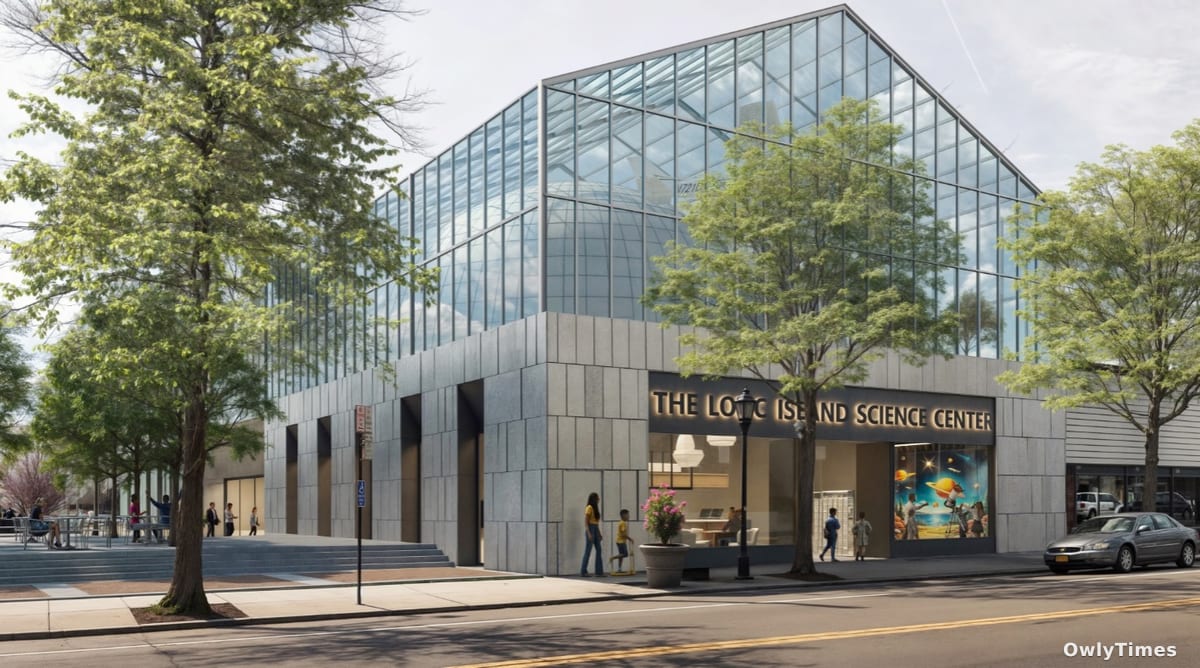

The stalled Long Island Science Center project in Riverhead isn’t simply a case of construction delays; it’s a revealing case study in the complex interplay between public investment, private ambition, and the shifting definitions of “economic development.” While headlines focus on the Riverhead Town Board’s potential condemnation of the Science Center’s building, the deeper story is about a breakdown in trust and a town grappling with how to revitalize its downtown core when initial promises remain unfulfilled – and accusations of obstruction muddy the waters. The situation highlights a critical question for municipalities nationwide: at what point does continued public patience become a detriment to broader community goals?
A Promise Unkept: From “Heart Transplant” to Impasse
In February 2020, the purchase of 111 East Main Street by the Long Island Science Center for $1.45 million was publicly celebrated. Then-Supervisor Yvette Aguiar famously called it a “heart transplant” for downtown Riverhead, envisioning a vibrant hub for interactive exhibits, classrooms, and community engagement. This wasn’t merely a real estate transaction; it was presented as a catalyst for broader economic revitalization. However, four years later, the building remains vacant, and the Science Center has yet to open its doors. This isn’t a simple failure to meet a deadline; it’s a failure to deliver on a publicly articulated vision, and that discrepancy is now fueling calls for drastic action. The board’s initial willingness to postpone condemnation in April 2025, based on assurances of a summer 2025 opening, underscores how repeatedly deferred expectations have eroded confidence.
This piece references the riverheadlocal.com report.
The Board’s Perspective: Lost Patience and Unclear Pathways
The current tension reached a critical point at the March 26 work session, where the Science Center failed to appear for a scheduled update. This absence, coupled with the continued lack of building permits and a concrete plan for completion, appears to have been the final straw for a majority of the Town Board. Council Member Denise Merrifield’s blunt statement – “I think time’s up” – reflects a growing sentiment that the project has become a drag on the town’s progress. It’s important to note that the board isn’t simply acting on a whim. They initially halted condemnation proceedings based on promises that haven’t materialized, suggesting a willingness to collaborate that wasn’t reciprocated with demonstrable progress. The board’s frustration isn’t solely about the vacant building; it’s about the perceived lack of transparency and accountability from the Science Center.
Accusations of Obstruction and a Contested Narrative
The narrative isn’t one-sided. Larry Oxman, a longtime board member of the Long Island Science Center, alleges that town officials have actively obstructed the project by blocking necessary permits and hindering repairs to the former Swezey’s Department Store building. This accusation introduces a significant counterpoint, suggesting that the delays aren’t solely attributable to the Science Center’s shortcomings. Oxman’s claims, if substantiated, would paint a picture of a town actively working against its own stated goals of revitalization. However, it’s crucial to remember that these are accusations, and independent verification of permit denials and repair obstructions is needed to fully assess their validity. The conflicting narratives highlight a deep-seated distrust between the Science Center and town officials, making a collaborative resolution increasingly unlikely.
Limitations to Consider: Defining “Success” and the Role of Public Funds
It’s essential to acknowledge the limitations of drawing definitive conclusions from this situation. The definition of “success” for a project like the Long Island Science Center is inherently subjective. While the town may prioritize rapid economic impact, the Science Center may have a longer-term vision focused on educational and cultural enrichment. Furthermore, the initial $1.45 million purchase price, while seemingly nominal, doesn’t account for the substantial costs of renovation and ongoing operation. The town’s investment, both financial and in terms of goodwill, hasn’t yielded the anticipated returns, but attributing blame solely to the Science Center overlooks the complexities of large-scale development projects. The case also raises questions about the appropriate level of public intervention in private ventures – and the point at which public funds are better allocated elsewhere.
What’s Next: Beyond Condemnation and the Future of Riverhead’s Downtown
The Riverhead Town Board’s potential move to condemn the building isn’t simply about acquiring a property; it’s about signaling a shift in priorities and a renewed focus on demonstrable results. If condemnation proceeds, the question becomes: what will replace the Science Center? Will the town actively solicit proposals for alternative uses, or will it pursue a development strategy aligned with its own vision? More broadly, this situation should prompt a broader review of Riverhead’s economic development policies. Specifically, the town should establish clearer metrics for evaluating the success of publicly supported projects – and a more transparent process for addressing delays and holding developers accountable. Residents should watch closely for the town’s response to any potential legal challenges from the Science Center, and whether the board prioritizes a quick sale or a carefully considered redevelopment plan. The fate of 111 East Main Street will serve as a crucial test case for Riverhead’s future.





